
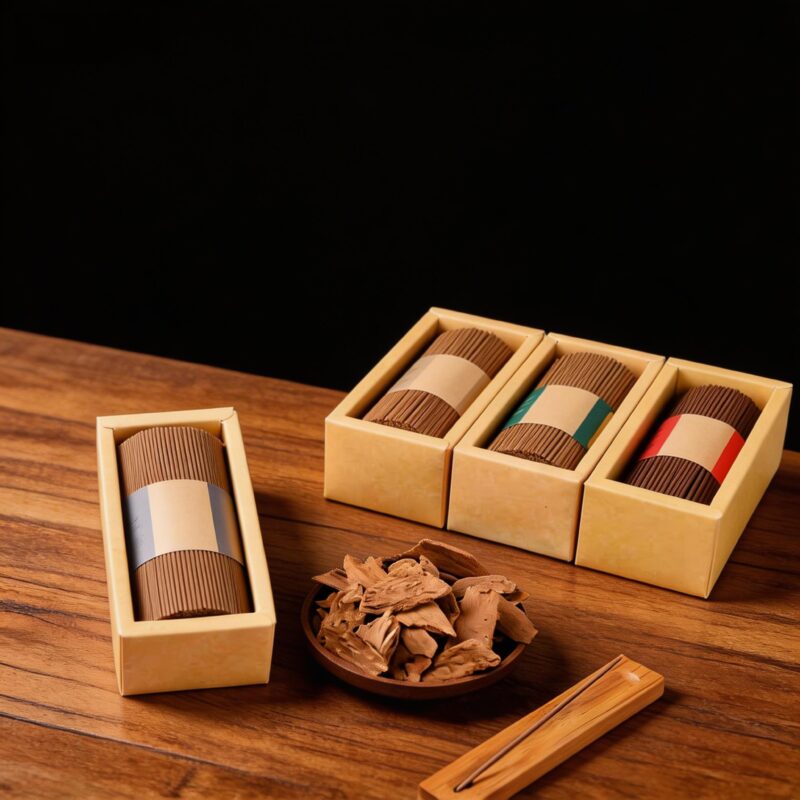
Vietnam Agarwood vs Indian Agarwood
Understanding the Differences in Aroma, Origin, and Character
Agarwood: A Material Shaped by Time
Agarwood has been valued for centuries across Asia as one of the most precious aromatic materials in the world.
Formed when Aquilaria trees produce resin in response to natural stress, agarwood develops a complex fragrance that cannot be artificially reproduced. Each region where agarwood grows produces materials with distinct aromatic characteristics, shaped by climate, soil, and the age of the tree.
Among the most recognized sources are Vietnam and India — two regions whose agarwood has developed unique reputations among collectors, incense makers, and fragrance enthusiasts.
Understanding the difference between Vietnamese agarwood and Indian agarwood helps reveal why this material continues to hold such cultural and aromatic significance.
For historical background on agarwood traditions:
Agarwood in Asian Culture
Vietnamese Agarwood: Elegant and Sweet
Vietnam, particularly regions such as Nha Trang and Khanh Hoa, is widely known for producing agarwood with a clear, refined aromatic profile.
Vietnamese agarwood is often described as:
- Fresh and lightly sweet
- Delicately floral
- Smooth and balanced
- Subtle yet layered
Rather than producing an overwhelming scent, Vietnamese agarwood tends to unfold gradually, revealing soft fruit-like sweetness and gentle woody warmth.
Because of this elegance, it is frequently used in refined incense blends and contemplative fragrance rituals, where subtlety is valued over intensity.
For many beginners exploring natural incense, Vietnamese agarwood offers one of the most approachable aromatic experiences.
If you are curious about experiencing this style of fragrance, you may explore our Nha Trang Agarwood Incense Sticks, crafted from natural Vietnamese agarwood.
Indian Agarwood: Deep and Resinous
Indian agarwood, often associated with Assam and surrounding regions, presents a very different aromatic profile.
Compared with Vietnamese material, Indian agarwood tends to be:
- Darker and more resinous
- Rich and earthy
- Stronger in projection
- Deeply complex
Its fragrance often carries smoky, leathery, and balsamic tones, creating an aroma that feels heavier and more dramatic.
Because of its intensity, Indian agarwood has historically been valued in traditional perfumery and oud oil distillation, where powerful depth is desired.
Differences in Fragrance Structure
While both materials originate from the same botanical family, their aroma structures differ significantly.
Vietnamese agarwood typically evolves through:
- A fresh, lightly sweet opening
- Gentle floral notes
- A smooth woody finish
Indian agarwood more commonly develops through:
- Dark resinous opening
- Smoky or balsamic heart
- Deep, lingering oud warmth
Neither style is inherently superior — they simply reflect different natural expressions of the same rare material.
Choosing Between Vietnamese and Indian Agarwood
For those new to agarwood incense, Vietnamese materials are often recommended because they offer:
- Cleaner aromatic clarity
- Balanced sweetness
- Gentle projection suitable for indoor spaces
Indian agarwood, by contrast, is often preferred by experienced collectors who appreciate:
- Powerful depth
- Strong resin character
- Traditional oud intensity
Ultimately, the choice depends less on quality and more on personal sensitivity to fragrance.
Agarwood as a Living Material
One of the reasons agarwood remains so fascinating is that no two pieces are exactly the same.
Even within the same region, aroma can vary depending on:
- tree age
- resin formation
- harvesting conditions
- storage and processing
This natural variation is part of what makes agarwood a living aromatic material rather than a standardized product.
When experienced through incense, its fragrance becomes not just a scent but a quiet interaction between material, environment, and attention.
A Moment of Stillness
In traditional Asian culture, agarwood was rarely burned simply for fragrance.
It accompanied tea gatherings, poetry, meditation, and quiet conversation, shaping the atmosphere of a space without dominating it.
Today, natural agarwood incense continues to offer the same possibility — a small moment of stillness within daily life.