

Hainan agarwood occupies a distinct place within the wider language of Chinese fragrant wood.
It is valued not simply because it comes from Hainan, nor because it is rare by name alone, but because it brings together several qualities at once: rainforest ecology, gradual resin formation, material individuality, and an aromatic character often described as pure, elegant, and quietly enduring.
To understand Hainan agarwood well, it is not enough to ask whether it smells rich or whether the wood appears dark. Origin, scent, resin maturity, structure, and type all matter. What gives one piece depth may be entirely absent in another, even when both are sold under the same regional name.
This guide offers a more complete way of reading Hainan agarwood — through origin, aroma, resin, grade, and type — so that the material can be understood with greater clarity and less noise.

What Hainan Agarwood Is
Hainan agarwood refers to resinous fragrant wood formed in Aquilaria sinensis, the botanical source most closely associated with Chinese agarwood.
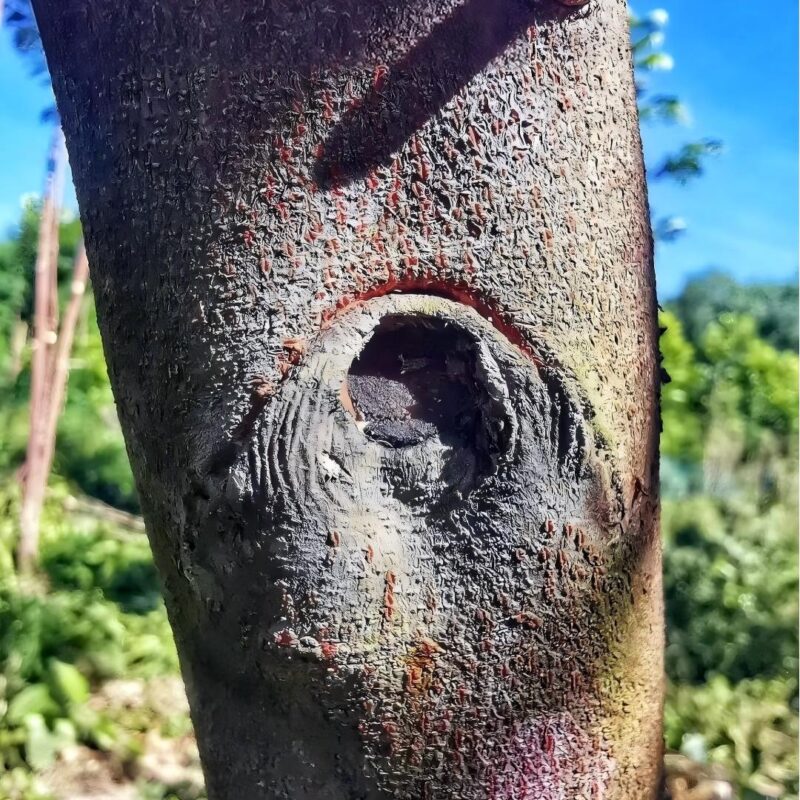
Agarwood does not begin as a naturally fragrant center hidden inside the tree. It forms gradually over time, as resin develops within the wood in response to injury, stress, or other natural processes. What is eventually valued is not wood alone, but the relationship between wood and resin: how the resin formed, how mature it became, and how naturally the scent and structure settled into one another.
This is why agarwood cannot be understood through surface appearance alone. A darker tone may suggest greater resin presence, but it does not, by itself, guarantee refinement. A stronger aroma may create immediate impact, but it does not always indicate quality. The best material is often not the loudest, but the most complete.
Explore the Agarwood Bracelet →
The Meaning of Hainan as Origin
Within the Chinese agarwood tradition, Hainan carries both cultural and material weight.
Its significance lies partly in history, and partly in ecology. Mountain rainforests, long sunlight exposure in certain regions, humidity, elevation, and slower material development all contribute to the way Hainan-origin agarwood is often described: cleaner in profile, more composed in expression, and quieter in its depth.
Yet origin should be understood carefully.
Hainan is not a guarantee of excellence by itself, nor does a place name create a fixed aromatic formula. Origin offers environmental background — a context for material formation — but what finally matters is still the wood in hand: the resin, the scent, the balance, and the maturity of the piece itself.
The Major Hainan Regions
Several regions are repeatedly referenced when discussing Hainan agarwood. These places matter not because each produces a rigidly predictable scent, but because they represent the island’s distinct ecological environments.
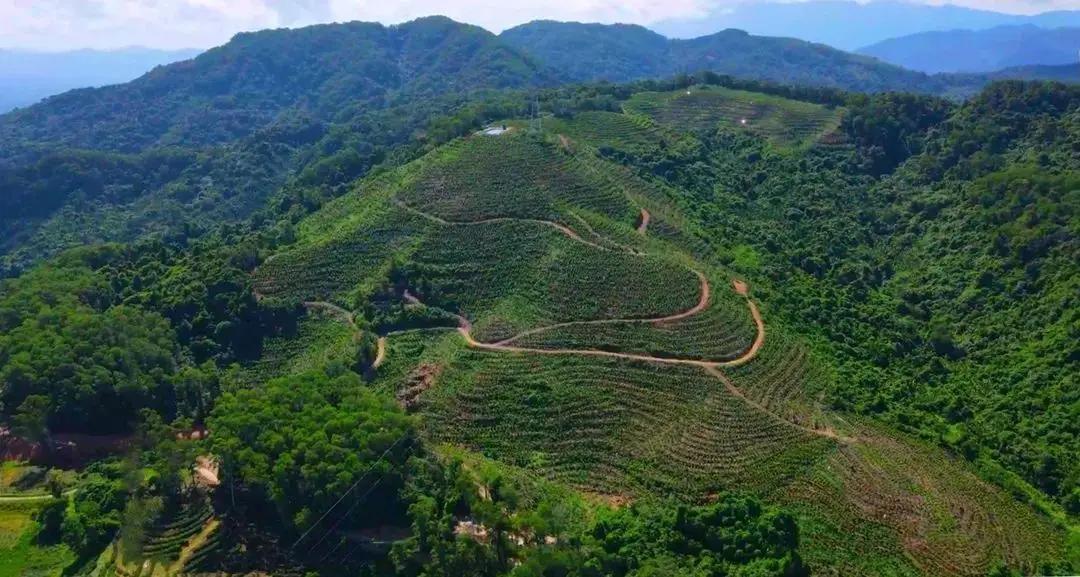
Jianfengling
Jianfengling is one of the most frequently mentioned origins in discussions of fine Hainan agarwood. It is associated with mountainous rainforest conditions and, in some areas, longer sun exposure and greater day-to-night variation.
Material linked to Jianfengling is often described in market language as pure, elegant, and clear — not aggressively forceful, but quietly refined.
Hainan Green Qinan Agarwood Bracelet – Jianfengling Origin →
Diaoluoshan
Diaoluoshan belongs to another important rainforest system in Hainan. With its dense forest cover and humid ecological setting, it remains an essential geographic reference when speaking about Hainan-origin agarwood.
Limushan
Limushan holds a strong place in traditional discussions of Hainan fragrant wood. It is often remembered less as a commercial label than as part of the deeper cultural geography of Hainan incense materials.
Wuzhishan
As the highest mountain area in Hainan, Wuzhishan contributes to the island’s larger rainforest identity. In any serious conversation about Hainan agarwood, it remains one of the core names through which the material landscape is understood.
Reading Origin Properly
A common mistake is to reduce agarwood to a single regional label.
Origin matters, but it should never be read in isolation.
The final character of Hainan agarwood depends on several things at once:
- the botanical and planting background
- the way resin formed
- whether development was natural or induced
- the maturity of the material
- the time allowed for the wood to settle
- the quality of selection and finishing
A place name can suggest direction. It cannot replace material judgment.
The Aroma of Hainan Agarwood
Hainan agarwood is often appreciated for an aroma that feels composed rather than loud.
Instead of leaning toward sharp projection or immediate heaviness, it is frequently described through qualities such as clarity, elegance, and persistence. Better pieces tend to reveal themselves in stages, staying close to the body and becoming more noticeable through warmth, stillness, and time.
Its aromatic language often moves through the following directions:
Clear
The scent feels clean rather than muddy.
Elegant
It remains restrained, without losing presence.
Sweet
Some pieces carry a natural sweetness that feels quiet and rounded, rather than sugary or artificial.
Creamy
In more refined material, the scent can develop a soft, milky depth — not perfumed, but smooth and mellow.
Lingering
Aroma that stays and unfolds gently is often more valuable than aroma that arrives too quickly and disappears.
The most important point is this: intensity alone is not the measure of quality. Better agarwood is often judged by how naturally the scent moves, how layered it feels, and how long it remains coherent.
Resin and Material Character
Resin is central to agarwood, but it is often misunderstood.
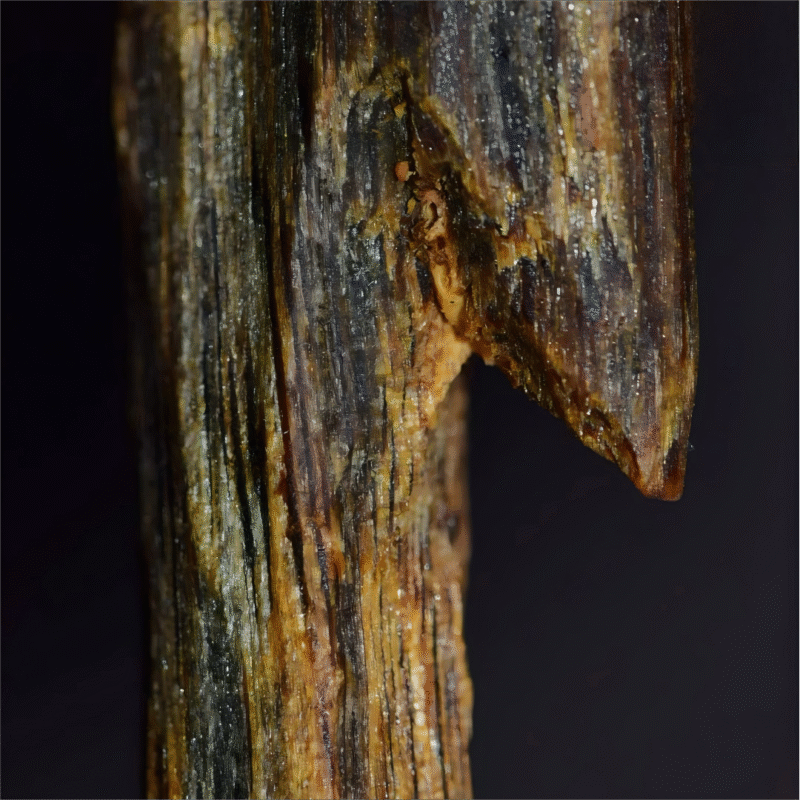
Many new buyers are taught to look for darkness, weight, or obvious oil lines. These can be useful clues, but they are not conclusions. Resin must be read together with structure, aroma, and maturity.
Broadly speaking, Hainan agarwood may be encountered across three material ranges:
Light Resin Material
Lighter in tone, softer in aromatic body, and often easier to wear daily.
Medium Resin Material
More stable in scent, fuller in development, and balanced enough for both appreciation and regular use.
High Resin Material
Denser in visual and aromatic presence, often more suitable for advanced appreciation, collecting, or quieter forms of use.
But no single surface marker is enough.
A darker bead is not automatically the better bead. A heavier bracelet is not automatically the finer bracelet. True quality lies in the agreement between aroma, resin, structure, and finish.
The best pieces feel settled.
Types of Hainan Agarwood
When people speak about “types” of Hainan agarwood, they may be referring to several different distinctions at once. The clearest way to understand the category is through three separate layers.
1. Botanical and Material Background
Most modern Hainan agarwood is connected to Aquilaria sinensis. Even within that framework, however, material can vary considerably according to planting stock, resin behavior, and aromatic expression.
This is why two Hainan-origin pieces may differ greatly even before questions of grade arise.
2. Resin Formation Method
This is one of the most important distinctions in the modern market.
Naturally Formed Agarwood
Resin develops through longer natural processes and is often more limited in supply.
Induced or Cultivated Agarwood
Resin formation is encouraged through modern methods. This now plays an important role in contemporary agarwood production.
Neither category should be judged too quickly. What matters is not the label alone, but whether the material has developed with enough maturity and whether the scent feels natural, stable, and complete.
3. Standard Material and Qinan-Type Material
In market language, one of the most significant distinctions is between standard agarwood and Qinan-type material.
Qinan is generally used to describe a higher-order expression of agarwood — finer, smoother, often sweeter, and more refined in both resin character and aromatic movement. But because the term is widely used, it should be approached with care.
A better question is not whether a piece carries the word “Qinan,” but whether the material itself shows that higher level of completion: smoother transition, greater elegance, deeper aromatic layering, and a more coherent resin identity.
Understanding Hainan Green Qinan
Among higher-end expressions, Hainan Green Qinan holds particular fascination.
The phrase does not necessarily refer to literal greenness in color. More often, it points to a certain aromatic and material style: sweetness, smoothness, creamy depth, softness in movement, and a more refined resin presence.
A careful way to understand it is this:
Hainan Green Qinan can be seen as a higher-end Hainan agarwood expression within the Aquilaria sinensis system, associated with greater aromatic refinement, stronger resin character, and a more complete sensory profile.
For this reason, the best way to speak about it is not through exaggerated claims, but through direct material language: sweetness, depth, lingering finish, natural variation, and resin maturity.
How Grade Should Be Understood
Agarwood grading is often treated as if it were universal. In practice, it is not.
Labels vary from seller to seller, and terms such as premium, reserve, collector, sinking, or top grade are not always standardized across the market. For that reason, grade is best understood through observable qualities rather than marketing vocabulary alone.
A useful framework is to judge Hainan agarwood by four dimensions:
Aroma
Is the scent clean, natural, and layered?
Resin
Does the resin feel mature and integrated?
Structure
Does the material show natural grain, density, and coherence?
Completion
Does the piece feel resolved as a whole, rather than impressive in only one aspect?
From there, a more consumer-friendly structure may look like this:
Daily Wear Grade
Lighter, easier to wear, and more accessible. Suitable for first contact and regular use.
Reserve Grade
More stable in aroma, more mature in resin, and more complete in material presence.
Collector’s Grade
More individuality, deeper layering, stronger finish, and greater rarity.
Qinan-Type High-End Material
Not merely darker or heavier, but finer across aroma, resin character, smoothness, and overall completeness.
What Makes Hainan Agarwood Valuable
The value of Hainan agarwood does not come from one factor alone.
It is the meeting point of several things:
- ecological background
- resin maturity
- aromatic clarity
- structural integrity
- rarity of the material type
- individuality of the finished piece
This is also why natural variation matters.
No two beads are exactly alike. Grain, tone, and resin expression will differ from piece to piece. These variations are not defects but part of what makes natural agarwood meaningful. A bracelet made from real material should not look mechanically identical.
A Better Way to Choose Hainan Agarwood
The most useful way to choose Hainan agarwood is to begin with intention rather than status.
For daily wear, lighter and cleaner material may be more suitable than heavier resin.
For slower appreciation, medium to high resin material with better layering may offer greater depth.
For collecting, the focus shifts further toward rarity, aromatic completion, and material distinction.
And for those drawn to Hainan Green Qinan or other higher-end expressions, the question becomes even more specific: does the material remain elegant as it deepens, or does it simply become heavier?
Closing Reflection
Hainan agarwood continues to matter because it resists simplification.

It is not only a fragrant wood, nor only a regional specialty, nor only an object of rarity. It is a material shaped by climate, time, damage, patience, and gradual transformation. Its best expressions do not reveal themselves all at once. They become clearer through closeness.
To understand Hainan agarwood is to move beyond label and toward relationship — between wood and resin, scent and stillness, place and time.
That is where the material begins to speak.
Learn more about Aquilaria sinensis, the botanical source of Chinese agarwood, in Kew’s Plants of the World Online.
Explore the full Agarwood Bracelet Collection →
Explore Hainan Agarwood Bracelet – Foundation Grade · Natural Form →
Frequently Asked Questions About Hainan Agarwood
What is Hainan agarwood?
Hainan agarwood refers to resinous fragrant wood formed in Aquilaria sinensis grown in Hainan. It is valued for its aromatic depth, natural variation, and regional identity within Chinese agarwood culture.
Why is Hainan agarwood considered special?
Hainan agarwood is often appreciated for its clean, elegant, and lingering aromatic character. Its reputation is also tied to the island’s rainforest ecology, cultural history, and long association with Chinese fragrant wood traditions.
What are the main Hainan agarwood regions?
Commonly referenced regions include Jianfengling, Diaoluoshan, Limushan, and Wuzhishan. These names indicate ecological background rather than a fixed scent guarantee.
Does darker agarwood always mean better quality?
No. Darker tone may suggest greater resin presence, but quality depends on balance. Aroma, resin maturity, structure, and overall completion matter more than color alone.
What is the difference between standard agarwood and Qinan-type material?
Qinan-type material is generally associated with greater refinement, smoother resin character, sweeter depth, and more elegant aromatic movement. It should be judged by the material itself rather than by label alone.
What is Hainan Green Qinan?
Hainan Green Qinan usually refers to a higher-end Hainan agarwood expression known for sweetness, creamy depth, soft aromatic movement, and stronger resin character.
How should Hainan agarwood be graded?
A practical way to judge grade is through aroma, resin maturity, structure, and overall completion. Seller labels may vary, so material quality is more important than grade wording alone.
Is natural variation normal in Hainan agarwood beads?
Yes. Differences in grain, tone, and resin expression are part of natural agarwood and should be expected. No two beads are exactly the same.