山、医、命、相、卜。
Five paths.
One root.
The ancient Taoist sages believed
that through these five arts,
a person could touch Heaven and Earth,
understand the unseen,
and return to harmony with the Tao.
The Taoist Five Arts (五术) form the foundation of Taoist cultivation. Practitioners believe these five arts can connect Heaven and Earth, summon spirits, drive away malevolent forces, invite blessings, avert disasters, heal the sick, and save lives.
What Are the Taoist Five Arts?
1. Mountain (山) — Cultivating Body and Spirit
“Shan” (山, Mountain) is the art of refining both the physical body and the spirit through diet, foundational practice, classical study, martial arts, and talismans. It is a complete discipline of transforming body and mind.
- Dietary Therapy (食饵): Using tonic herbs, medicinal wines, and daily nutrition to strengthen the body and treat illness.
- Foundational Practice (筑基): Employing meditation and quiet sitting to regulate Essence (Jing 精), Qi (气), and Spirit (Shen 神), gradually transforming one’s constitution.
- Classical Study (玄典): Studying the teachings of Laozi and Zhuangzi as a means of cultivating the heart-mind and refining one’s nature.
- Martial Arts (拳法): Practicing various martial forms to strengthen the body and build vitality.
- Talismans and Mantras (符咒): A method of spiritual cultivation for communication with the divine, primarily used to ward off evil, suppress negative energies, and turn misfortune into fortune.
2. Medicine (医) — Healing Body and Mind
“Yi” (医, Medicine) uses herbal formulas, acupuncture, and spiritual healing to maintain health and cure disease.
- Herbal Formulas (方剂): Preparing powders, pills, and decoctions from various medicinal substances to treat illness and support cultivation.
- Acupuncture and Moxibustion (针灸): Applying needles and heat to specific points along the body’s meridian system to regulate Qi and blood circulation.
- Spiritual Healing (灵治): Using the power of consciousness and mental intention to heal the body and restore balance.
3. Destiny (命) — Understanding Your Life Path
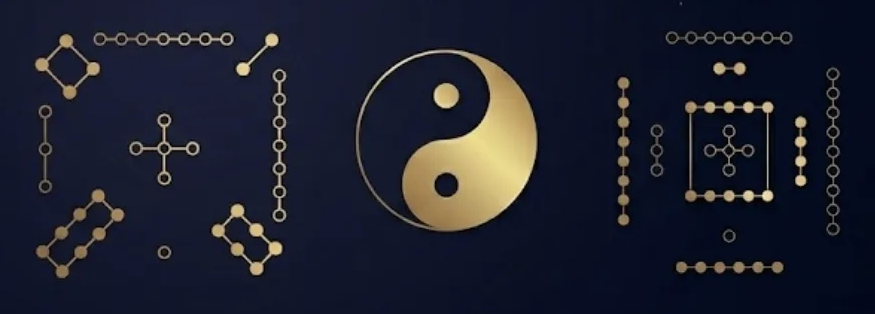
Among the Five Arts, “Ming” (命, Destiny) is the study of understanding one’s life through reasoned analysis of fate, so as to align with the natural order and improve one’s life path. It is based primarily on a person’s birth time and the principles of Yin-Yang and the Five Elements (阴阳五行), allowing one to foresee tendencies and act wisely — moving toward fortune and away from misfortune.
Major Methods:
- Astrology-Based Systems (占星术): Observing celestial bodies and their movements to calculate human destiny. Systems like Purple Star Astrology (Zi Wei Dou Shu 紫微斗数), Five Star Method, and Seven Luminaries Four Excesses all belong to this category.
- Stem-Branch Systems (干支术): Arranging the Heavenly Stems and Earthly Branches of a person’s birth year, month, day, and hour into what is commonly known as the Eight Characters (Ba Zi 八字). Classic texts in this tradition include San Ming Tong Hui, Qiong Tong Bao Jian, and Di Tian Sui.
Among all these methods, Zi Wei Dou Shu (紫微斗数, Purple Star Astrology) stands out as one of the most refined and precise. By charting the position of the Purple Emperor Star and over a hundred other stars at the moment of your birth, it reveals a detailed map of your innate strengths, challenges, life phases, relationships, and career trajectory. Unlike generic horoscopes, a Zi Wei Dou Shu reading is deeply personal — a mirror of your inner nature and your life’s unfolding pattern. Zi Wei Dou Shu is known as the “Knowledge of Emperors” and also revered as the “Supreme Divine Art under Heaven.” If you’d like to explore this ancient art more deeply, we’ve written a dedicated guide that walks you through its origins, how it works, and what a reading can illuminate. 👉 [Read the Full Guide to Zi Wei Dou Shu]
Curious about your own destiny chart?
A professional Zi Wei Dou Shu reading
can help you understand your natural gifts,
the timing of major life shifts,
and how to navigate challenges
with clarity rather than resistance.
👉 [Explore Your Destiny with Zi Wei Dou Shu]
4. Physiognomy (相) — Reading the Visible Signs
“Xiang” (相, Physiognomy) is the art of observing visible forms and patterns to discern underlying truths. It traditionally includes five subcategories:
- Seal Reading (印相): Observing a person’s seal or stamp to determine fortune — in ancient times, the seal symbolized identity and authority.
- Name Reading (名相): Analyzing personal names or business names to interpret their energetic influence.
- Face and Palm Reading (人相): Divided into facial physiognomy and palmistry, this reads the lines, features, and complexion of the face and hands.
- Home Feng Shui (家相): Observing the layout, arrangement, and energy flow of a residence to support the well-being of its inhabitants.
- Tomb Feng Shui (墓相): The art of selecting and positioning burial sites for ancestors, believed to influence the fortune of future generations.
5. Divination (卜) — Foreseeing and Managing Events
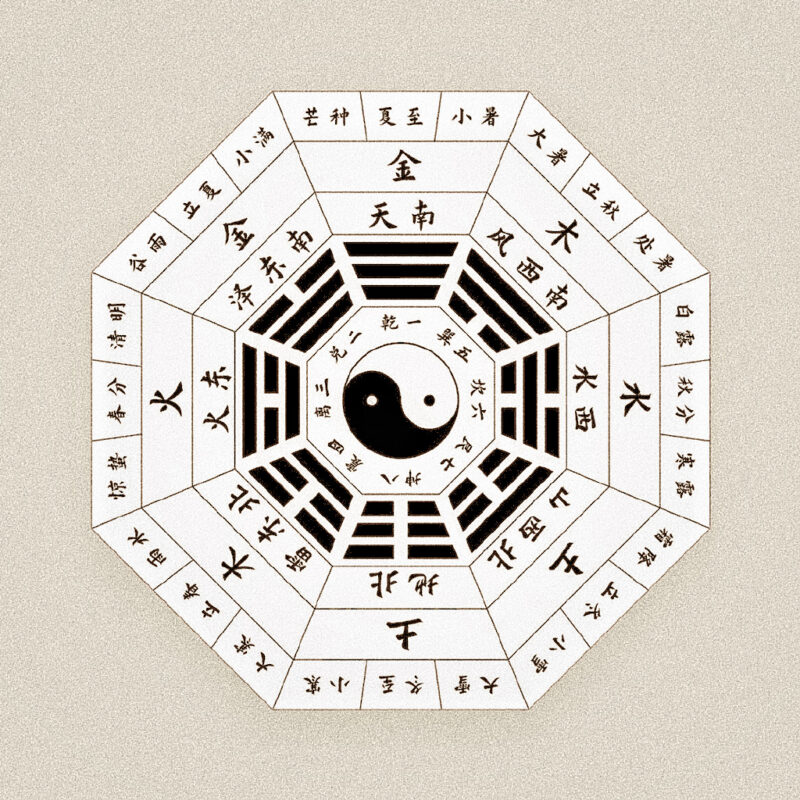
“Bu” (卜, Divination) includes fortune-telling, date selection, and strategic analysis. Its purpose is to predict outcomes and guide decision-making.
- Fortune-Telling (占卜): Based on the I Ching (易经), this method interprets how the three realms — Heaven, Earth, and Humanity — interact and constrain one another, revealing the likely outcome of any situation.
- Strategic Selection (选吉): Represented by Qi Men Dun Jia (奇门遁甲), this method uses spatial arrangement, ritual, and talismans to neutralize unfavorable factors. It was historically used in military strategy.
- Situational Analysis (测局): Represented by Tai Yi Shen Shu (太乙神数), this uses twelve movement hexagrams to calculate national destiny, historical cycles, and the rise and fall of dynasties.
These Five Arts are not separate disciplines — they are branches of a single tree, rooted in the same Taoist understanding of the cosmos and the human being. Whether through cultivating the body, healing the sick, understanding destiny, reading the visible world, or foreseeing what lies ahead, each path offers a way to live with greater harmony, wisdom, and peace.
And for those drawn to the art of destiny, the stars may have more to reveal than you think.
The Five Arts are not five separate roads.
They are five gateways,
each opening onto the same ancient truth:
The Tao moves through all things.
Even now.
Even here.
Even in you.
👉 [Discover Your Zi Wei Dou Shu Chart Now]
If you’d like to explore the philosophical roots behind the Five Arts, the Stanford Encyclopedia of Philosophy offers an excellent scholarly overview of Taoist thought. Read more here: Stanford Encyclopedia of Philosophy — “Taoism”