
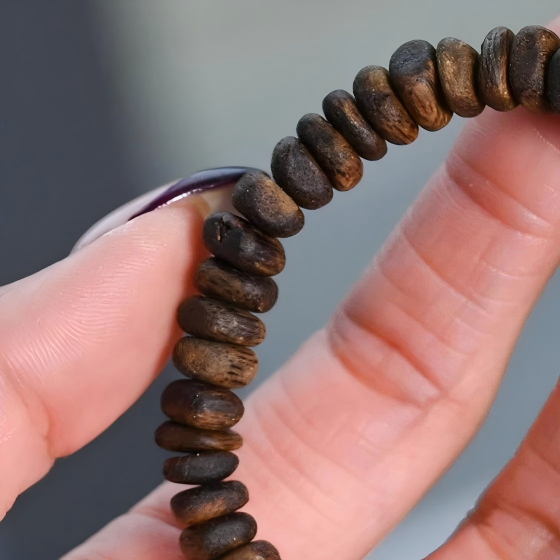
How to Choose an Agarwood Bracelet? Some materials ask to be chosen slowly.
Agarwood is one of them.
Unlike ordinary wood bracelets, agarwood is rarely understood through appearance alone. Its value is not only in color, darkness, or grain, but in the balance between resin, structure, aroma, and the way the material settles into daily use. Two bracelets may look similar in photographs and yet feel entirely different when worn.
For this reason, choosing an agarwood bracelet is not simply a matter of selecting the highest grade or the most expensive piece. It is a matter of choosing the material character that suits your rhythm, your sensitivity, and the role the object will hold in your life.
Begin with use, not rarity
Many first-time buyers begin by asking which agarwood is best.
A more useful question is: what kind of presence are you looking for?
Some bracelets are suited to everyday wear — lighter, quieter, more easily integrated into daily life. Others are better appreciated in slower moments, where density, resin depth, and aromatic nuance can be felt more fully. A rare or more concentrated bracelet is not always the right first choice. Sometimes the better piece is simply the one you will continue to wear.
The most meaningful choice is rarely made by status alone. It is made by fit.
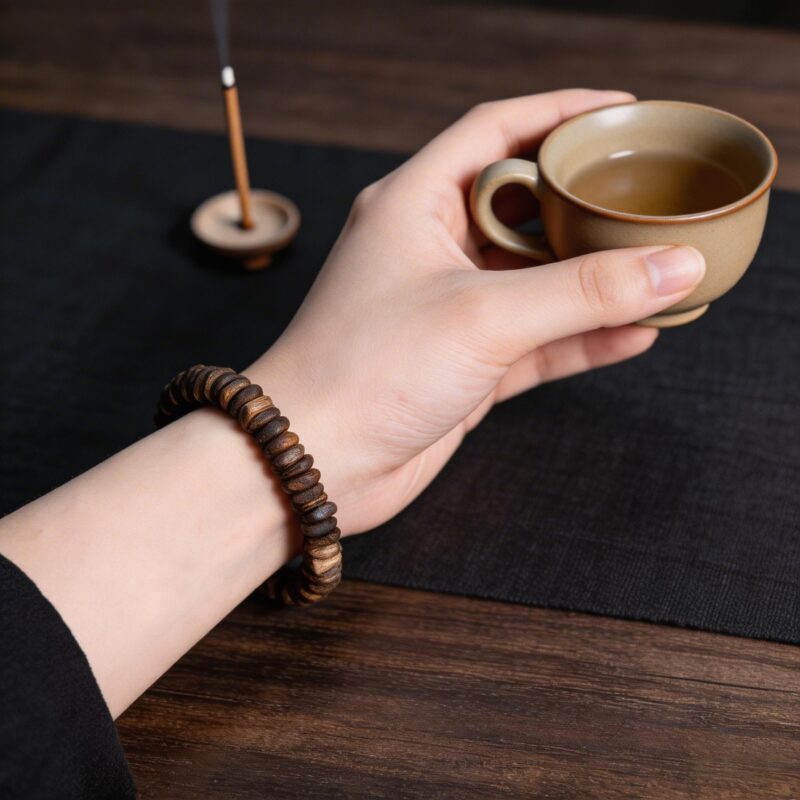
Understand what defines the material
Agarwood forms when resin develops within the wood over time. This is what gives the material its depth, variation, and character. But not all agarwood expresses itself in the same way.
When choosing an agarwood bracelet, the experience is shaped by several factors:
- origin
- resin concentration
- density
- bead size
- aromatic character
- intended use
A bracelet chosen for daily wear may call for clarity, restraint, and comfort. A bracelet chosen for handling, collecting, or meditation may call for more depth, more resin structure, and a more concentrated presence.
Origin is not a fixed measure of resin level
One important point is often misunderstood: origin alone does not determine resin concentration or overall grade.
Hainan agarwood, Nha Trang agarwood, and other regional materials can all appear across different levels of resin development and density. In practice, this means that material from more than one origin may exist in non-sinking, high-density, or sinking-grade forms, depending on the individual piece.
For this reason, origin should not be treated as a simple hierarchy of value. A Hainan bracelet should not automatically be understood as lower-grade material, just as a Nha Trang bracelet should not automatically be judged superior by origin alone.
A more accurate way to choose is to separate material profile from material concentration. Origin may shape the aromatic character and overall expression of the bracelet, but resin structure, density, and grade still need to be understood on their own terms.
This matters especially when comparing Hainan and Nha Trang material. Each can produce refined and high-level selections. The difference is often not whether one origin is “better,” but how each expresses aroma, structure, and presence in a different way.
Origin changes the overall expression
Origin is not the only factor, but it often shapes the overall tone of the bracelet.
Hainan agarwood
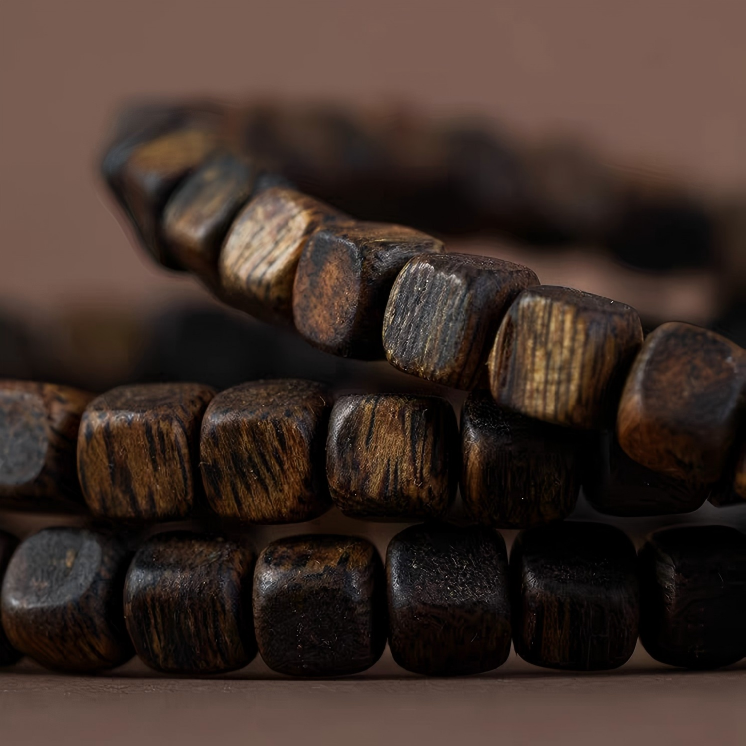
Hainan agarwood is often appreciated for its quiet, inward, and more restrained expression. In some selections, it may feel cleaner, drier, and more contained in character, which makes it especially appealing to buyers who value subtle presence over projection.
At the same time, Hainan material should not be understood as lower-grade by default. Like other origins, it can appear across different levels of resin development, density, and refinement, including more concentrated and higher-end selections. What distinguishes it is not simply “less” or “more,” but a different relationship between aroma, structure, and presence.
For some wearers, this makes Hainan especially compelling: it offers clarity, composure, and material depth without needing to feel excessive. In stronger selections, that restraint can become one of its greatest strengths.
Vietnam agarwood
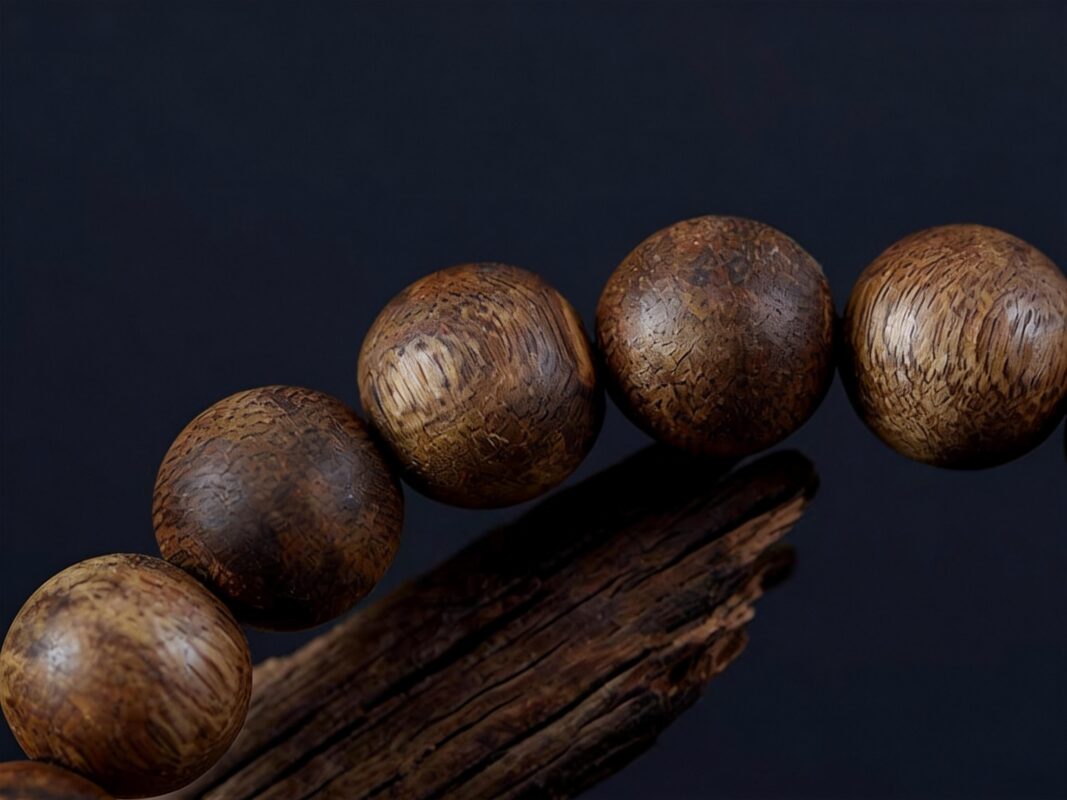
Vietnam agarwood is often valued for a more layered and expressive aromatic character. In many selections, it can feel richer, rounder, or more immediately legible in handling, which is why it is often strongly associated with aromatic depth.
But as with Hainan material, origin alone should not be used as a shortcut for grade. Vietnam material also spans a range of resin levels and structural qualities. Its appeal lies not simply in status, but in the particular way aroma, sweetness, texture, and diffusion come together.
For some buyers, Vietnam material feels more open and aromatic in expression. For others, Hainan material feels more inward and refined. The better choice is not decided by origin name alone, but by the specific character of the piece and the experience the wearer is looking for.e.
High-resin or Kyara-style selections
High-resin or Kyara-style pieces are usually more concentrated in structure and expression. These are not necessarily the right choice for everyone. They tend to feel more specific, more inward, and less casual.
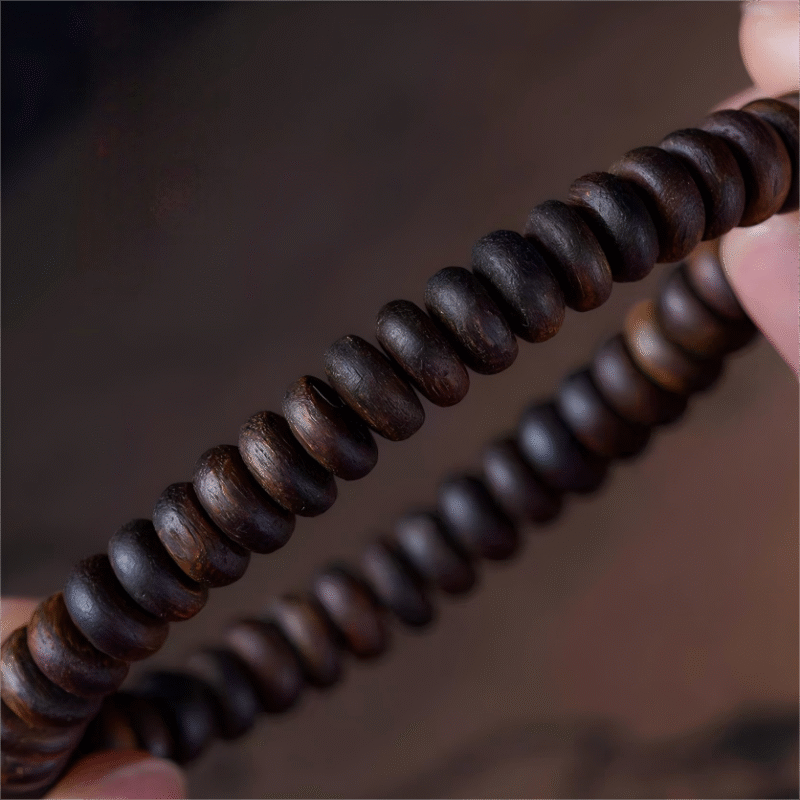
They are often better suited to:
- experienced buyers
- collectors
- slow handling and deeper appreciation
- those who already know the type of agarwood they prefer
For some, this level of material intensity is exactly the point. For others, it may be too specialized for everyday use.
Resin structure matters more than color alone
One of the most common mistakes is to judge agarwood primarily by visual darkness.
A darker tone may suggest resin concentration, but color alone does not define quality. A good agarwood bracelet should feel convincing as material. The grain should feel coherent, the density should feel natural, and the overall structure should align with the way the bracelet is positioned.
A bracelet should not be chosen because it appears dramatic in photographs. It should be chosen because its material logic feels true.
Bead size changes the experience
Size affects not only appearance, but also the way a bracelet is worn and perceived.
Smaller beads
Smaller beads tend to feel lighter, quieter, and easier to wear throughout the day. They are often better for:
- daily wear
- layering
- discreet material presence
- a softer, more adaptable fit
Medium beads
Medium beads often offer the best balance between comfort and substance. They are well suited to:
- all-day wear
- a more noticeable but still restrained bracelet
- buyers seeking both presence and ease
Larger beads
Larger beads emphasize material identity more strongly. They are often chosen for:
- slower handling
- more visible presence
- stronger tactile weight
- dedicated appreciation of the material itself
If you are uncertain, choose the size you are most likely to wear consistently. Continuity matters more than impression.
Choose according to the role the bracelet will hold
A useful way to choose is to ask what role the bracelet is meant to serve.
For daily wear
Choose a piece that feels:
- balanced
- wearable for long periods
- gentle in aromatic presence
- easy to return to each day
For meditation or quiet handling
Choose a piece that feels:
- more inward
- more stable in density
- less decorative and more material-centered
- suitable for slower appreciation
For collecting
Choose a piece that feels:
- more concentrated
- more specific in resin character
- visually and materially convincing
- aligned with a clear preference, not only a label
Common mistakes first-time buyers make
Choosing only by price
Price may reflect rarity, resin depth, or selection quality, but it does not guarantee suitability.
Choosing only by appearance
Agarwood is not only visual. Weight, texture, atmosphere, and wearability matter just as much.
Starting with the most intense piece
A more concentrated bracelet is not always the best first experience. Sometimes a quieter piece creates a stronger long-term relationship with the material.
Ignoring personal rhythm
The right bracelet is not the one that sounds most impressive, but the one that fits naturally into how you live.
A practical way to decide
If you want a simple framework:
Choose Hainan-style material if:
you want subtlety, ease, and a quieter daily presence. Explore Hainan-style →
Choose Vietnam-style material if:
you want more layered aromatic character and a stronger sense of material richness. Explore Vietnam-style →
Choose high-resin or Kyara-style material if:
you already understand your preferences and want a more concentrated, collector-oriented experience.
Agarwood should not be chosen by origin name alone. A well-selected bracelet depends on the individual material — its resin structure, density, aromatic character, and intended use — not only on where it comes from. Explore high-resin →
Final thoughts
Agarwood is best chosen with patience.
The right bracelet is rarely the one with the loudest claim. It is the one whose material, weight, aroma, and use all feel aligned. Some people need a bracelet that disappears gently into the day. Others are looking for something deeper, denser, and more contemplative.
There is no universal best choice.
There is only the point where the material begins to feel right in the hand, right on the body, and right over time.
That is where the real choice begins.
Explore our Agarwood Collection →
For botanical reference, see Kew Plants of the World Online – Aquilaria malaccensis.
For trade and legal context, see CITES – Agarwood-producing taxa.
For a general background on agarwood, see FAO – Agarwood overview.
FAQ – How to choose an agarwood bracelet
Is Hainan agarwood always lower grade than Nha Trang agarwood?
No. Origin alone does not determine grade, resin concentration, or density. Hainan agarwood, Nha Trang agarwood, and other regional materials can all appear in different levels of resin development, including non-sinking, high-density, and sinking-grade forms. The difference between origins is better understood as a difference in aromatic profile and material character, not a simple hierarchy of value.
Can Hainan agarwood also be sinking grade?
Yes. Hainan agarwood can also appear in higher-density and sinking-grade selections. It should not be treated as entry-level by default. In practice, both Hainan and Nha Trang material may exist across different resin and density levels, depending on the individual piece.
Should I choose an agarwood bracelet mainly by origin?
Not by origin alone. Origin matters, but it should be considered together with resin structure, density, bead size, aromatic profile, and intended use. A well-chosen bracelet depends on the character of the specific material, not only on the region named in the title.
What is the best agarwood bracelet for daily wear?
For daily wear, many people prefer a bracelet that feels balanced, comfortable, and easy to return to over time. This usually means choosing a piece with a wearable bead size, a stable material feel, and an aromatic presence that remains close rather than overly assertive.
Is a more expensive agarwood bracelet always better?
Not necessarily. A higher price may reflect rarity, resin concentration, selection level, or origin, but it does not automatically mean better fit for every wearer. The best bracelet is the one that matches your use, your sensitivity to the material, and the role the bracelet will hold in daily life.
How do I know if I should choose a lighter or more concentrated piece?
A lighter piece is often better for daily wear, longer use, and a quieter presence. A more concentrated piece is often better for slower appreciation, handling, or collecting. If you are buying your first agarwood bracelet, it is usually better to choose for fit and wearability rather than intensity alone.
Does darker color always mean better agarwood?
No. Darker color may suggest stronger resin presence, but color alone is not a reliable measure of quality. A bracelet should be judged by the overall integrity of the material, including grain, density, resin structure, and the way it feels in use.
What matters more when choosing an agarwood bracelet: grade or fit?
Fit matters first. Grade is meaningful, but a bracelet should still suit your way of wearing it. A piece chosen for daily use, meditation, or collecting should feel aligned with that purpose. The right bracelet is not simply the highest label, but the one whose material character feels right over time.