Taoist Meditation for Beginners: The Ancient Practice of Quiet Sitting
May 26, 2026
For centuries, Taoist meditation has been practiced as a path toward inner stillness, emotional balance, and natural well-being.
Unlike modern productivity-focused mindfulness, traditional Taoist meditation emphasizes returning to a calm and natural state — where both body and mind can fully relax.
One of the most important Taoist practices is known as Quiet Sitting, a simple yet profound form of meditation that combines breath awareness, mental stillness, and deep relaxation.
What Is Taoist Quiet Sitting Meditation?
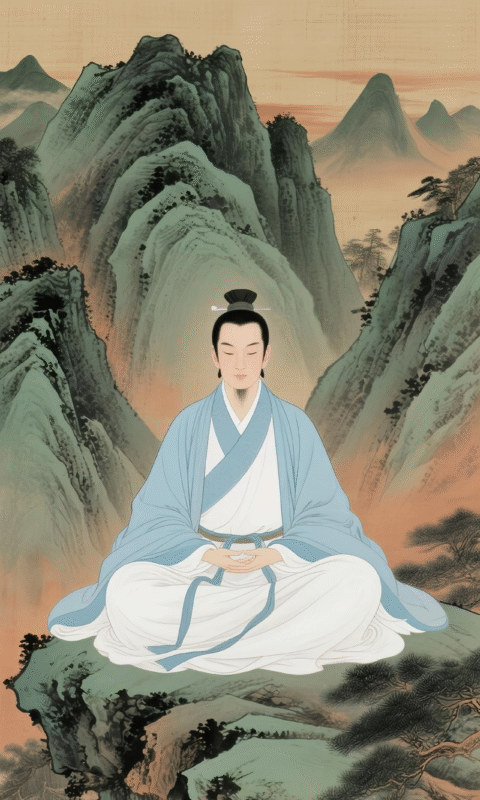
Taoist Quiet Sitting is a traditional meditation practice rooted in ancient Chinese Taoist philosophy.
The purpose is not to “force concentration” or “empty the mind,” but to gradually allow thoughts, emotions, and inner tension to settle naturally.
In Taoist teaching, true stillness begins with calming the heart-mind.
When the mind is constantly occupied by desire, anxiety, fear, comparison, or attachment, inner energy becomes disturbed. Taoist meditation seeks to restore harmony by allowing the mind to return to quietness.
This is why Taoist practitioners often say:
“When the mind becomes still, the breath naturally settles. When the breath settles, one returns to the root.”
The Foundation of Taoist Meditation: Calming the Mind
In Taoist practice, inner stillness is considered the foundation of all spiritual cultivation.
Traditional teachings describe six qualities that help nourish and stabilize the mind:
Openness
Integrity
Emotional balance
Stability
Calmness
Inner quiet
As these qualities develop, one gradually releases:
restless thinking
emotional agitation
fear and anxiety
excessive desire
anger and resentment
attachment to outcomes
The goal is not suppression — but natural release.
How to Practice Taoist Meditation
1. Relax the Entire Body
Before calming the mind, Taoist meditation first emphasizes relaxing the body.
Whether sitting or lying down:
loosen unnecessary muscular tension
allow the shoulders and jaw to soften
keep breathing natural
avoid rigid posture
When practiced correctly, the body feels comfortable rather than strained.
Long sitting should not produce excessive numbness, pain, or irritation.
2. Listen to the Breath
One of the oldest Taoist breathing methods is called Listening to the Breath.
Instead of controlling breathing, simply become aware of the natural rhythm of inhaling and exhaling.
Do not intentionally deepen or slow the breath.
Just quietly notice:
the inhale
the exhale
the subtle movement of breathing
Over time, the mind naturally becomes calmer.
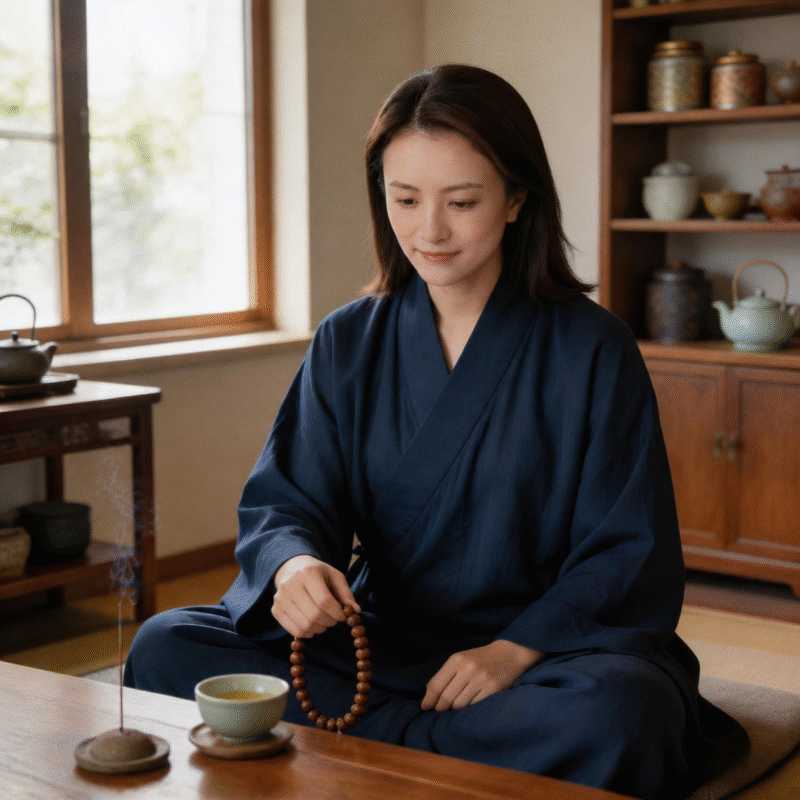
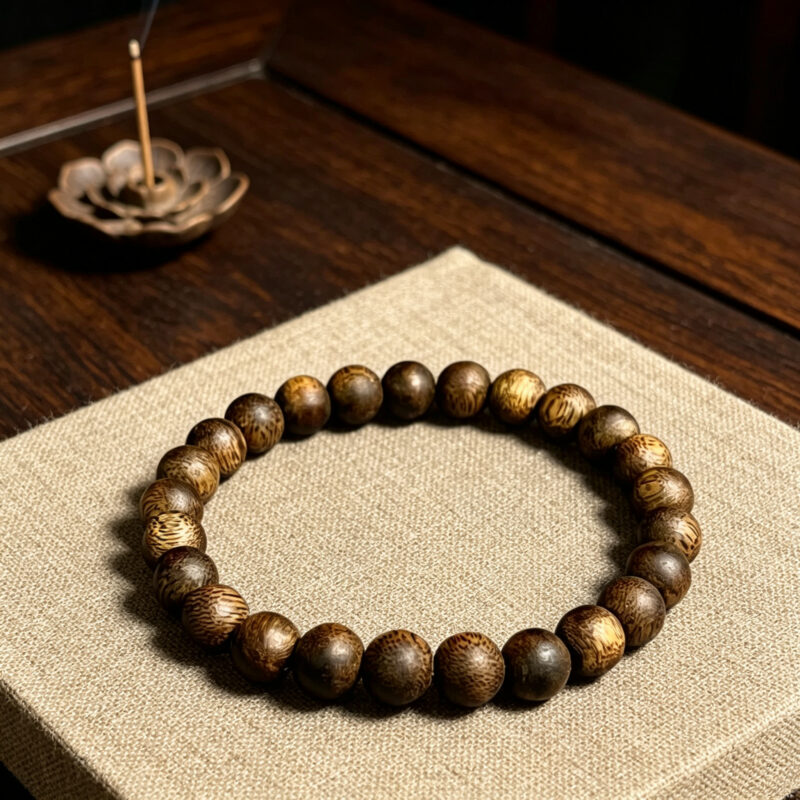
Quiet sitting is not only about posture and breathing, but also about creating an environment that supports stillness. Many practitioners incorporate natural incense, agarwood bracelets, or tea rituals into meditation to encourage a deeper sense of calm and presence.
3. Count the Breath
Another traditional Taoist technique is Breath Counting.
Gently rest your gaze downward toward the nose and mentally count each breath cycle.
The important principle is:
do not force concentration
do not become overly tense
remain relaxed yet aware
After continued practice, mental activity gradually slows down on its own.
Returning to Inner Stillness
As practice deepens, Taoist meditation encourages letting go of unnecessary mental attachment:
not dwelling on the past
not clinging to present worries
not anxiously predicting the future
This allows the mind to enter a state of natural rest.
In Taoist philosophy, true stillness is not created by force.
It arises through:
relaxation
natural breathing
emotional quietness
non-attachment
inner balance
Benefits of Taoist Meditation
Many practitioners use Taoist meditation to support:
stress reduction
emotional balance
better sleep
mental clarity
nervous system relaxation
mindfulness and self-awareness
spiritual grounding
While Taoist meditation is not a medical treatment, it has traditionally been regarded as an important part of holistic wellness and longevity practices.
Taoist Meditation vs Modern Mindfulness
Taoist Meditation
Modern Mindfulness
Focuses on returning to natural harmony
Often focuses on stress reduction
Emphasizes breath, energy, and stillness
Emphasizes present awareness
Rooted in Taoist philosophy
Often secular or therapeutic
Encourages effortless calm
Sometimes emphasizes active observation
Both practices can complement each other beautifully.
Yes. Taoist quiet sitting is considered one of the most accessible meditation methods because it emphasizes natural relaxation rather than strict control.
How long should I practice Taoist meditation?
Beginners often start with 10–20 minutes daily. Consistency is more important than long sessions.
Should I control my breathing?
No. Traditional Taoist meditation encourages natural breathing rather than forced breathing techniques.
Can Taoist meditation help with stress?
Many people practice Taoist meditation to reduce stress and calm the nervous system through breath awareness and mental stillness.
What is the difference between Taoist meditation and Zen meditation?
While both emphasize stillness, Taoist meditation traditionally focuses more on natural energy flow, breath harmony, and returning to balance with nature.