
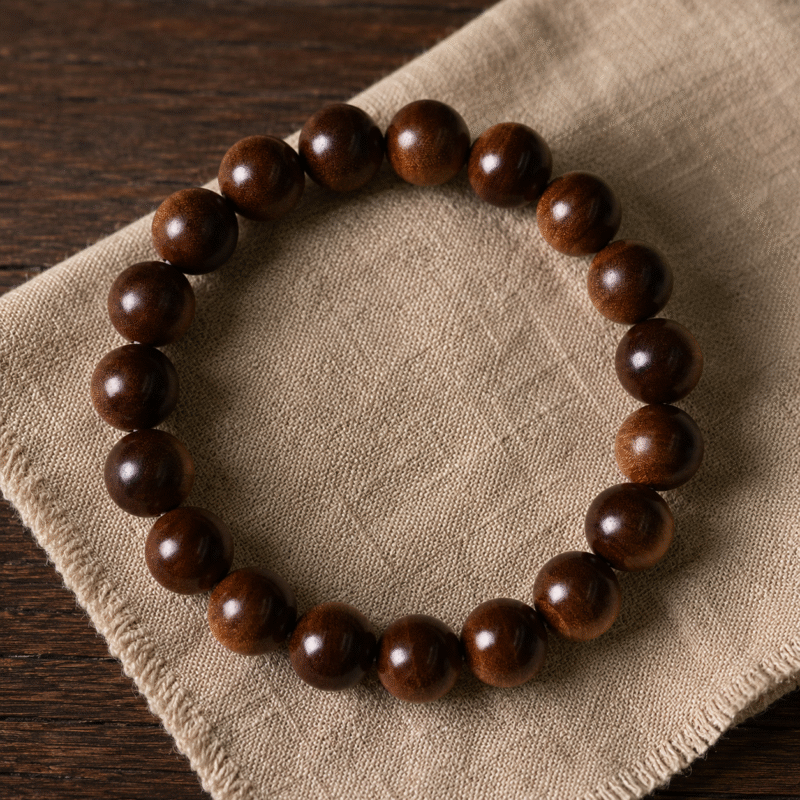
The Mysore old sandalwood beads is one of the most prized forms of Indian sandalwood jewelry. Originating from the Mysore region of Karnataka, India, this sandalwood (Santalum album L.) is known for its exquisite fragrance, rich material quality, and the natural beauty of its beads.
Origin: Mysore, India
The Mysore region has been a historic center for Indian sandalwood cultivation. Mysore sandalwood, or Santalum album, is grown under carefully managed conditions to ensure long-term maturation, typically over several decades. Trees develop dense heartwood over years, which is highly aromatic and forms the basis of premium beads.
The Royal Botanic Gardens, Kew records Santalum album L. as an accepted species, widely known as Indian sandalwood. This species is highly valued for both its natural fragrance and fine grain, making it ideal for bracelets.
Material and Bead Selection
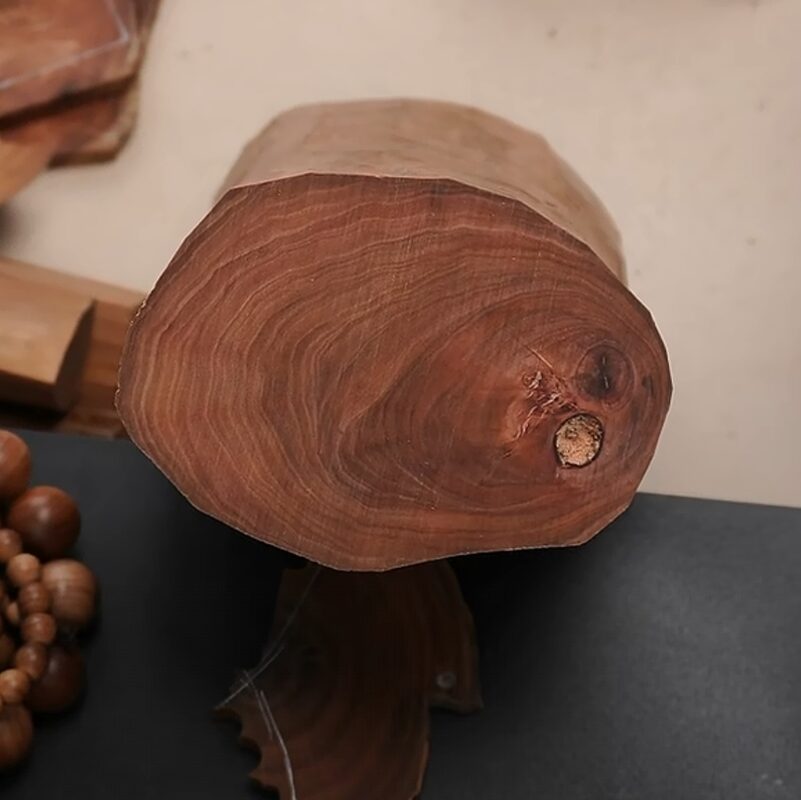
Mysore old sandalwood beads are usually made from heartwood, which is the densest, most aromatic, and durable part of the tree. Sapwood, the outer lighter layer, is less fragrant and rarely used for premium beads. The heartwood contains natural oils that give the beads their creamy texture and long-lasting scent.
The quality of the material is classified by density and oil content. High-density, resin-rich wood is used for Deep Reserve or advanced-grade bracelets, while lower-density heartwood may appear in more common grades. Each bead is carefully cut and polished to maintain uniform shape while preserving natural grain and scent.
Natural Aroma
The fragrance of Mysore sandalwood is soft, warm, and creamy. It is subtly sweet and woody, lingering without being overpowering. Unlike artificially scented jewelry, natural Mysore sandalwood releases a gentle aroma when worn close to the skin. Scientific studies confirm that the essential oils in Santalum album heartwood provide calming and relaxing properties (source).
Bead Color and Gradation
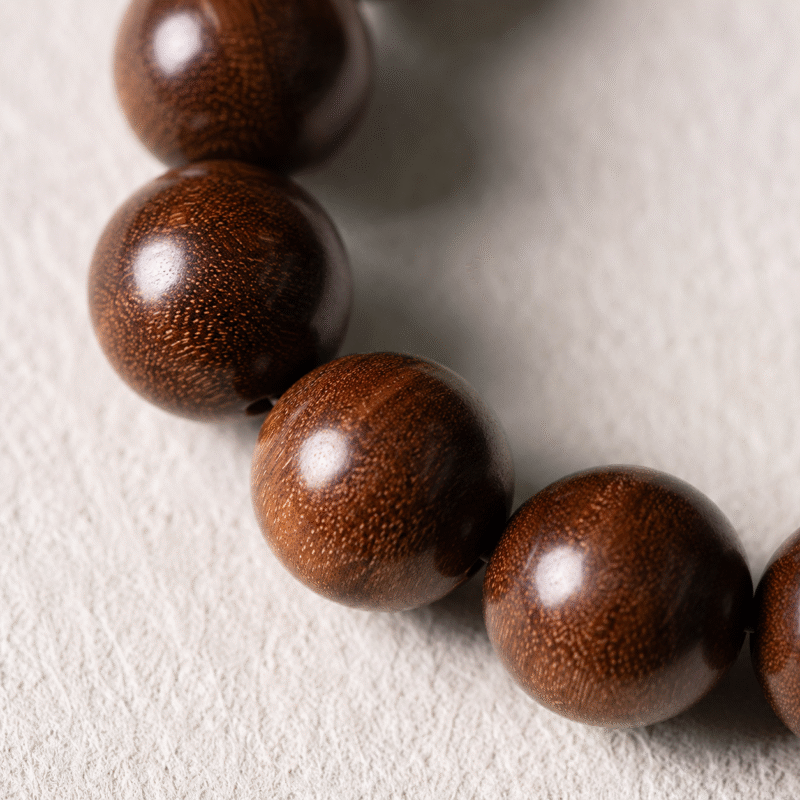
Mysore old sandalwood beads display a range of colors, from pale yellow-gold to deep reddish-brown. This variation occurs naturally due to:
- Age of the tree: older heartwood tends to be darker.
- Density and oil content: more resin-rich wood appears deeper in color.
- Exposure within the tree: beads cut from inner heartwood may be darker, while outer layers are lighter.
Within a single bracelet, gradual transitions of color from light to dark are common. This natural gradation enhances visual interest and indicates authenticity. Beads with uniform color often come from specially selected heartwood, but subtle variation is a hallmark of natural Mysore sandalwood.
Wood Grain and Texture
Mysore sandalwood exhibits fine, straight grain with gentle texture lines. Beads may show subtle swirls or linear patterns, creating a natural, organic aesthetic. The grain is typically uniform but may vary slightly due to the tree’s growth patterns. High-quality beads feel smooth to the touch and develop a soft sheen over time with handling.
Texture and grain are not just aesthetic; they influence tactile experience. When used as a bracelet, the beads provide a soft, comforting touch that engages the wearer’s senses daily.
Bead Size and Shape
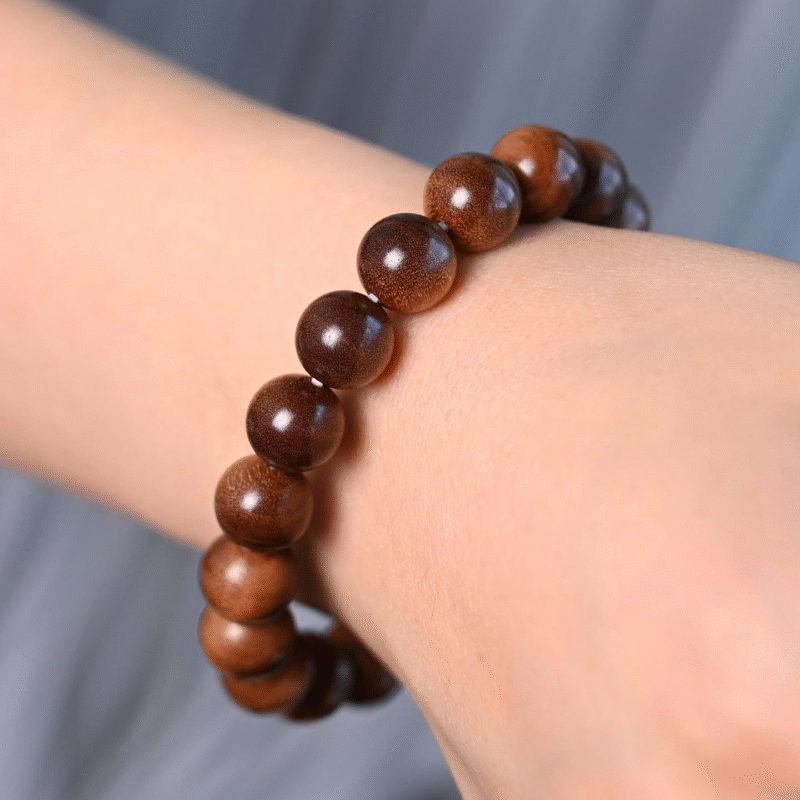
Common Mysore old sandalwood beads sizes include 6mm, 8mm, and 10mm beads, with some meditation-specific 108-bead strands. Smaller beads (6mm) offer subtle elegance and layering possibilities. Medium beads (8mm) provide balance and versatile daily wear. Larger beads (10mm) offer more visual and tactile presence, often preferred for standalone bracelets or statement pieces.
Care and Maintenance
To preserve your Mysore old sandalwood beads:
- Avoid soaking in water or exposing beads to chemicals.
- Keep away from perfume or strong scents.
- Remove before showering, swimming, or strenuous activity.
- Store in a dry, shaded place to avoid direct sunlight.
- Handle with clean hands to maintain natural oils and sheen.
With regular wear, the beads may gradually develop a softer surface and deeper tone, enhancing their tactile and aromatic qualities.
Why Choose a Mysore Old Sandalwood Beads?
Mysore old sandalwood beads are unique for several reasons:
- Soft, natural fragrance without artificial enhancements
- Organic color variations and natural gradation across beads
- Fine, smooth grain providing a pleasant tactile experience
- Durable, dense heartwood for long-lasting wear
- Versatile accessory for meditation, daily wear, or quiet reflection
External References
- Kew Science: Santalum album L.
- Britannica: Sandalwood
- National Library of Medicine: Indian Sandalwood Oil
FAQ
What is Mysore sandalwood?
Mysore sandalwood is Santalum album grown in Karnataka, India. It is prized for its dense heartwood, fine grain, and naturally rich fragrance.
Why do Mysore sandalwood beads have different colors?
Bead colors vary due to tree age, heartwood density, and natural oil content. Lighter beads come from younger or outer heartwood; darker beads from older, resin-rich inner heartwood. Gradation is natural and indicates authenticity.
How do I care for a Mysore old sandalwood beads?
Avoid water, chemicals, and direct sunlight. Store in a dry place, handle with clean hands, and wear regularly to allow natural oils to polish the beads over time.
Can Mysore sandalwood be used for meditation?
Yes. Its subtle aroma and smooth tactile beads make it ideal for meditation, mindfulness, and quiet reflection.
Are all Mysore old sandalwood beads the same?
No. Each bracelet is unique, with individual variations in color, grain, and aroma reflecting the natural characteristics of the tree.
Explore Mysore Sandalwood
Explore Our Sandalwood Collection →
How to Choose a Sandalwood Bracelet: Size, Scent, and Daily Use →