
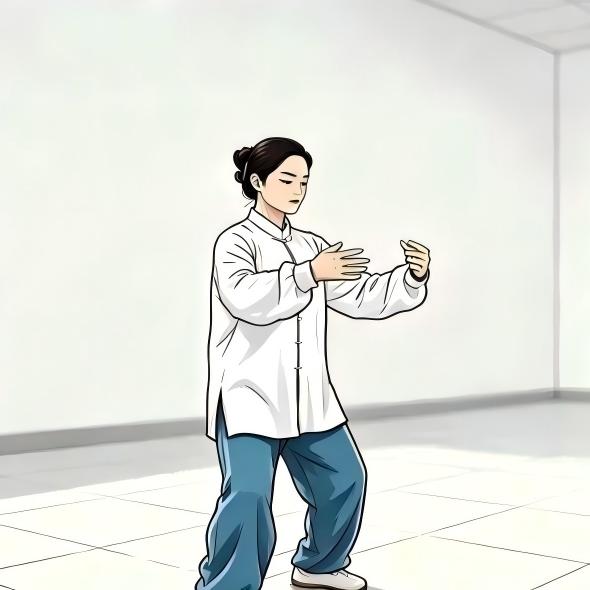
What if the deepest strength isn’t about doing more — but about returning to what has always been there?
This is the quiet question at the heart of Taoist Qigong.
For thousands of years, Taoist practitioners have understood something that modern life often forgets: the body and mind are not separate. They are one river, flowing from the same source. When the river flows freely, there is health, clarity, and a quiet sense of being at home in your own skin. When it becomes blocked — by stress, by tension, by the endless noise of daily life — that sense of ease begins to fade.
Taoist Qigong is the art of clearing the river.
A Practice with Deep Roots
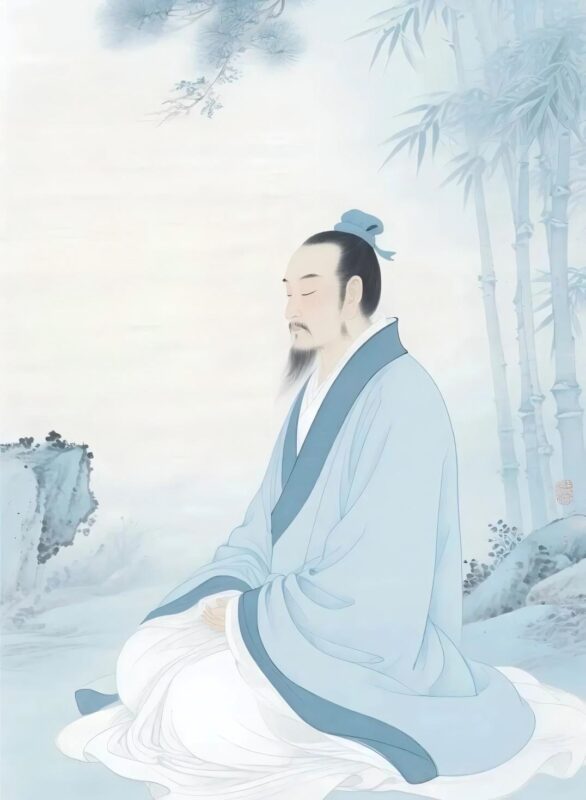
The tradition of Taoist Qigong stretches back over two thousand years, rooted in the ancient pursuit of harmony between human beings and the natural world. Taoist sages observed the rhythms of nature — the stillness of mountains, the flow of water, the way a tree stands rooted through every season — and found within them a mirror for the human body and spirit.
From these observations grew a rich tradition of cultivation practices. Some are still, like sitting meditation and standing meditation. Some are flowing, like Tai Chi. Some are gentle and deliberate, like Ba Duan Jin and Wu Qin Xi. Some work deeply with the body’s structure, like Yi Jin Jing and the Eight Brocades of Diamond.
What unites them all is not the shape of the movement, but the principle beneath it: Qi — the vital energy that animates all life — can be cultivated, guided, and harmonized.
To understand the philosophical roots of Taoist Qigong, one can trace back to the Taoist tradition of living in harmony with the Dao, as elaborated by scholars at Stanford Encyclopedia of Philosophy.
How It Works: The Inner Logic of Taoist Qigong
In Taoist understanding, Qi flows through channels in the body — much like water through a riverbed. When Qi flows smoothly, the body functions well. The mind is calm. Emotions settle. When Qi stagnates or becomes disordered, we feel it as fatigue, restlessness, or a sense of being “stuck.”
Taoist Qigong practices work with this inner landscape. Through gentle movement, stillness, breath, and awareness, the practitioner learns to clear the channels and guide Qi where it is needed. This is not a belief system. It is a practice — something you do, not something you accept.
- Stillness practices like sitting meditation and standing meditation train the mind to settle. They build internal awareness and a sense of rooted calm.
- Flowing practices like Tai Chi and Wu Qin Xi teach the body to move with ease and continuity, releasing tension and restoring natural rhythm.
- Structural practices like Ba Duan Jin, Yi Jin Jing, and the Eight Brocades of Diamond work deeply with the body’s fascia and energy channels, clearing long-held blockages and building resilience.
Each practice is a doorway. Each works in its own way. Together, they form a complete system for cultivating Qi.
Qigong is increasingly recognized for its health benefits →
An Invitation to Practice
At ZEN TAO, we are preparing a series of online Qigong courses guided personally by our founder J.Li — a practitioner who has walked this path for many years. These are not fitness programs dressed in Eastern imagery. They are quiet, grounded introductions to Taoist Qigong as it has been practiced for centuries.
- Sitting Meditation — returning to stillness
- Standing Meditation — rooting into the earth
- Ba Duan Jin — unfolding the silk of the body’s channels
- Wu Qin Xi — awakening the primal vitality within
- Yi Jin Jing — renewing the tendons and structure
- Eight Brocades of Diamond — forging inner strength
- Tai Chi — flowing with the duality of movement and stillness
Each course is designed for a small space and a busy life. A few minutes a day is where it begins.
Whether you are drawn to Chinese astrology and the inner map of the self, or to the quiet practice of Taoist meditation and Qigong, there is a door here for you.
This is not about becoming someone else.
It is about returning — to your own body, your own breath, your own quiet center.
Explore Taoist Qigong at ZEN TAO.