
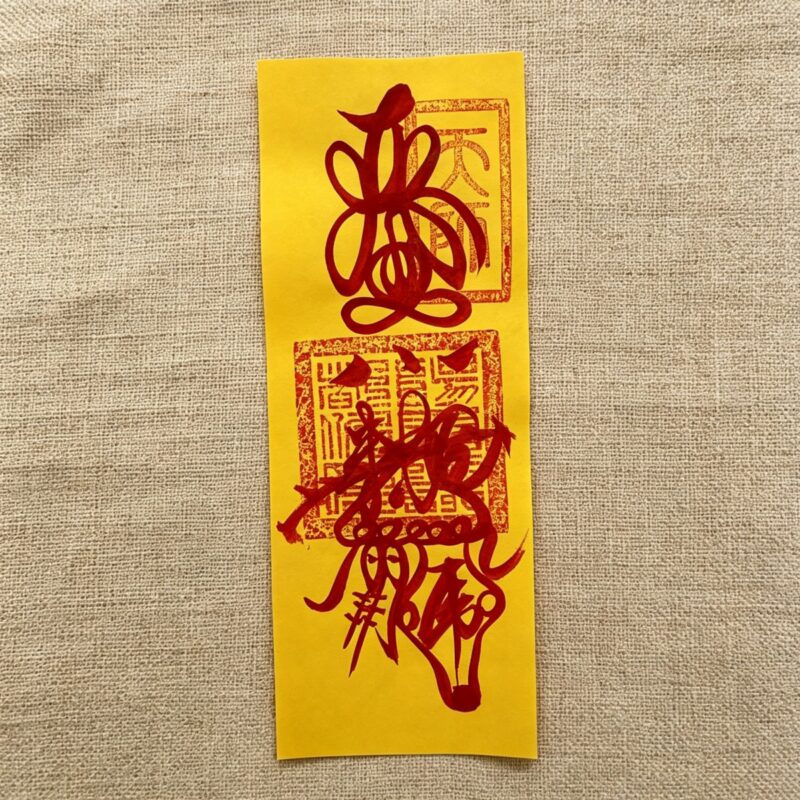
A Zhao Gongming wealth talisman is often misunderstood before it is even held. It is not a ticket to sudden riches, and it is not a piece of paper with a mechanical “power” inside it. It is a cultural object — a mark drawn from a tradition in which wealth, order, and personal conduct were never separate subjects.
To understand this talisman, it helps to begin with the figure whose name it carries: Zhao Gongming.
Zhao Gongming: From Mountain Cultivator to God of Wealth
Zhao Gongming did not begin as a god of wealth. In early Taoist sources, his role was different — at times associated with spirits and guardianship, later absorbed into the protective order of the Taoist pantheon.
During the Ming dynasty, the novel Investiture of the Gods gave him the form most people recognise today. He was titled “Golden Dragon, Wish-Fulfilling, Zhengyi, Dragon-Tiger Dark Altar True Lord” and placed at the centre of a group of wealth-related deities. That group is often called the Five Roads God of Wealth, but the talisman itself is not a “five roads” talisman. It is a Zhao Gongming wealth talisman — a document addressed to him, in his name.
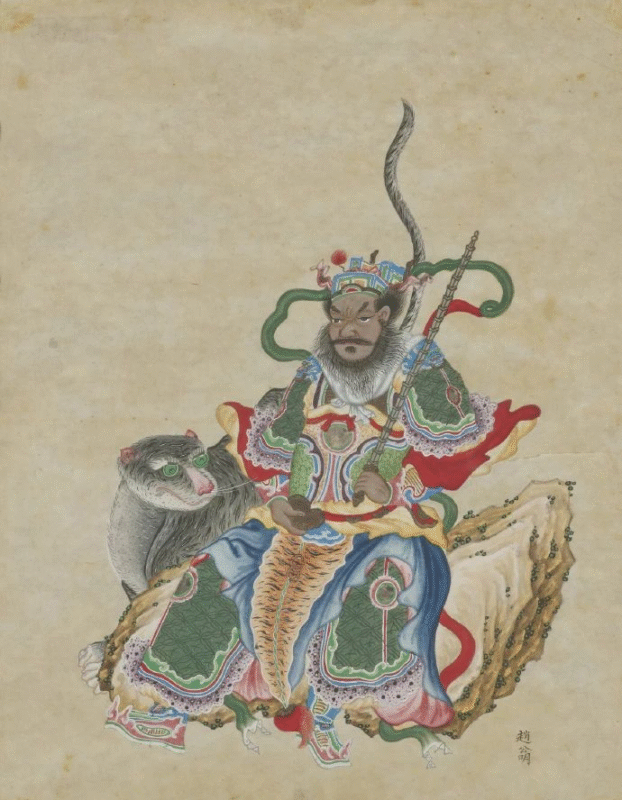
Traditional images show him riding a black tiger, holding an iron whip in one hand and a gold ingot in the other. The tiger and whip point to his role as a guardian. The ingot points to his later association with wealth.
That combination matters. It suggests that wealth, in this tradition, is not imagined as something wild or unrelated to conduct. It is placed within a framework of order, protection, and restraint.
Why Zhao Gongming?
Zhao Gongming is associated with what the tradition often calls rightful wealth — the kind that comes through work, trade, craft, and patience, rather than windfall. This distinction is important. It turns “seeking wealth” from a vague wish into something more grounded: a wish that effort meets its season, and that fair work finds a fair return.
A Zhao Gongming wealth talisman carries this association. It is not a request for money without cause. It is a symbolic reminder that prosperity has a structure — and that honest work, fair dealing, and steady effort are part of that structure.
This is not a modern interpretation. A paper talisman bearing the image of General Zhao Gongming , produced in early 20th-century China, is preserved in the collection of The Metropolitan Museum of Art. It confirms that the form you hold today follows a recognised traditional pattern: a named deity, a defined function, and a structured mark.
What a Zhao Gongming Wealth Talisman Is — and Is Not
A Fu talisman is a traditional written mark. In Taoist practice, it is not drawn casually. The preparation involves ritual cleanliness, focused attention, specific materials, and a single continuous stroke.
This is why traditional talismans are often described as being drawn “in one breath.” The value is not in the pattern alone, but in the discipline of the act: the mind settles, the hand moves once, and the mark is complete. There is no correction and no second pass.
From a modern perspective, this resembles a form of cognitive anchoring — a physical object carrying a clear intention and a long cultural memory. It does not replace action or judgement. It serves as a quiet point of return.
A Zhao Gongming wealth talisman in this tradition is therefore best understood as a cultural and symbolic object. It carries the weight of a tradition, but it does not promise specific outcomes.
Why a Wealth Talisman Looks the Way It Does
A Chinese wealth talisman is not drawn randomly. Its form follows a traditional structure, and each part of that structure has a function.
The head (fu tou) sits at the top. It often begins with three small V-shaped strokes, representing the Three Pure Ones — the highest deities in the Taoist pantheon. The head establishes who the document is addressed to, and by what authority it is issued.
The body (fu dan) is the core. It contains the command (chi ling), followed by the name and title of the deity being invoked. In a Zhao Gongming wealth talisman, this is where his formal title appears, along with symbols associated with his role as a guardian of rightful wealth.
The foot (fu jiao) seals the document. It is often drawn as a stylised compound character, such as the Gang Yin seal, representing the authority of the lineage that issued the talisman. The foot is not decoration. It is a statement of validity.
This three-part structure — head, body, foot — is what makes a talisman a talisman, rather than a decorative drawing. It is a written form with a grammar: an address, a command, and a signature.
A Zhao Gongming wealth talisman drawn in this tradition is therefore not a picture of wealth. It is a structured invocation — a form that has been used for centuries to place the idea of prosperity within a framework of order, name, and lineage.
The Quiet Meaning of a Wealth Talisman
In traditional usage, a talisman associated with Zhao Gongming is often linked to the idea of rightful wealth — the kind that comes through work, trade, craft, and patience, rather than windfall.
That distinction is worth keeping. It turns “seeking wealth” from a vague wish into something more grounded: a wish that effort meets its season, and that fair work finds a fair return.
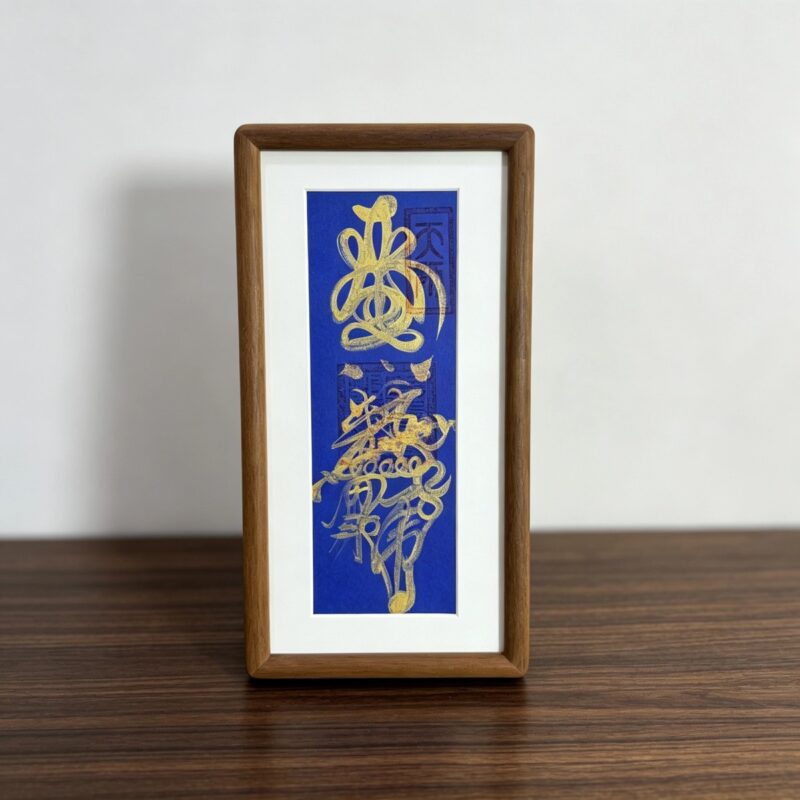
A talisman may be folded and carried, or framed and placed on a desk. In either form, its function remains symbolic. It marks an intention. It does not guarantee a result.
Choosing and Keeping a Zhao Gongming Wealth Talisman
If you are drawn to a Zhao Gongming wealth talisman, a few things are worth remembering.
It is a cultural object, not a promise. A talisman does not replace professional advice, and it does not guarantee any specific outcome. Its meaning comes from tradition, symbol, and the quiet attention you bring to it.
Form should support attention. Whether you choose a hand-drawn original or a framed piece for a desk, choose a form that makes you willing to pause and look at it occasionally. Its value lies less in where it is placed than in whether it becomes a moment of conscious pause.
It is for those who recognise it. The black tiger, the iron whip, the formal title — these elements do not need to be explained as “effects” in order to matter. They are already part of a cultural memory that can be held quietly.