
Introduction
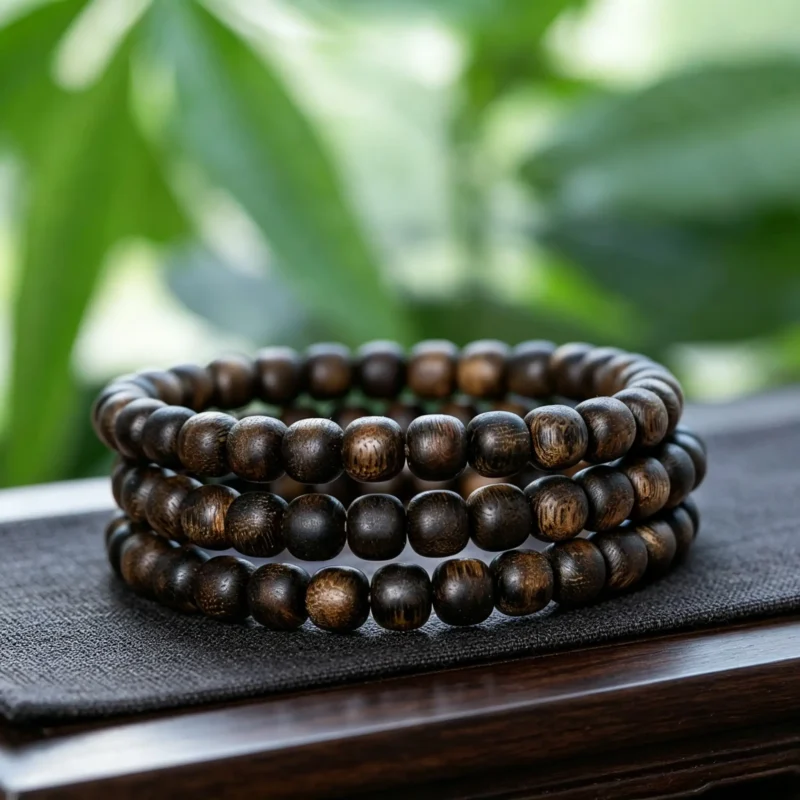
Kynam agarwood is the rarest and most aromatic category of agarwood on earth. Known in Japan as Kyara, in China as Qinan, and in the Middle East as Kinam, it has been documented for over a thousand years as a material reserved for emperors, nobility, and the highest ranks of incense practice. A single gram of wild Kynam can command over $10,000. It is widely considered the most valuable wood in the world.
What makes Kynam distinct is not simply its rarity. It is a fundamentally different material structure — one that changes how the wood behaves, how it ages, and how it releases fragrance. This profile examines Kynam as a material: its formation, classification, physical properties, regional character, and the scientific basis for its unusual behavior.
What Is Kynam Agarwood?
Kynam is not a botanical species. It is a grade and category of agarwood — the very highest. Industry sources describe it as “a tiny subset within aloeswoods in a very very small percentage.” In historical context, the term referred to “a special type/grade of aloeswood with unique and excellent fragrance properties.”
In classical Chinese texts, Kynam was called Qiongzhi (琼脂) and described as “more soft and warm than ordinary agarwood.” It has been documented since the Tang Dynasty and served as a royal tribute material in both China and Japan.
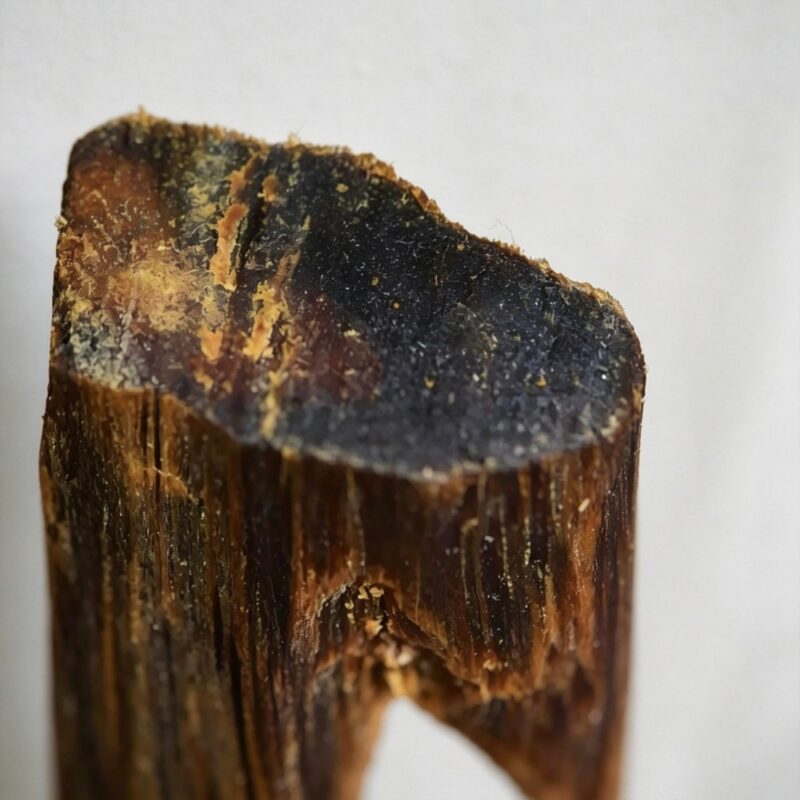
The material difference lies in its oil structure. Ordinary agarwood consists of wood fibers filled with hardened resin. Kynam undergoes a process sometimes described as “oilification” — the wood fibers themselves are replaced by a softer, more viscous, almost buttery oil. One common comparison: Kynam feels like “cutting dark chocolate.”
The Five Colors of Kynam
Kynam is traditionally classified by the color of its oil glands and surrounding wood. The five main types are White, Green, Yellow, Purple (or Honey), and Black. Each represents a distinct material expression with its own density, texture, and aromatic profile.
| Type | Appearance | Aroma Character | Material Notes |
|---|---|---|---|
| White Kynam | Pale, creamy, with fine oil lines | Sweet, cooling, floral, with a light penetrating quality | The rarest and most expensive; extremely soft texture |
| Green Kynam | Green-toned with fine oil lines; interior often dark green | Sweet, cooling, layered; creamy and floral undertones | The most commercially recognized collector grade; Hainan Yingge Green is a benchmark |
| Yellow Kynam | Pale yellow to amber | Sweet but less persistent than Green or White | Suitable for daily wear; scent fades faster |
| Purple/Honey Kynam | Green-black with a tender, soft texture | Sweet, rich, with a honeyed depth | Valued for dense, aromatic character |
| Black Kynam | Dark, slightly harder texture | Aroma less persistent; oil harder | Historically considered lower grade among Kynam; more affordable |
Color alone does not determine quality. The highest-grade Kynam — regardless of color — shares three material traits: soft texture, rich oil content, and a complex, layered scent.
Regional Character: Hainan Yingge Green Kynam vs. Nha Trang Kyara
Two regions dominate the collector conversation today: Hainan, China and Nha Trang, Vietnam. Both produce collector-grade Kynam, but their material character is fundamentally different.
| Hainan Yingge Green Kynam | Nha Trang Kyara | |
|---|---|---|
| Origin | Yingge Ridge, Hainan, China | Nha Trang, Vietnam |
| Historical Status | Royal tribute material; historical benchmark for green Kynam | Current market mainstay; most commercial green Kynam today |
| Surface Character | Green-toned with fine oil lines; rare dark body | Green with lighter, more uniform surface tone |
| Aroma Profile | Sweet, cooling, mellow; layered creamy undertones; slow to unfold | Sweet with medicinal, slightly bitter opening; sharper projection |
| Aromatic Structure | Depth-oriented; develops gradually through body warmth | Intensity-oriented; expressive from first contact |
| Resin Character | Integrated resin structure; balanced oil distribution | High oil content with pronounced resin presence |
| Market Availability | Limited; wild material exceptionally scarce | More widely available |
The fundamental difference lies in aromatic orientation. Hainan Yingge Green Kynam is depth-oriented — its sweetness, coolness, and creamy undertones unfold gradually and remain close to the skin. Nha Trang Kyara is intensity-oriented — its medicinal, slightly bitter opening and sharp projection deliver immediate aromatic impact.
Scientific analysis supports this distinction. Hainan green Kynam contains a higher relative content of 2-(2-phenylethyl)chromone derivatives (84.71%) compared with Vietnamese green Kyara (71.98%), contributing to its distinctive aromatic depth and persistence. This data is derived from GC-MS analysis of four Kynam agarwood samples conducted by Yang Delan et al. (2014).
View our collection: Hainan Yingge Green Kynam Bracelets | Nha Trang Kyara Bracelets
The Sinking Paradox: Why Kynam Often Floats
For ordinary agarwood, the rule is simple: more oil means greater density, and greater density means the wood sinks. Peer-reviewed research in RSC Advances confirms that fully sinking agarwood samples consistently have densities above 1.0 g/cm³, while floating samples fall well below that threshold. When oil content exceeds approximately 25%, density surpasses water, and the wood sinks.
Kynam breaks this rule.
Because Kynam’s oil is soft and less dense per unit volume, even pieces with oil content exceeding 40% may float or sink halfway. Industry reference data on Kynam places its specific gravity range at 0.90–1.13 g/cm³. High-grade Kynam often has specific gravity above 1.0 (sinking Kynam), but rarely does one find sinking Kynam.
This means something counterintuitive but material in nature: a non-sinking Kynam piece is not lower grade. It may be more authentic to the material’s true structure. The softness and oiliness that make Kynam so aromatic are the same qualities that keep it from sinking.
Material Characteristics of Kynam
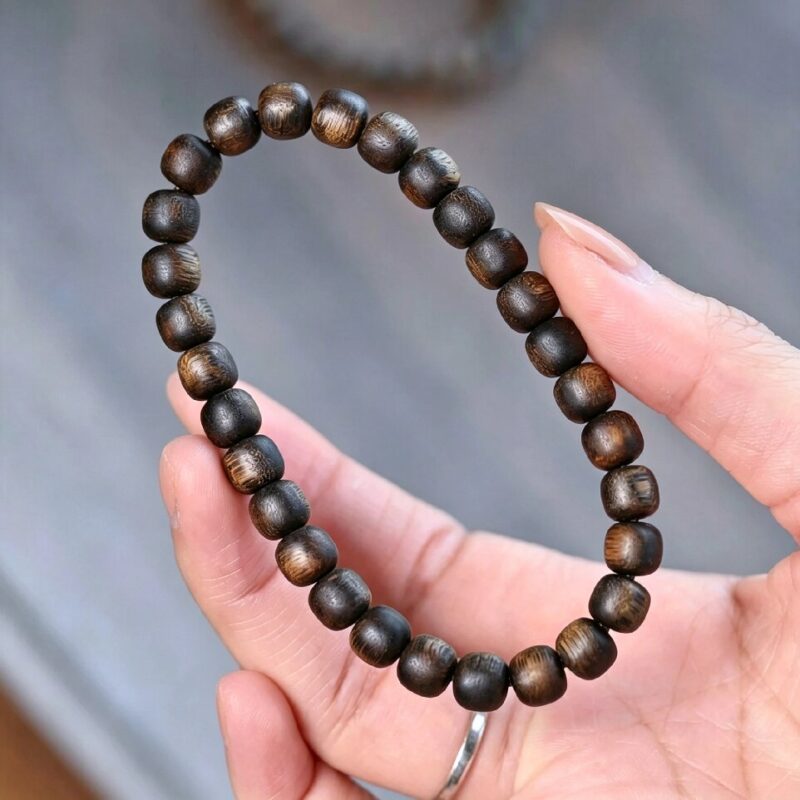
Genuine Kynam can be identified by a set of physical and aromatic properties that distinguish it from ordinary agarwood. These are material traits, not market guidelines.
Texture and touch. Kynam is soft and slightly sticky. A shaving of Kynam can be pressed into a small ball with the fingers. Ordinary agarwood is hard and brittle. This tactile difference is one of the most reliable material distinctions.
Scent at room temperature. Kynam releases fragrance without burning. The scent unfolds in layers: typically cool and sharp at first, then sweet and honeyed, then a lingering milky or floral base. Hainan Yingge Green Kynam is especially known for its sweet honey aroma, elegant fruity fragrance, milky notes, and intense coolness — earning it the title “King of Fragrances.”
Cutting behavior. Kynam cuts like soft chocolate or cheese — it curls or rolls rather than shattering. The interior shows clear, separated oil glands under magnification, not clustered resin masses.
Sinking behavior. In room-temperature water, Kynam may float or sink halfway. If it sinks, it sinks slowly and steadily. Some imitations sink abruptly because they contain added metal powder or heavy fillers.
Heat response. When touched with a heated needle, authentic Kynam releases a rich, layered fragrance — cool, sweet, and complex. Imitation or low-grade material produces a single, flat, or chemical smell.
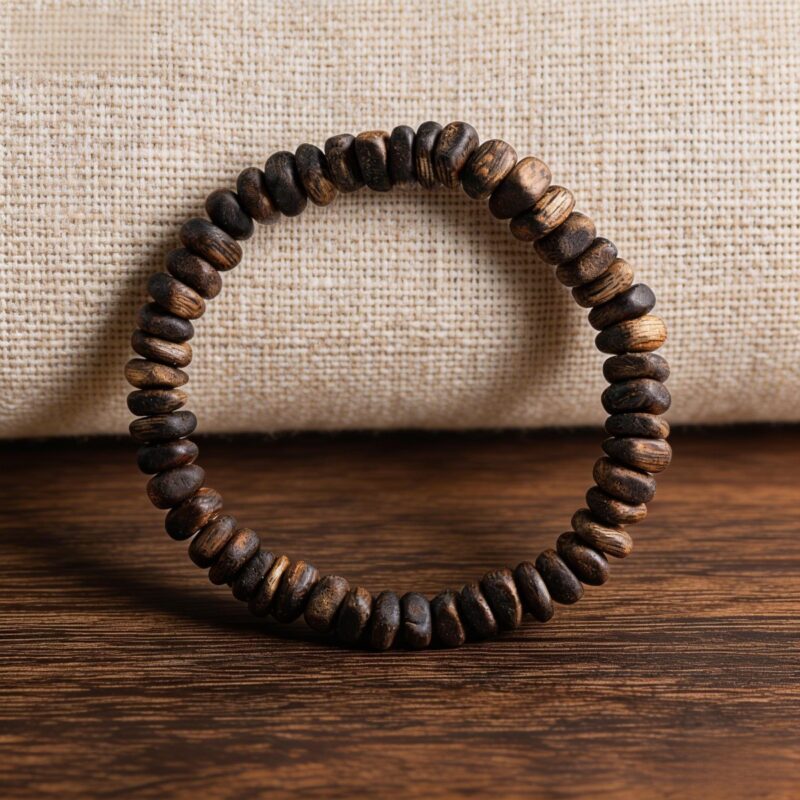
Soft, sticky, sweet-cool, layered. An accessible way to experience the material.
Tap to view.
Price Differentiation: What Determines the Value of a Kynam Bracelet
Kynam bracelets span an extraordinary price range — from a few hundred dollars to six figures. This gap is not arbitrary. It reflects a set of material, biological, and provenance factors that determine where a piece sits on the quality spectrum.
Grade and oil content are the primary determinants. Kynam pricing depends fundamentally on grade, and grade is determined by oil content — the higher the oil, the greater the density, weight, and aromatic quality. “Sinking grade” (沉水级) is the widely recognized standard for premium quality. However, as discussed earlier, Kynam’s soft oil structure means that non-sinking pieces can still be collector-grade. For cultivated Kynam, oil content remains the most direct indicator of material quality.
Origin and provenance carry significant weight. Kynam from Nha Trang, Vietnam, and Hainan, China, commands substantially higher prices than material from other regions, due to their documented historical status and distinctive aromatic profiles. Wild material — now effectively exhausted — sits at the absolute top of the market. Wild Kynam raw material commands prices from approximately $150 to $12,500 per gram, depending on grade and provenance. Cultivated Kynam, while more accessible, occupies a different tier: lower-end cultivated material (typically $110–$690 per bracelet) offers entry-level access to Kynam material, while higher-grade cultivated stock with denser oil and more developed aromatic character can reach $690–$2,780.
Size and craftsmanship affect the price within the same grade. Larger beads require more raw material, and round beads consume more material than irregular shapes. Same-grade pieces with larger dimensions consistently price higher.
Aromatic complexity is the ultimate differentiator. Two pieces with comparable oil content can differ dramatically in value based on the depth, layering, and persistence of their scent. Top-grade Kynam — particularly White Kynam and high-grade Green Kynam — is distinguished by a multi-layered aroma that evolves through distinct phases: an initial cool and sharp note, a sweet and honeyed middle, and a lingering milky or floral base. This aromatic complexity cannot be artificially replicated.
Understanding Kynam Bracelet Tiers: Experience Levels, Not Quality Grades
For collectors, understanding where a bracelet sits on the Kynam spectrum is less about “better or worse” and more about what stage of the journey you are in. The following tiers describe experience levels, not quality rankings.
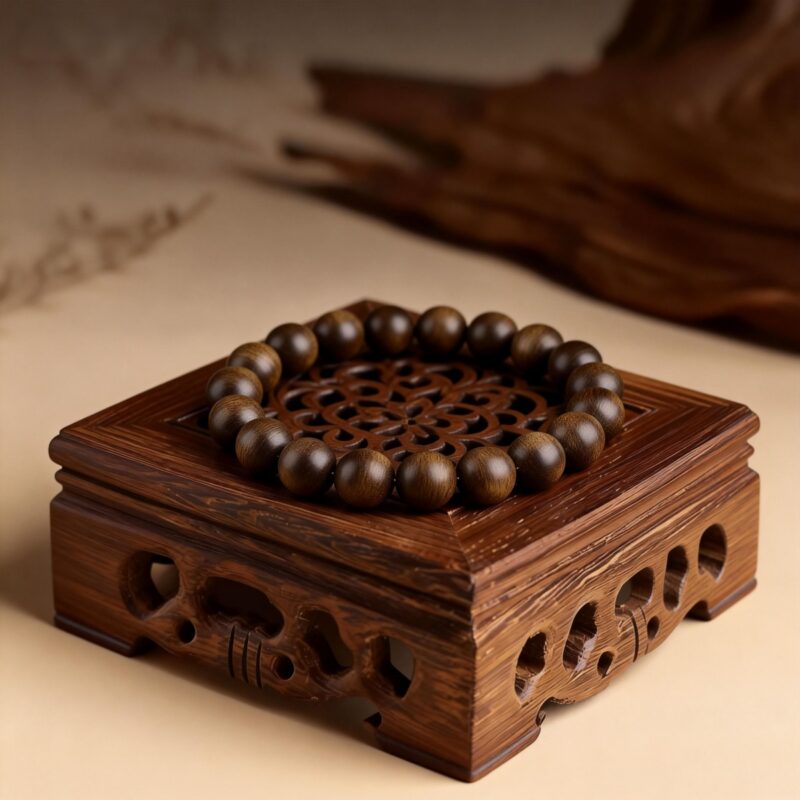
Collector-Grade Kynam — for the seasoned collector. This is the material that defines the category. Collector-grade Kynam is characterized by soft, slightly sticky texture — a shaving can be pressed into a small ball with the fingers. Oil content is dense and evenly distributed, with clear, separated oil glands visible under magnification. The scent is complex and layered, releasing fragrance at room temperature and evolving with body warmth. Raw material for genuine wild Kynam commands prices in the hundreds to low thousands of USD per gram, and bracelets are correspondingly rare. This tier rewards patience, close attention, and a developed palate.
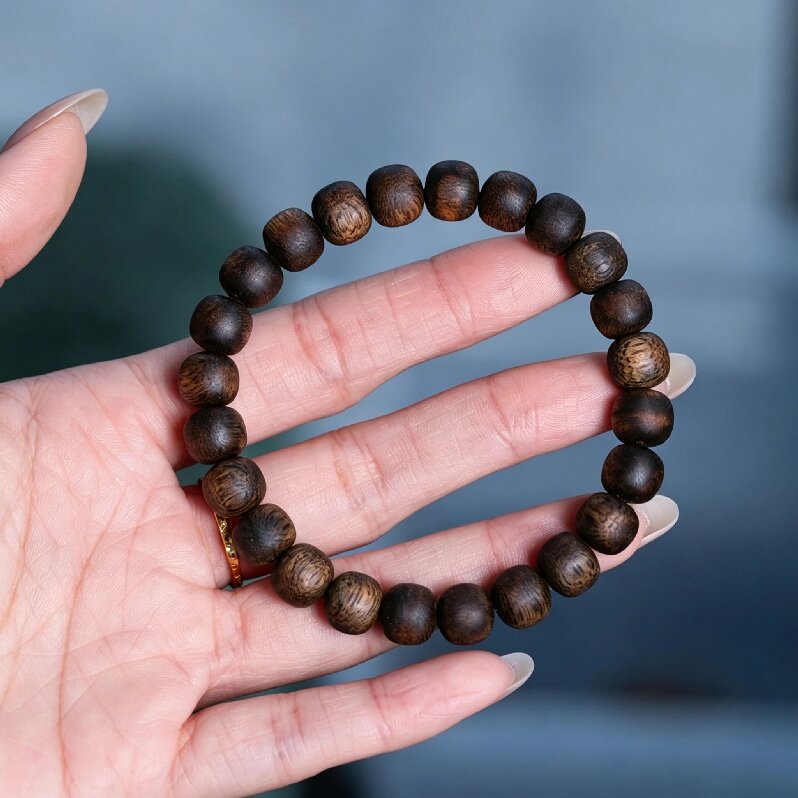
Immersive Kynam — for deep aromatic exploration. This tier typically comes from older cultivated stock with more mature oil development. The texture is firm but not brittle. Aroma is present and engaging but less layered — sweetness dominates without the full cool-floral-milky progression of collector-grade material. Oil lines are visible but may not be as finely distributed. These pieces offer a deep, satisfying experience for collectors who want to explore Kynam’s aromatic character without stepping into the rarest wild material.
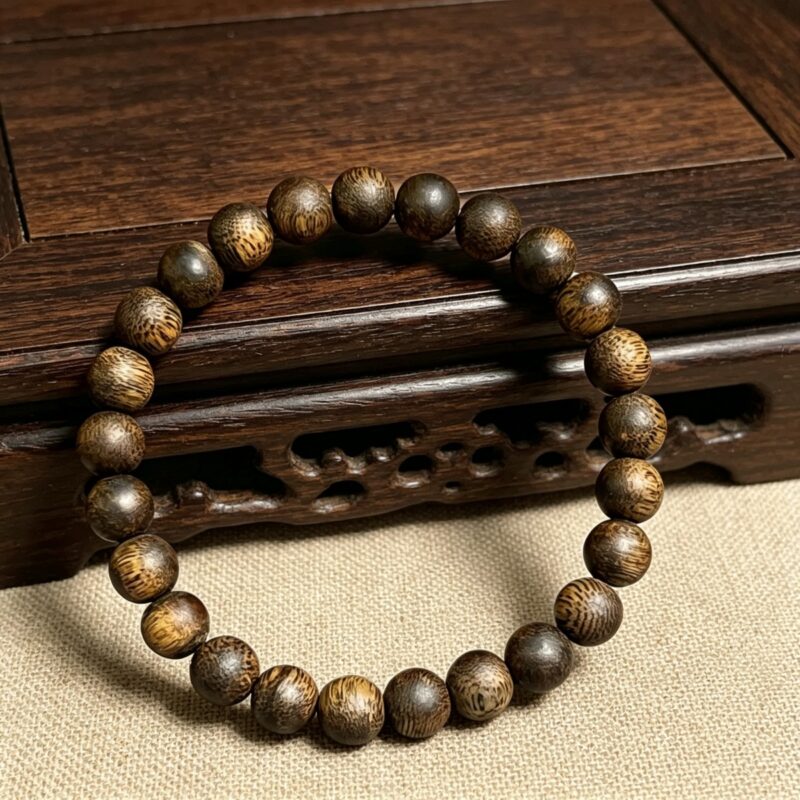
Entry-Level Kynam — for first encounters. This tier often refers to young cultivated material with shorter aging periods. Oil content is present but shallower, and the aroma is simpler — sweet but lacking the depth or persistence of higher tiers. The texture may be harder, closer to ordinary agarwood. Market prices for this tier are substantially lower, reflecting the material’s earlier stage of aromatic development. For many collectors, this is where the Kynam journey begins — an accessible first encounter with a material that has captivated people for centuries.
Distinguishing genuine from treated material is equally important. Treated pieces — whether oil-soaked, dye-enhanced, or resin-filled — share several warning signs: they may feel abnormally soft, smell of chemicals or solvents rather than natural wood, or leave color on a cotton swab when wiped with alcohol. Genuine Kynam, regardless of tier, should smell of natural wood and resin, never of solvent or artificial fragrance. As industry sources note, treated material often becomes dry and scentless within weeks of wear, whereas genuine Kynam evolves and deepens with time.
The material truth is that Kynam quality cannot be reduced to a single metric. Oil content matters, but so do texture, aroma complexity, and provenance. A piece that sinks is not automatically superior to one that floats. A piece with visible oil lines is not automatically authentic. The most reliable approach is to evaluate texture, scent, and material behavior together — and to recognize that in Kynam, the softest, most aromatic pieces are often the ones that float.
Kynam in Cultural and Historical Context
Kynam agarwood is not merely a material. It is a cultural artifact with a documented history spanning centuries.
It is finite. Wild Kynam is effectively exhausted. Hainan wild Yingge Green Kynam is extinct in commercial quantities. Global wild stock is measured in grams, not kilograms. What remains in the market is overwhelmingly cultivated — and the best cultivated material is grown from the same genetic stock, managed to produce oil content that meets collector standards.
It changes with wear. A Kynam bracelet worn daily gradually releases its fragrance through body warmth. The scent evolves — sometimes sweeter, sometimes cooler — depending on temperature, humidity, and the oil’s interaction with the skin. This is not a static material. It is a living aromatic substance.
It carries cultural weight. In Japan, Kyara sits at the top of the Kodo incense ceremony. In China, it was royal tribute. In the Middle East, it is the benchmark against which all oud is measured. Kynam as a material embodies that history.
Summary
Kynam agarwood is the rarest, most aromatic, and most structurally distinct category of agarwood in the world. It breaks the rules that apply to ordinary agarwood — including the sinking test. It appears in five colors, each with a distinct material character. Its value lies not only in rarity, but in the depth, complexity, and evolution of its scent.
As a material, Kynam is defined by soft oil, integrated resin structure, and layered fragrance. Its price reflects grade, provenance, oil content, and aromatic complexity — with genuine wild material commanding prices that place it among the most valuable natural substances on earth. These properties distinguish it from all other agarwood grades — and explain why it remains the most sought-after aromatic wood in the world.
Explore our collection: Hainan Yingge Green Kynam Bracelets | Nha Trang Kyara Bracelets