
Introduction
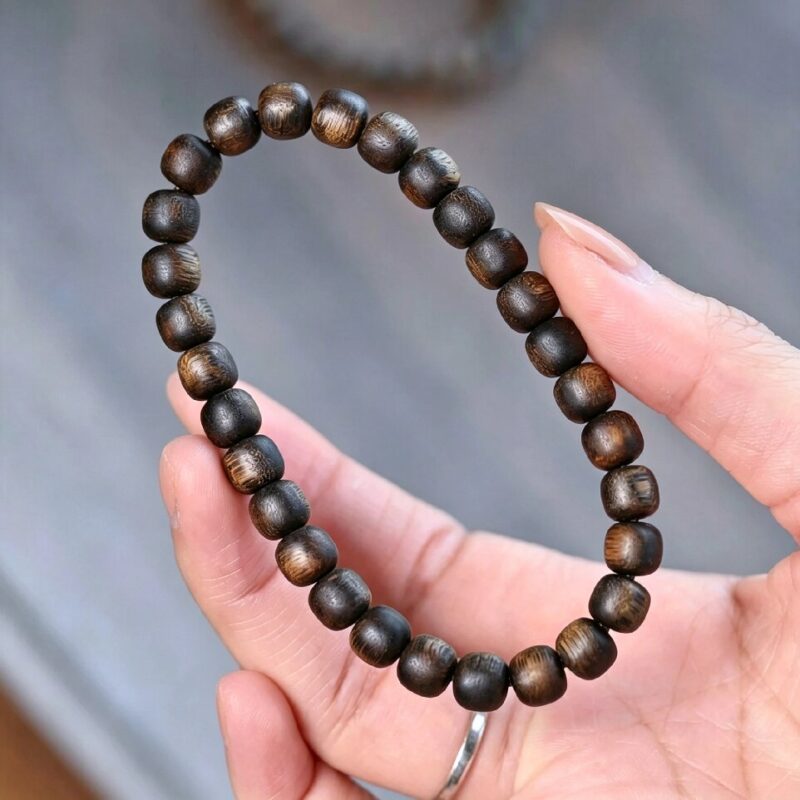
If you‘ve spent any time searching for a high-end agarwood bracelet or oud bracelet, you’ve probably noticed something confusing. The same type of wood is called Kyara in some listings, Kynam in others, and Qinan somewhere else entirely. Sometimes a bracelet is labeled “sinking grade.” Sometimes it isn‘t—yet the price is just as high.
There’s a reason for all of this. And once you understand it, you‘ll see agarwood—especially the rarest grades—in a completely different way.
This guide explains the naming logic behind Kynam vs Kyara vs Qinan, why some of the most valuable agarwood bracelets don’t sink in water, and how to judge oil density the way experienced collectors do.
Kynam vs Kyara: Same Wood, Different Traditions
First, the most important thing to understand: Kyara, Kynam, and Qinan are not three different materials. They are three names for the same category of aromatic wood, used in different cultural and linguistic traditions.
According to industry sources, “Kinam, kynam, kyara, qi-nan and related spellings are trade and cultural terms, not accepted botanical species names. Usage varies by language, market, period and seller.” In the oud bracelet market, Kynam dominates retail listings. In Japanese incense tradition, Kyara is the preferred term. And in Chinese-speaking collector circles, Qinan remains the standard.
Qinan (奇楠) is the Chinese term. It appears in classical Chinese texts on incense and is the word used in mainland China, Taiwan, and among Chinese-speaking collectors worldwide.
Kyara (伽羅) is the Japanese rendering of the same term. In Japan, Kyara sits at the very top of the traditional incense ceremony (Kodo) grading system. When a Japanese incense master says “Kyara,” they are referring to a specific sensory standard—a specific type of scent profile and quality that has been refined over centuries.
Kynam (also spelled Kinam) is the term that dominates in the Middle East, Southeast Asia, and increasingly in Western retail markets. It is the spelling you will see most often on international e-commerce platforms, in English-language forum discussions, and in product listings aimed at global audiences.
One experienced collector put it simply on the Ouddict forum: “Qinan, kynam, kyara is all meaning the same thing.” The choice of word is less about the material and more about who you are talking to.
There is, however, one nuance worth noting. Some collectors distinguish between Kyara as a specific scent standard and Kynam as a broader category. As one Ouddict discussion puts it: “Kyara (specific type of scent, Japan system) versus kinam which is a broader category including a variety of scents.” This distinction matters most in Japan, where Kyara is not just a grade—it is a sensory benchmark tied to centuries of incense practice.
Why Our Vietnamese Bracelet Is Called Kyara—and Our Hainan Bracelet Is Called Kynam
This is the logic behind our own product naming.
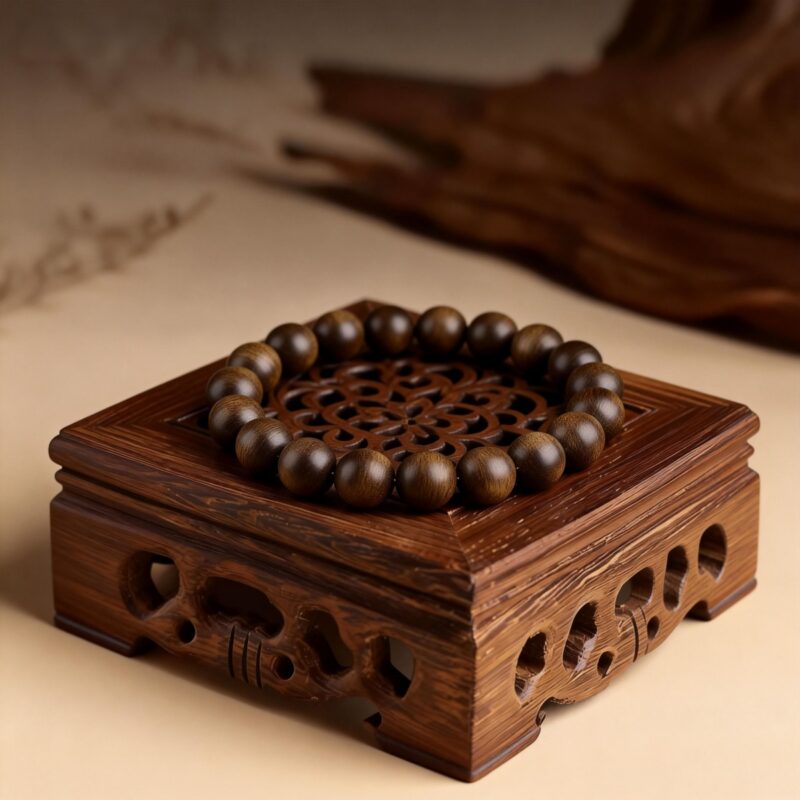
Our Vietnamese Nha Trang Kyara Bracelet is labeled Kyara. Why? Because Nha Trang agarwood is deeply connected to the Japanese incense tradition. Japanese incense houses have sourced and graded Vietnamese Kyara for centuries. Historically, the Japanese used the term “Sham” to refer to a kingdom that encompassed modern-day Vietnam, parts of Laos, Cambodia, Thailand, and southern China—including Hainan. These woods were all exported through the coastal ports of Vietnam, which is why collectors today say “Kyara comes from Vietnam.” For collectors who follow the Japanese system, “Nha Trang Kyara” is not just a name—it is a statement of provenance and sensory expectation. Using Kyara signals that this piece belongs to that lineage.
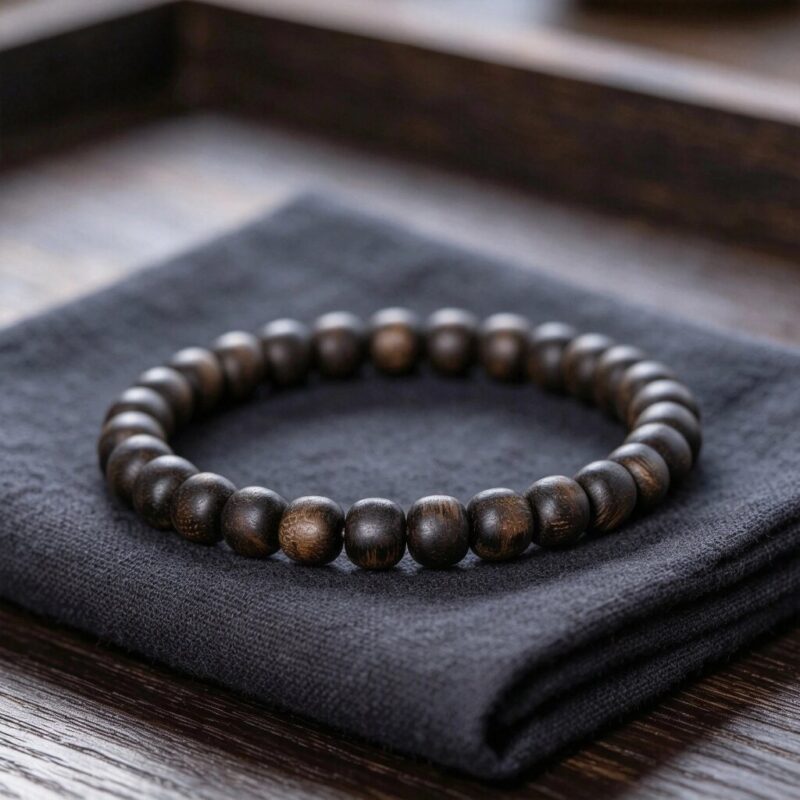
Our Hainan Yingge Green Kynam Bracelet is labeled Kynam. Hainan agarwood has its own tradition, rooted in Chinese incense culture rather than Japanese. For this piece, “Kynam” is the more accurate term—it connects the bracelet to the Chinese grading system and to the collector community that uses that vocabulary. It also aligns with the term most international buyers are searching for.
The naming is not arbitrary.
Each name points to a different tradition,
and each tradition carries its own standards of what “excellent” means.

Explore our Hainan Yingge Green Kynam Bracelets · Collector Grade

Explore our Vietnamese Nha Trang Kyara Bracelets · Collector Grade
Hainan Yingge Green Kynam vs Nha Trang Kyara: A Collector’s Comparison
While both are collector-grade Kynam, Hainan Yingge Green Kynam and Nha Trang Kyara express their rarity in fundamentally different ways. Understanding these differences helps collectors choose according to their aromatic preferences—and explains why both command premium prices despite their distinct characters.
| Hainan Yingge Green Kynam | Nha Trang Kyara | |
|---|---|---|
| Origin | Yingge Ridge, Hainan, China | Nha Trang, Vietnam |
| Historical Status | Traditional royal tribute material; historical benchmark for green Kynam | Current market mainstay; most commercial green Kynam today |
| Surface Character | Green-toned with fine oil lines; rare dark body | Green with lighter, more uniform surface tone |
| Aroma Profile | Sweet, cooling, mellow; layered creamy undertones; composed and slow to unfold | Sweet with medicinal, slightly bitter opening; sharper projection |
| Aromatic Structure | Depth-oriented; develops gradually through body warmth | Intensity-oriented; expressive from first contact |
| Resin Character | Integrated resin structure; balanced oil distribution | High oil content with pronounced resin presence |
| Market Availability | Limited; wild material exceptionally scarce | More widely available |
| Collector Positioning | High-end collector spectrum; valued for subtlety and depth | High-end collector spectrum; valued for aromatic intensity |
The fundamental difference lies in aromatic orientation. Hainan Yingge Green Kynam is depth-oriented—its sweetness, coolness, and creamy undertones unfold gradually and remain close to the skin, rewarding patience and close attention. Nha Trang Kyara is intensity-oriented—its medicinal, slightly bitter opening and sharp projection deliver immediate aromatic impact. For collectors who prioritize subtlety, layered development, and historical provenance, Hainan Yingge Green Kynam represents a distinct and increasingly scarce proposition.
Scientific analysis supports this distinction. Hainan green Kynam contains a higher relative content of 2-(2-phenylethyl)chromone derivatives (84.71%) compared with Vietnamese green Kyara (71.98%), contributing to its distinctive aromatic depth and persistence. This data is derived from GC-MS analysis of four Kynam agarwood samples conducted by Yang Delan et al. (2014).
The Sinking Paradox: Why Kynam Doesn‘t Always Sink
Here is where agarwood gets genuinely counterintuitive.
For ordinary agarwood, the rule is simple: the more oil, the denser the wood, the more likely it sinks. Peer-reviewed research in RSC Advances confirms that fully sinking agarwood samples consistently have densities above 1.0 g/cm³, while floating samples fall well below that threshold. When oil content exceeds approximately 25%, density surpasses water, and the wood sinks.
So for most agarwood, “sinks” is a reliable signal of high oil content. That’s why sinking-grade agarwood commands premium prices.
Kynam breaks this rule.
Kynam is not ordinary agarwood with more oil. The structure of the oil itself is different. In normal agarwood, resin fills the wood fibers—the resin is hard and heavy. In Kynam, the process is often described as “oilification”: the wood fibers themselves are replaced by a softer, more viscous, almost buttery oil. One comparison is that Kynam feels like “cutting dark chocolate.”
This soft oil is extremely rich—Kynam oil content typically exceeds 40%—but its per-unit density can be lower than water. The industry consensus is that “kyara itself is often not sinking.” Only pieces where the oil has concentrated to an unusually high degree will sink. As Ensar Oud notes, “kyara itself is often not sinking, it‘s the sinking batches of kyara that fetch much higher prices than the non-sinking.” Industry reference data on Kynam →
This means something important: a non-sinking Kynam bracelet is not lower grade. It may actually be more authentic to the material’s true nature.
Scientific studies support this. Kynam has a specific gravity range of 0.90 to 1.13 g/cm³, and “high grade Kynam often has specific gravity > 1 (sinking Kynam). Rarely find sinking Kynam.” The rarity of sinking Kynam is precisely what makes those batches so valuable—but it also means that most genuine Kynam, including collector-grade material, will float or sink slowly.
In fact, some of the highest grades of Kynam are explicitly labeled as “highest non-sinking grade.” One supplier describes their 5A Kynam as “our highest non-sinking grade. It possesses nearly the same resin volume as sinking grade but maintains a slightly lower density, making it the most aromatic and visually stunning option before reaching the museum-grade under-water category.”
This is the paradox: the softness and oiliness that make Kynam so fragrant and valuable are the same qualities that keep it from sinking.
What Non-Sinking Kynam Means for Collectors
If you are shopping for a Kynam bracelet and you see that it does not sink, do not automatically assume it is lower grade. The opposite may be true.
A non-sinking Hainan Yingge Green Kynam bracelet can be priced the same as—or higher than—a sinking-grade piece, and still be correctly classified as collector grade. The reasons are:
Oil content, not density, is the primary metric. Kynam oil content is typically ≥40%. That is higher than most sinking-grade agarwood (25–40%). A bracelet can have more oil than a sinking piece but still float because the oil is soft and less dense.
Scent is the true differentiator. Kynam is distinguished by its fragrance—sweet, cool, layered, with a penetrating quality that ordinary agarwood lacks. The scent is released without burning, and it evolves with temperature. A non-sinking piece with exceptional scent can be far more desirable than a sinking piece with flat aroma.
Texture tells the story. Kynam feels different. It has a soft, sticky, almost buttery quality. You can press a shaving of Kynam into a small ball with your fingers. Ordinary agarwood is hard and brittle. This tactile difference is one of the most reliable ways to distinguish Kynam from ordinary agarwood.
How to Judge Agarwood Oil Density: A Practical Guide
Understanding the theory is one thing. Judging a bracelet in your hand is another. Here is what experienced collectors look for.
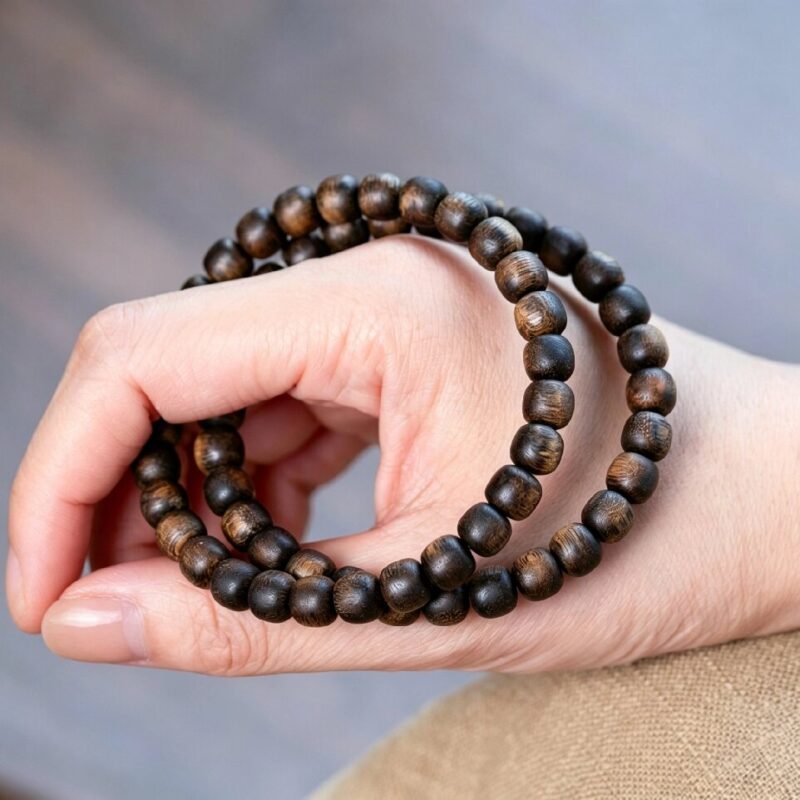
1. The sinking test—with nuance
Place the agarwood bracelet in room-temperature pure water. Ordinary high-grade agarwood will sink. A non-sinking Kynam bracelet may float or sink halfway. If it sinks, observe the speed: authentic Kynam sinks slowly and steadily, not abruptly. Some imitation pieces sink too fast because they contain added metal powder or heavy fillers.
2. Weight-to-size ratio
A dense piece feels heavy for its size. For a 9mm bead bracelet, compare the total weight against the number of beads. Natural agarwood has a density range of roughly 0.8–1.2 g/cm³. Kynam sits within this range, but its density is determined more by oil distribution than by total oil volume.
3. Surface texture and luster
High-oil Kynam has a distinctive semi-matte sheen—it looks like it is about to “seep oil,” but without appearing wet or greasy. Under magnification, the oil glands in Kynam are distinctly separate and clear, unlike the clustered oil glands of ordinary agarwood.
4. Scent behavior
Authentic Kynam releases fragrance at room temperature. Warm it slightly by rubbing it between your fingers or holding it against your skin. The scent should unfold in layers: initially cool and sharp, then sweet and honeyed, then a lingering milky or floral base. Hainan Yingge Green Kynam is renowned for its sweet honey aroma, elegant fruity fragrance, milky notes, and intense coolness—earning it the title of “King of Fragrances.”-45
5. The heat test (for loose beads only)
If you have a loose bead or a hidden area, touch it briefly with a heated needle. Authentic Kynam releases a rich, layered fragrance—cool, sweet, and complex. Imitation or low-grade material often produces a single, flat, or chemical smell.
Read Our Agarwood Bracelet Buying Guide →
Cultivated vs. Wild Kynam: What You Need to Know
All high-grade Kynam—whether from Vietnam or Hainan—is now overwhelmingly cultivated. Wild sources have been depleted. Hainan wild Yingge Green Kynam is effectively extinct in commercial quantities, with global wild stock measured in grams, not kilograms.
This does not mean cultivated Kynam is inferior. In fact, the best cultivated material is grown from the same genetic stock and managed to produce oil content that meets or exceeds collector standards. The difference is traceability and consistency: cultivated Kynam can be documented and verified in ways that wild material never could.
When you see a bracelet labeled “Hainan Yingge Green Kynam,” the term “Kynam” is doing important work. It signals that the material meets the criteria for that category—high oil content, distinctive texture, and a scent profile that separates it from ordinary agarwood, regardless of whether it sinks.
The Bottom Line: Kynam vs Kyara
Kynam vs Kyara is not a debate about quality. It is a question of tradition. Kyara carries the weight of Japanese incense ceremony. Kynam carries the weight of Chinese and Middle Eastern collector traditions. Qinan is the Chinese term that started it all.
And the sinking test? It is a useful tool—but it is not the final word, especially for Kynam. A non-sinking Kynam bracelet can be collector grade. A sinking piece can be ordinary agarwood. What matters is the oil itself: its content, its texture, and above all, its scent.
If you are choosing between a sinking piece and a non-sinking Kynam piece, do not let the water test alone decide. Look at the oil. Feel the texture. Smell the wood. That is how collectors judge Kynam—and that is how you should too.
Explore our collection: Vietnamese Nha Trang Kyara Bracelets | Hainan Yingge Green Kynam Bracelets