
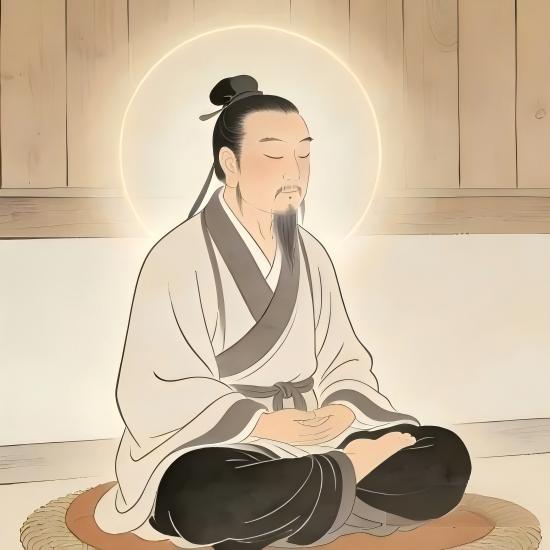
Introduction
The Huangdi Neijing (黄帝内经, Yellow Emperor’s Inner Canon) states: “In tranquil emptiness, true Qi follows.” It also teaches: “Anger makes Qi rise; joy makes Qi slow; grief exhausts Qi; fear makes Qi descend.” Whenever the emotions stir, Qi follows and becomes disordered.
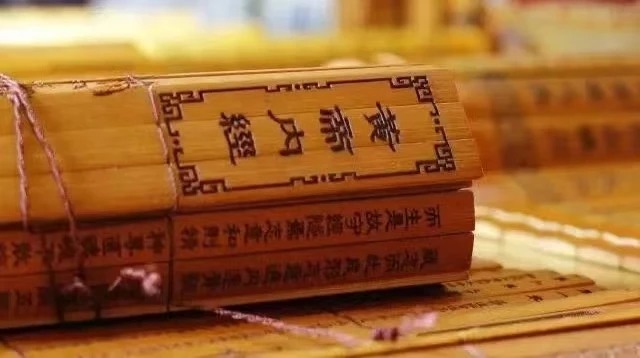
Taoist cultivation has an even more concise teaching: “Stillness gives birth to Qi” (静则炁生). These four words capture the fundamental principle of nourishing Qi.
All external disturbances consume the body’s energy. Only in stillness can Original Qi regenerate and accumulate. In cultivation, every transformation of Qi must be free from acquired, artificial intention — otherwise, the practice falls to a lower level. This is why Taoist internal cultivation of the organs always begins with Stillness Practice (静功) .
Below, we outline the method, levels, and daily support practices of Stillness Practice, for those who wish to walk this path.
Stillness is not emptiness.
It is the soil.
Qi is the seed.

When the soil is quiet,
life rises on its own.
1. Stillness Practice Is the Foundation
Taoist cultivation begins with Stillness Practice, and its deepest stages never leave it. No matter what phase you are in, stillness is the core practice that runs through everything. From the most basic Foundation Building (筑基) to the higher stages of refinement and transformation, every step relies on stillness.
Quiet sitting is not an advanced technique — in Taoist cultivation, stillness is simply where we begin.
2. The Basic Method of Stillness Practice
Stillness Practice does not rely on complex external postures. Keep the head and spine upright, and the body comfortable and natural. You may stand, sit, or lie down. Here are the key points:
- Lower the eyelids (双目垂帘): Eyes fully open invite scattered thoughts; eyes fully closed invite drowsiness. The ideal state is to let the eyelids fall naturally, so that what you see is indistinct — the ancients called this “open three parts, closed seven” (睁三闭七).
- Turn the ears inward (两耳返听): Withdraw your hearing from the outer world. Do not chase external sounds, nor deliberately listen for anything. Simply let the ears settle into quiet.
- Close the mouth and store the tongue (闭口藏舌): Gently close the lips, lightly touch the teeth together, and rest the tip of the tongue softly against the two small hollows behind the upper palate. This point is called the “Heavenly Pool” (天池穴), a gateway connecting above and below. Placing the tongue here prevents the outward leakage of Shen (Spirit) and Qi.
- Breathe naturally: Gradually allow the breath to become deep, long, even, fine, and subtle — but do not force it. Let it adjust on its own. Then use the method of “listening to the breath” (听息). The ears simply listen to your own breathing, without effort, without interference, as if listening yet not listening. Gradually, mind and breath become one, scattered thoughts fall away, and the foundation for entering stillness is laid.
3. The Three Levels of Stillness
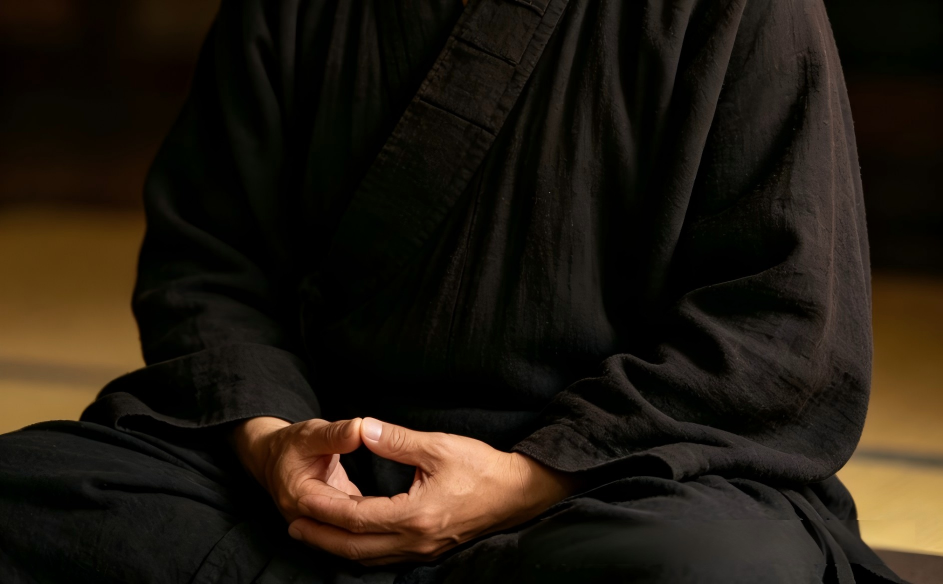
The state of stillness deepens through three stages:
First Level: Bodily Stillness (身静). The body does not move. There is no restlessness, no discomfort. You can sit steadily and comfortably. This is the foundation.
Second Level: Mental Stillness (心静). Thoughts no longer surge. You do not chase the past, cling to the present, or anticipate the future. All concerns are set down, and the mind is clear and empty. This is the intermediate stage.
Third Level: Intentional Stillness (意静). Even the sense of “I” is released. You enter a state of indistinct wholeness, where you forget your very self. This is true stillness.
In popular Qigong, reaching bodily stillness is already considered good. In ordinary meditation, mental stillness is regarded as rare. But Taoist cultivation aims directly for intentional stillness. The difference between these levels marks the dividing line between shallow and deep practice.
These three levels, though simple in description, already contain within them the refining of Essence, Qi, and Shen: bodily stillness refines Essence, mental stillness refines Qi, intentional stillness refines Shen. All of Foundation Building is right here.
Body still — Essence gathers.
Mind still — Qi flows.
Intention still — Spirit returns.

Three gates.
One stillness.
The whole path is here.
4. Ten Daily Supports for Stillness Practice
The fruits of practice are deeply connected to how you live. Here are ten areas worth attending to:
- Quiet environment: Avoid noise — voices, traffic, machinery — and let the ears rest in peace.
- Fresh air: Stay away from smoke, paint, chemicals, and other turbid Qi. Natural, clean air is best.
- Moderate light: Too bright irritates the eyes; too dark invites sleepiness. Soft, neutral indoor light is ideal.
- Light diet: Eat simply. Reduce rich, heavy, and greasy foods. Alcohol and tobacco are best set aside.
- Protect from extremes: Avoid practicing in extreme heat or cold, wind, rain, thunder, or lightning. Keep warm and sheltered from drafts.
- Eat in moderation: Nutrition should be balanced. Overeating burdens the body. Unhealthy snacks should be eliminated.
- Reduce external engagements: During practice periods, limit social visits, phone calls, and messages. Keep the mind calm and undisturbed.
- Choose gentle reading: Read travel diaries, health notes, and writings of past masters. Avoid mentally taxing or chaotic content.
- Observe the best times: The hours of Zi (11pm–1am), Wu (11am–1pm), Mao (5am–7am), and You (5pm–7pm) are most conducive to stillness. Each session can last from half an hour to one hour. Do not sit immediately after a full meal.
- Keep posture natural: Whether sitting, lying, or standing, simply keep the head and spine upright and the whole body relaxed.
The Gift of Stillness
The beauty of Stillness Practice is this: it requires no special space, costs nothing, and harms nothing. The only thing it asks of you is a quiet moment each day, set aside just for yourself.
Start with ten minutes. Then twenty. Keep going, and the changes in body and spirit will reveal themselves — quietly, steadily, from the inside out.
Ready to Go Deeper?
Stillness Practice is the foundation.
If you wish to go further —
to truly cultivate Qi,
refine Essence and Spirit,
and experience the transformative power
of authentic Taoist internal arts —
our Taoist Qi Cultivation Courses
are here for you.

We are preparing these courses with care.
They will be released gently,
one by one,
in the weeks to come.

Sitting meditation. Zhan Zhuang.
Baduanjin. Wuqinxi. Tai Chi.

Each a doorway.
Each a step toward the Qi within.
👉 [Explore Taoist Qi Cultivation Courses]
Stanford Encyclopedia of Philosophy — Daoism