
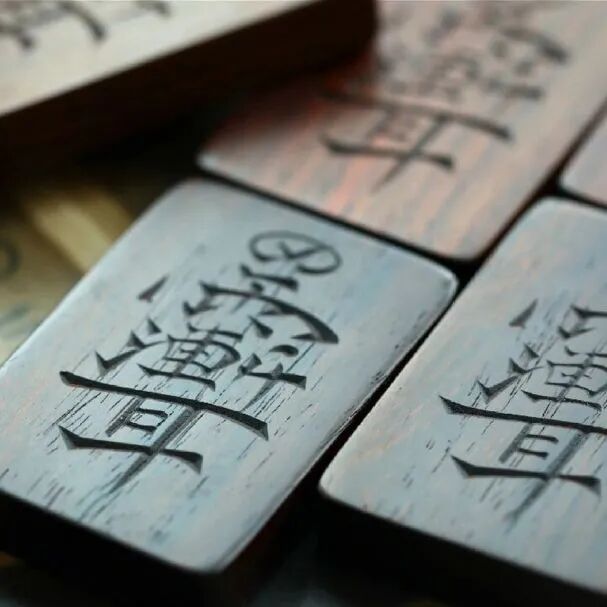
1. Taoist Secret Hidden Names
Taoist hidden names (讳字, Hui Zi) are not merely written symbols. They are the essence of Taoist culture, forming — together with ritual tablets and Dharma seals — the unique character of Taoist sacred practice.
Taoist secret hidden names are the code names of heavenly deities, or one could say their sacred insignia. Their method of writing differs from ordinary script, and they appear frequently throughout Taoist classics. The hidden names of immortals and gods may be avoided out of reverence, kinship, or respect for wisdom. This avoidance reflects the ancient Chinese culture of name taboo and the spirit of honoring teachers and valuing the Dao.
Why do most Taoist hidden names carry the “rain” radical (雨) at the top? Because characters with the rain radical are mostly related to weather, nature, and astronomy — such as snow, thunder, frost, mist, and hail. The ancients revered nature and endowed it with divinity. Taoism inherited this shamanic tradition and also avoided speaking the names of celestial deities out of reverence. Thus, they used combinations of characters with the rain radical to replace them. The rain radical itself signifies the heavens and celestial phenomena.
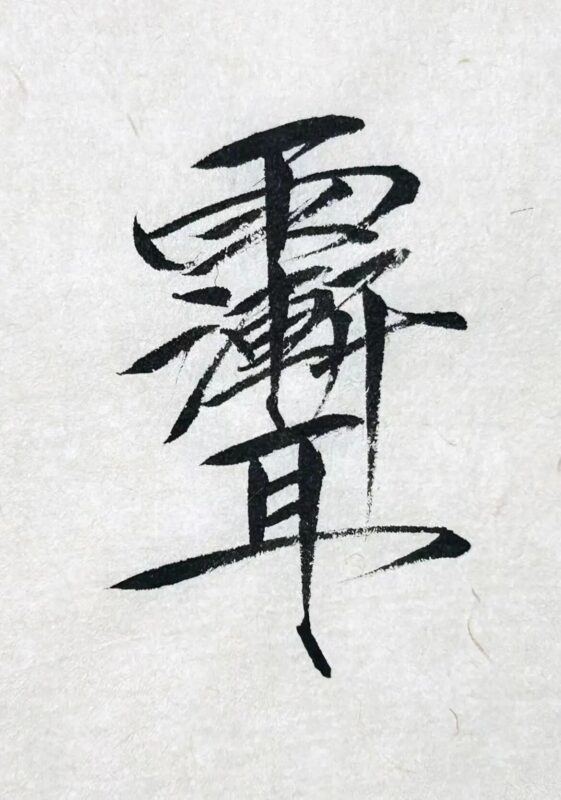
The Zi Wei Hui (紫微讳) is the most widely used and best-known hidden name. It is the abbreviated hidden name of the Great Emperor of the Purple Star (紫微大帝, Zi Wei Da Di). This emperor governs the celestial order, commands the sun, moon, stars, mountains, rivers, and all deities, and controls the four seasons. He can summon wind and rain, command thunder, lightning, ghosts, and spirits, and his power shakes the Three Realms.
According to the Beiyin Fengdu Taixuan Zhimo Heilü Lingshu (北阴酆都太玄制魔黑律灵书), during the Longhan era, the ghost soldiers and demon kings of the six caves of Beiyin Fengdu ravaged the human world, and no one could subdue them. The Jade Emperor then summoned the Northern Emperor to command the divine generals and soldiers, to enact the Great Demon Black Law, to wield the Fengdu Nine Springs Command Talisman, and to bear the seal of inspecting the Three Realms. He subdued the demon hordes and swept away the demonic atmosphere. When his merits were complete, he ascended to the position of the Great Emperor of the Purple Star in the Northern Pole of the Central Heaven.
2. The Zi Wei Hui
The Zi Wei Hui has inner hidden names, demon-subduing hidden names, and killing hidden names. The most common form is composed of the character “rain” (雨) and the character “聻” (Jian), symbolizing the functions of the Purple Star Emperor.
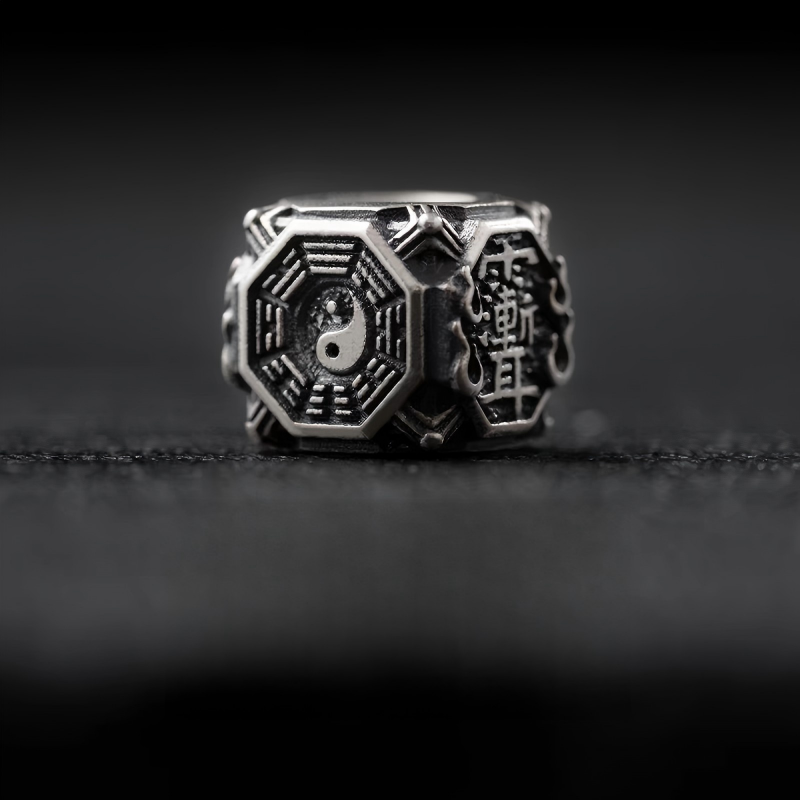
The character “聻” has an extraordinary origin. It comes from a Tang Dynasty folk method for repelling ghosts — “writing ‘Jian Er’ (渐耳) on the door.” According to the Xuan Shi Zhi (宣室志), Pei Jian lived in seclusion by the Yi River. A Taoist named Li Jun was skilled at seeing ghosts, and the court officials all admired his ability. Later, Li Jun retired and became friends with Duke Cui. Duke Cui wrote “Jian Er” on his door to drive away evil. Later, “Jian Er” was transmitted as the name of underworld ghosts and spirits. By the time of the You Yang Za Zu (酉阳杂俎), it was recorded: “At that time, people painted a tiger’s head on the door and wrote the character ‘聻’, saying that the name of the underworld ghosts and spirits could eliminate malaria and epidemics.”
The Jin Dynasty scholar Han Daozhao, in his Wu Yin Ji Yun (五音集韵), also said: “When a person dies, they become a ghost; people fear them. When a ghost dies, it becomes a ‘Jian’; ghosts fear it. If you write this character in seal script and paste it on the door, all ghosts and evil spirits will flee a thousand miles away.”
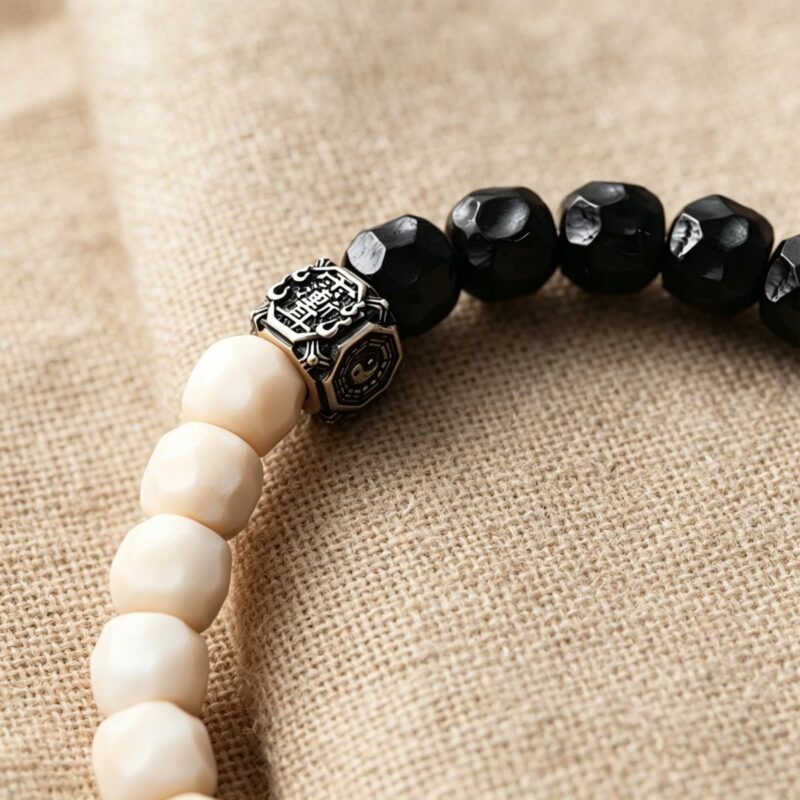
The Zi Wei Hui consists of twenty-eight strokes, corresponding to the twenty-eight constellations. It can be used to drive away evil, suppress negativity, subdue demons, kill evil, calm fright, and repel malevolent forces. Different Taoist schools have different secret methods when using the Zi Wei Hui or related mantras. Explore Zi Wei Hui (“聻”Yu Jian Er) Bracelet →
3. The Functions of Hidden Names
Taoist hidden names are widely used in rituals such as drawing talismans, consecration, and empowerment. In Taoist ceremonies, they are often written in the air. On talismans, they are often used as the talisman head, or written and then smeared into a ball. Sometimes many hidden names are written stacked together. The “talisman gallbladder” (符胆) is often composed of multiple characters or hidden names stacked together.
The hidden names of Taoist deities are a required subject for cultivators and are frequently used in Zhai Jiao (斋醮) rituals. For example, in the rituals of the Zhengyi School, summoning deities and generals often involves corresponding hidden names for each spirit-general. Common methods include silent recitation, visualization, circulating the hidden name, writing with the celestial eye, writing on a ritual tablet, or writing with the sword seal. They must not be read aloud casually. Moreover, most hidden names of immortals and gods have only a written form and no pronunciation.
During rituals, the high priest transforms his body to perform the ritual, strikes the tablet to summon generals, and sprays water toward the southeast (the Xun direction) to write the hidden name with the command, signing a contract with the spirit-general. Only then is the summoning complete.
The Baopuzi: Xia Lan (抱朴子·遐览) says: “Among Taoist books, none are more important than the Three Sovereigns’ Script and the True Forms of the Five Sacred Mountains. The ancient immortals and perfected ones revered this Dao as secret, and it could not be transmitted to those without a name among the immortals.” Cultivators who dwell in mountain valleys must wear the True Forms of the Five Sacred Mountains, and then the demons, tigers, insects, and all poisonous spirits of the mountains cannot approach. From this, we know that the hidden names of immortals and gods can be worn on the body and have the effect of driving away evil and avoiding disaster. From ancient times to the present, it has been common to carve hidden names into ornaments and wear them.
As the Shangqing Sanyuan Yujian Sanyuan Bujing (上清三元玉检三元布经) says: “One who knows the Great Simplicity Three Primes Lord will have a lifespan as long as Heaven and Earth. By visualizing, one can see the true form of the Great Simplicity Three Primes Lord; one who sees this Lord will have a lifespan lasting as long as Heaven and Earth.” This shows the important function of hidden names.
In the past, Taoist priests transmitted hidden names orally and through personal example, as secret methods not easily recorded on paper.
Taoist hidden names are truly the mysteries of Heaven and Earth, and a treasure of Taoist culture.
Stanford Encyclopedia of Philosophy — Daoism