Have you ever woken up after a full night‘s sleep, only to feel just as exhausted as when you went to bed? Or found yourself drained of energy before the day even really begins?
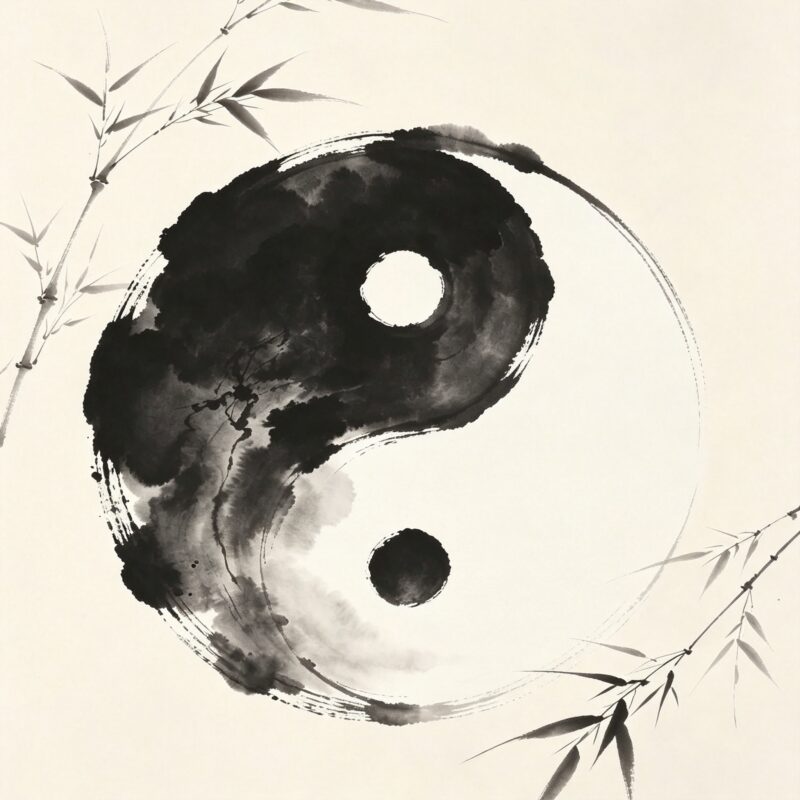
In the millennia-old tradition of Taoist Internal Alchemy, this experience points to a fundamental concept: the state of your life-force energy (Qi) and the flow of energy through your body‘s meridian pathways.
Understanding the Microcosmic Orbit
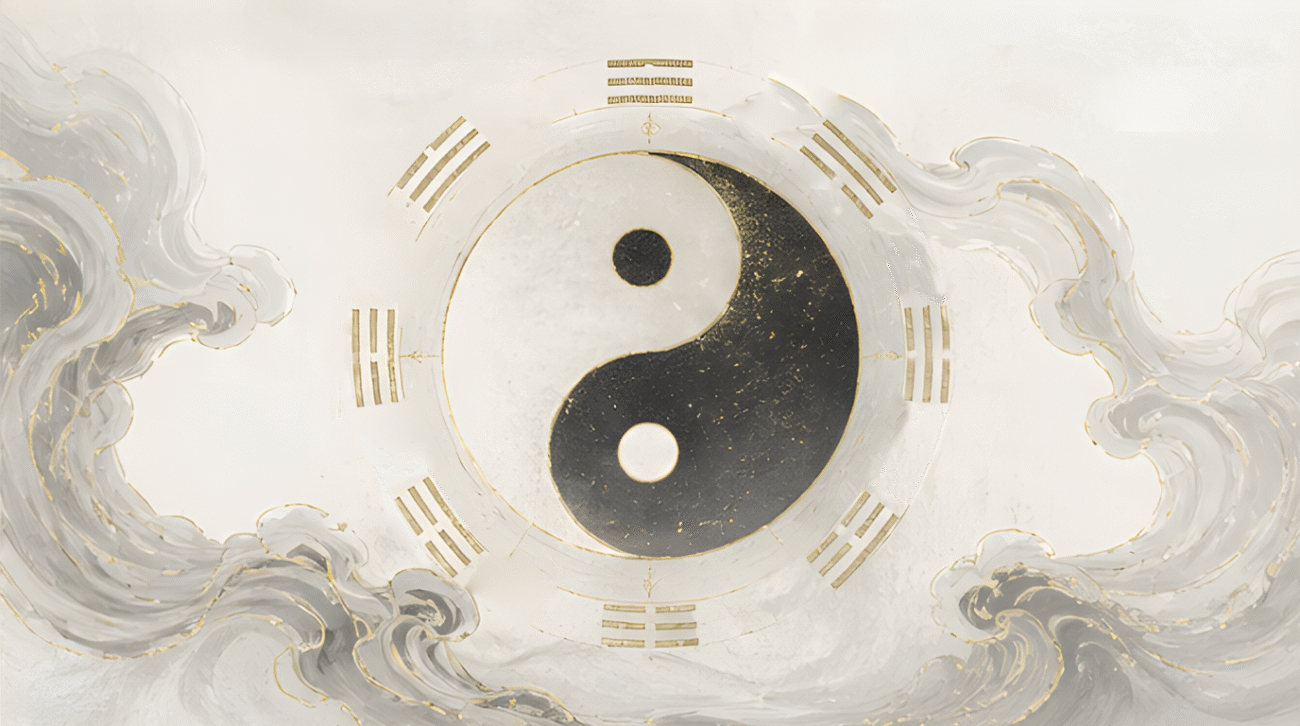
At the heart of Taoist Internal Alchemy lies the understanding that every person is born with a complete energy circulation system. Its two core channels are the Ren Mai (Conception Vessel) and the Du Mai (Governing Vessel) .
During childhood, these two meridians are naturally open. This is why children often display abundant energy, sharp intuition, and clear presence. After puberty, a natural biological shift occurs — the Ren and Du meridians gradually become less active, and many people experience a gradual decline in vitality over time.
The process of reopening the Ren and Du meridians and establishing the flow of Qi along these pathways is known in Taoist practice as the “Microcosmic Orbit” (Xiao Zhou Tian) . This is understood in the tradition as a physiological state that can be approached through dedicated practice.
The Three-Stage Practice of Qi Cultivation
The foundational practice of Taoist Internal Alchemy unfolds in three stages:
Stage One: Gathering Qi in the Middle Dantian
The Middle Dantian, located in the upper abdominal region, is considered in this tradition as a primary center for transforming energy from breath and food into postnatal Qi. Through specific breathing techniques combined with focused attention, practitioners begin to accumulate Qi here. Common reported experiences include sensations of warmth, fullness, or a cooling sensation — the latter often interpreted as the body releasing accumulated cold.
Stage Two: Sinking Qi to the Lower Dantian
Once Qi is felt to be present in the Middle Dantian, the practice guides it downward to the body’s fundamental energy reservoir — the Lower Dantian, located in the lower abdominal area. In Taoist practice, this is called “sinking Qi into the Dantian.” During this stage, practitioners often report increased intestinal activity, which is understood as part of the body’s natural cleansing process.
Stage Three: Guarding the Dantian with Intention
This is considered the core phase of foundation-building. Practitioners gently and steadily “guard” the Lower Dantian with their attention, allowing Qi to accumulate and consolidate over time. When the Dantian is sufficiently full, Qi may naturally ascend along the Du Mai, potentially passing through key points along the spine. This process is what the tradition refers to as “opening the Microcosmic Orbit.”
What Practitioners May Experience
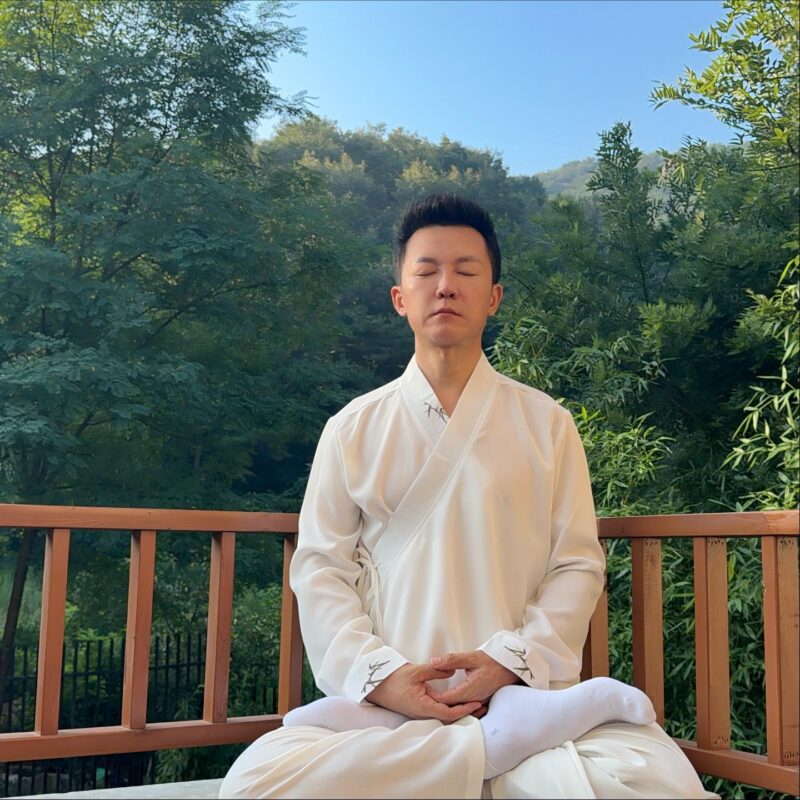
Those who engage in consistent practice over time may report various experiences, including:
- Increased sense of vitality and reduced fatigue
- Improved mental clarity and focus
- Greater emotional stability and calm
- Enhanced awareness of internal bodily states
- Improved sleep quality
Note: Individual experiences vary significantly. These are reported outcomes from practitioners and should not be understood as guaranteed results.
Core Principles of Practice
There is a fundamental principle in Taoist Internal Alchemy: Do not chase sensations. Whether you feel warmth, throbbing, or movement of Qi — these are considered temporary experiences along the way. The practitioner’s task is to follow the method consistently and patiently, without attachment to specific outcomes.
Conclusion: The Key Is in Your Hands

This course does not teach you anything new. It guides you in reawakening a powerful energy system you already possess — one that has simply been dormant for years.

It is not mystical or esoteric. It is a practical, systematic method of Qi cultivation, validated by thousands of years of continuous practice.

The key is now in your hands. The only question is: will you take the first step?

Start Your Qi Cultivation Journey Today →
Important Disclaimer
The information provided in this article is for educational and informational purposes only. It is not intended as medical advice, diagnosis, or treatment. Taoist Internal Alchemy and Qi cultivation are traditional self-cultivation practices and are not substitutes for professional medical care. If you have any known medical conditions, mental health concerns, or are taking medication, please consult a qualified healthcare professional before beginning any practice. Individual results vary, and no specific outcomes are guaranteed. By engaging with this content, you acknowledge that you understand and agree to this disclaimer.
PubMed Research: Qigong & Health →