
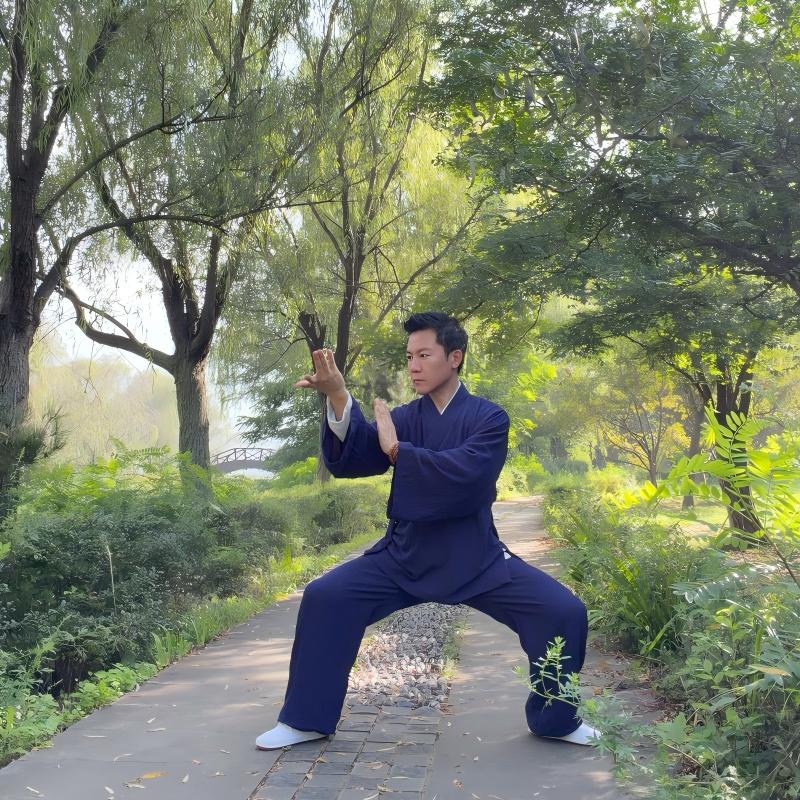
Taoist Qi Cultivation — known in Chinese as 炼炁 (Qi Refinement) — is regarded in Taoism as the source of all power. It is the foundation of a Taoist priest’s spiritual efficacy, and the root of all creation and transformation in Heaven and Earth. The Taoist art of Qi Cultivation has a long history. Since the Han Dynasty, through two thousand years of transmission and development, it has formed a complete system centered on refining external Qi, visualization and guarding the One, and refining spirit-generals and summoning them into union.
I. The Origins of Taoist Qi Cultivation
The formation of Taoist Qi Cultivation was deeply influenced by Han Dynasty theories of Qi transformation and the practices of ancient alchemists (方士, Fang Shi — practitioners of esoteric arts). In the early stages of Taoism, methods centered on Qi refinement and visualization had already developed. During the Han dynasties, practices included absorbing the essence of the sun, moon, and stars, as well as visualization of inner deities and guarding the One.
By the Eastern Han, the practice of “visualization” (存想, Cun Xiang) was already widespread. The Taiping Jing (太平经, Scripture of Great Peace) contains chapters such as “Entering the Chamber and Visualizing According to the Diagram.”
During this period, Taoist texts had already combined visualization with Qi refinement. The Taishang Lingbao Wufu Xu (太上灵宝五符序, Supreme Numinous Treasure Five Talismans) records methods such as “The Method of the Five Beginnings of Great Clarity” and “The Way of Consuming the Essence of the Sun and Moon,” all based on the belief:
“If you wish to practice the Tao, attain long life and not die, you must first preserve your Spirit, nourish your root, circulate your Qi, and call its name.”
Preserving the Spirit and circulating Qi are two sides of one reality. Preserving the Spirit requires circulating Qi as its foundation; circulating Qi uses visualization as its path.
For example, in the method of consuming solar essence, on specific days of each month from sunrise to noon, one visualizes:
“Within my heart there is a sun. Within the sun is a Dark Canopy. Beneath the canopy is a young boy, perfectly red. Red Qi fills the body, inside and out, nine layers. The Qi of visualization fills my head, emerges from the crown, rises to Heaven, and encircles the sun nine times.”
This is welcoming the sun and absorbing its Qi, using visualization to drive the circulation of Qi. When the consumption of solar essence is accomplished, one can “ascend to Heaven and greet the Origin” and gain spiritual transformation and supernatural powers.
II. The Theoretical Foundation of Taoist Qi Cultivation
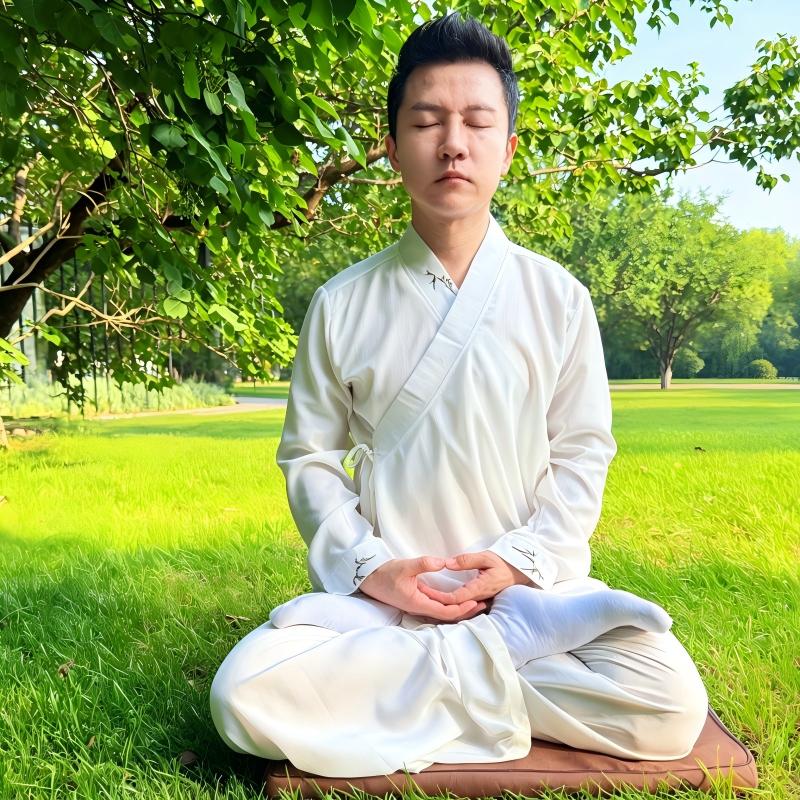
The theoretical foundation of Taoist Qi Cultivation is built upon a profound understanding of the nature of Qi (炁) itself. In Taoism, Qi is not only the root of human life activity but also the primordial substance from which all things in Heaven and Earth are generated. The spirit-generals (神将, Shen Jiang — divine commanders summoned by Taoist priests) that a priest commands are also transformations of Qi.
Therefore, Qi refinement is not merely a technique for health and longevity — it is the fundamental prerequisite for accomplishing Taoist rituals and commanding spirits.
Early Taoist classics extensively expounded the principles of Qi refinement. The Taiping Jing says:
“One who obtains the true Tao can use inner Qi; the outer Qi is not used. With inner Qi, one nourishes one’s nature, and then can return to infancy and restore one’s destiny.”
This emphasizes the essential meaning of using inner Qi to nourish nature and return to the original state of infancy.
During the Wei and Jin dynasties, related techniques became increasingly refined, especially in the Shangqing (上清, Supreme Clarity) scriptural tradition centered on Mount Maoshan in Jurong, Jiangsu. Ancient Shangqing texts such as the Shangqing Dadong Zhenjing (上清大洞真经) and the Dongzhen Taishang Suling Dongyuan Dayou Miaojing (洞真太上素灵洞元大有妙经) detail the names, functions, and dwelling places of the five-organ spirits within the body, instructing practitioners to visualize their forms, colors, and Qi as the core of practice.
Although these methods are extremely complex, the fundamental concept of visualization and Qi refinement as the core is consistently maintained.
The Yunji Qiqian (云笈七签, Seven Slips of the Cloud Satchel), a comprehensive collection of Taoist practices from before the Northern Song, systematically discusses visualization and spirit-preservation. It holds that visualization is the practitioner’s focused attention on specific deities, persons, objects, or principles according to a set procedure, in order to achieve concentration, stillness, and self-cultivation. Taoism values visualization for its ability to guide one into stillness, mobilize latent potential, attain spiritual realization, and heal the body.
For a deeper philosophical background on Taoist cosmology and Qi, see the Stanford Encyclopedia of Philosophy’s entry on Taoism.
III. The Main Methods of Taoist Qi Cultivation
Taoist Qi Cultivation methods are numerous, but can be broadly classified into three categories: refining external Qi, visualization and guarding the One, and refining spirit-generals and summoning them into union.
(1) Refining External Qi (服炼外炁)
Refining external Qi is the most basic method of Taoist Qi Cultivation. It refers to absorbing the essence Qi of Heaven, Earth, the sun, moon, and stars through breathing and inhalation to nourish oneself. Methods include consuming solar essence, consuming lunar radiance, absorbing the Three Lights’ True Qi, taking in the Qi of the Big Dipper’s Handle (天罡炁), and consuming thunder Qi.
Consuming Solar Essence and Lunar Radiance has ancient origins. The Taishang Lingbao Wufu Xu records:
“Consuming the essence of the sun brings long life.”
“Consuming the essence of the moon nourishes the root of the kidneys; white hair turns black again.”
The method of consuming solar essence is often practiced from the first to the seventh day of each month, at dawn. Enter a quiet room, close the eyes, and visualize the red Qi of the sun’s essence descending into your mouth. Swallow it. For lunar radiance, practice at midnight, visualizing white Qi from the kidneys circulating throughout the body, ascending to the brain and descending to the soles of both feet.
By the Song Dynasty, the Tianxin School (天心派) systematized the method of absorbing Qi into the practice of “Taking in the Three Lights’ True Qi.” The Wushang Xuanyuan Santian Yutang Dafa (无上玄元三天玉堂大法) requires students to take in the “Three Lights’ True Qi” daily. The Three Lights are the sun, moon, and stars (primarily the Big Dipper’s Handle).
The method: Each morning, face the altar, offer incense, sit comfortably, and with eyes partially closed, first form the Sun Lord’s hand seal, recite the Sun Lord’s Mantra nine times, inhale one mouthful of solar Qi through the nose, visualize five colors entering the five organs, and swallow the Qi. Then switch to the Moon Lord’s seal and mantra, inhaling lunar Qi. Then switch to the Big Dipper’s seal and mantra, visualizing the Dipper radiating ten thousand zhang of firelight, inhaling it fully, and swallowing the Qi into the Dantian.
The Yutang Dafa emphasizes:
“Use my Three Lights to unite with Heaven’s Three Lights. Let inner Qi unite with outer Qi. Let the outer spirit match the inner spirit. When heart and symbol become one, one can communicate with the true and reach the numinous, commanding ghosts and spirits.”
Taking in Qi (取炁) is a specialized category within refining external Qi. It refers to practitioners actively absorbing specific True Qi from the cosmos according to specific directions and times. Among these, taking in the Big Dipper’s Handle Qi (天罡炁) is most valued by all schools.
Taoism holds that the Big Dipper’s Handle Qi has the function of suppressing evil and dispelling impurity. Therefore, in daily cultivation, stepping the Dipper, visualizing and summoning spirit-generals, capturing demons, and entering the homes of the sick, one absorbs it to assist the righteous and dispel evil, or absorbs it and spreads it into talisman water.
The Thunder Rites (雷法) especially value the Big Dipper’s Handle Qi, holding that thunder is Yang Qi wrapped in Yin Qi, bursting forth with power. In the human body, Yin Qi wraps Yang Qi with no opening for release. Therefore, using the Big Dipper’s True Qi to strike the Yin Qi and guide out the Yang Qi causes thunder to manifest.
The method: First determine the direction of the Big Dipper’s Handle based on the time and date. Face that direction. Visualize the Great Sage of the Big Dipper standing before you — hair unbound, barefoot, wearing plain silk robes, one hundred zhang tall. Once clearly visualized, inhale the light Qi from the Dipper’s central eye through the nose and mouth, swallow it into the abdomen, and send it to the three Dantians and the five organs and six bowels.
Consuming Thunder Qi is another method in the Thunder Rites. According to the Mengwei Jing (盟威经), when the first spring thunder sounds each year, concentrate the Spirit, tap the teeth, and request the Qi, reciting:
“I receive the Qi of the Thunder Duke and the power of the Lightning Mother to eliminate all illness from my body, so that all people may be healed. Let me command the generals of the Five Elements and the soldiers of the Six Jia to cut off all evil and destroy all spirits. Quickly, quickly, as the law commands!”
After the mantra, inhale thunder Qi nine times through the nose, swallow saliva nine times, then inhale thunder Qi ten times through the mouth and swallow ten times. Always preserve and nourish this. For healing illness, driving out evil, spreading Qi, and activating talismans, there will be no failure.
(2) Visualization and Guarding the One (存思与守一)
Visualization and guarding the One are the core inner methods of Taoist Qi Cultivation. Visualization (存思) means using the power of intention to focus exclusively on the three Dantians, nine palaces, five organs, four images, true Qi, body spirits, heavenly deities, sun, moon, and stars. Guarding the One (守一) means guarding the “One” within the human body — the prenatal ancestral Qi and Original Spirit — so that Spirit and Qi unite and do not disperse.
Embryonic Breathing (胎息) is the great essential of Qi consumption. The method begins at the hour of Zhen (震, 5–7 AM) by entering a quiet chamber, or during walking, standing, sitting, or lying down. One must be pure inside and out, concentrating Qi to achieve suppleness like an infant, with every breath returning to the womb. When embryonic breathing reaches a deeper level, Spirit enters Qi, Qi wraps around Spirit, the nose breath becomes faint and barely perceptible, the eight meridians open, and the whole body feels comfortable.
Embryonic breathing and Original Qi are one body. If you understand embryonic breathing, you understand Original Qi.
The Shangqing School’s visualization methods are especially refined. Practitioners visualize the spirits of the five organs and six bowels. For example, the Central Life-Directing Minister resides in the Crimson Palace (the heart), exhaling purple cloud Qi that pervades the five organs. Each organ generates five-colored radiance like lotus flowers. The practitioner, with eyes partially closed, recites this, uniting the heart-mind with the body spirits.
(3) Refining Spirit-Generals and Summoning Them into Union (炼将与召合)
The unique aspect of Taoist Qi Cultivation is that its purpose is not only self-transformation but also the creation of spirit-generals that can be commanded, or the realization of one’s own union with the spirit-generals. Therefore, visualization of deities and spirit-generals — their names and appearances — occupies a significant proportion of Qi refinement.
Refining Spirit-Generals (炼将) is often about refining one’s own command of spirit-generals, hence the term “refining generals” or “refining spirits.”
The principle of refining spirit-generals lies in “transforming Qi into Spirit.” The root of spirit-generals is the Qi of the Tao. Through combining visualization and inner cultivation, the priest transforms his inner Qi into the body of a spirit-general. The foundation lies in daily inner practice. The practitioner must first become familiar with the spirit-general’s appearance, clothing, colors, functions, and weapons. Then, through repeated visualization in the mind, the image becomes increasingly clear and vivid. Only then can one summon and unite with them at the altar according to the ritual.
The Shangqing Leiting Huoche Wulei Dafa (上清雷霆火车五雷大法) contains a representative method for refining spirits:
Sit in quiet meditation, concentrating the Spirit. Visualize a point of extreme brightness in the kidney palace. Soon, fire arises, gradually burning throughout the entire body. Blow one mouthful of Qi, and all the ashes are blown away. Visualize the five directions’ five-colored Qi mixing and forming a ball of purple-gold light, transforming into an infant. The infant gradually grows — phoenix beak, silver teeth, red hair, blue body, eyes radiating ten thousand zhang of firelight, fire on both wings, a head beneath each armpit with eyes also emitting fire, golden light, a fire drill in the left hand, an eight-cornered hammer in the right hand, a fire dragon encircling the body. Then visualize the Five Thunder Spirit-Generals, towering to Heaven and standing on Earth, accompanied by fire clouds, with fierce and mighty divine power.
The purpose of refining spirit-generals is to station them within the body, ready to be summoned at any time. In actual summoning, the priest first recites mantras and issues the summoning talisman. He visualizes the heavenly general arriving, then inhales the general through the nose into the Central Palace to merge. Then he separates the general’s Five Elements and sends them into the five organs. He draws them out with hand seals, ready for command at the altar.
Summoning generals was originally a traditional method of the Talisman School (符箓派), but it usually relied primarily on talismans and mantras, supplemented by visualization. The Thunder Rites’ summoning and union changed this, taking Internal Alchemy as its foundation and emphasizing the merging of inner and outer generals into one.
The Thunder Department generals summoned in Thunder Rites reside in the “Thunder City.” Yet Thunder Rite theory also holds that “the general uses one’s own Original Spirit.” Therefore, the general residing in the Thunder City and the general emerging from within the body must be unified. This method of unifying inner and outer generals is called “Summoning and Union” (召合, Zhao He).
Ready to practice? Explore our Taoist Qi Cultivation courses →
IV. The Relationship Between Taoist Qi Cultivation and Talismans
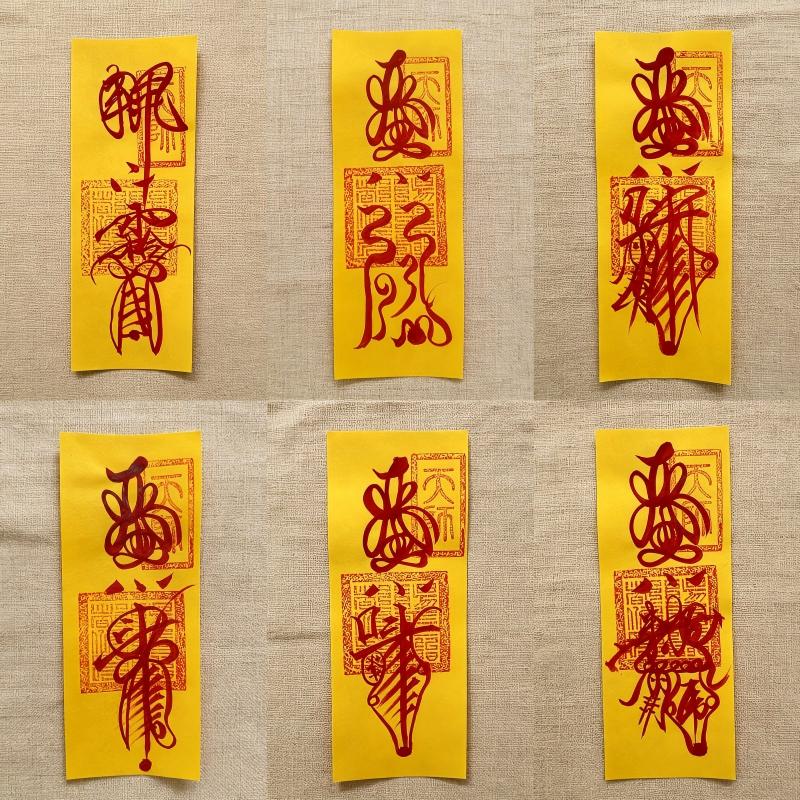
Institutionally, the summoning of spirit-generals and immortal officials is related to ordination (授箓, Shou Lu — the ritual transmission of Taoist registers). Therefore, refining generals should still be based on the Taoist register. However, the generals on the register are still outside the body. One must be able to summon them at any time, station them within the body, and regularly review them. This repeated operation is precisely the method of unifying Qi refinement and general refinement.
After the rise of the Thunder Rites, Taoist Qi Cultivation developed further. The Thunder Rites integrated Internal Alchemy with talismans and mantras, teaching both visualization, spirit-preservation, and Internal Alchemy, as well as prayer rituals, talismans, and mantras — emphasizing Internal Alchemy as the foundation.
The Qingwei School (清微派) also emphasized: “Do not be solely attached to talismans, nor mired in mantras.” Instead, first use my own True Qi to unite with the spirit of the Thunder General.
Discover authentic Taoist Talismans →
Taoist Qi Cultivation began in the Han Dynasty, was refined by the Shangqing School during the Wei and Jin, and reached integration with Internal Alchemy in the Talisman and Thunder Rites of the Song and Yuan. It formed a complete system — from refining external Qi to visualization and inner observation, from absorbing and gathering Qi to refining generals and summoning them into union.
Qi refinement is not merely a technique for health and longevity. It is the fundamental practice by which a Taoist priest accomplishes Taoist rituals and communicates with the divine.
Through ordination and the transmission of the Dharma, combined with daily visualization and general-refinement practice, a qualified Taoist priest is formed. And a truly qualified priest must, through long-term practice, use Qi refinement as the foundation, take saving the world and delivering people as their duty, and only then gradually advance in cultivation and accomplish the true Tao.
☯️ This is an introduction to the Taoist art of Qi refinement. It is a profound tradition requiring proper guidance and years of dedicated practice. If you wish to explore these methods further, our Qi cultivation courses and authentic Taoist talismans are available.
👉 [Explore Qi Cultivation Courses]
👉 [Explore Authentic Taoist Talismans]