
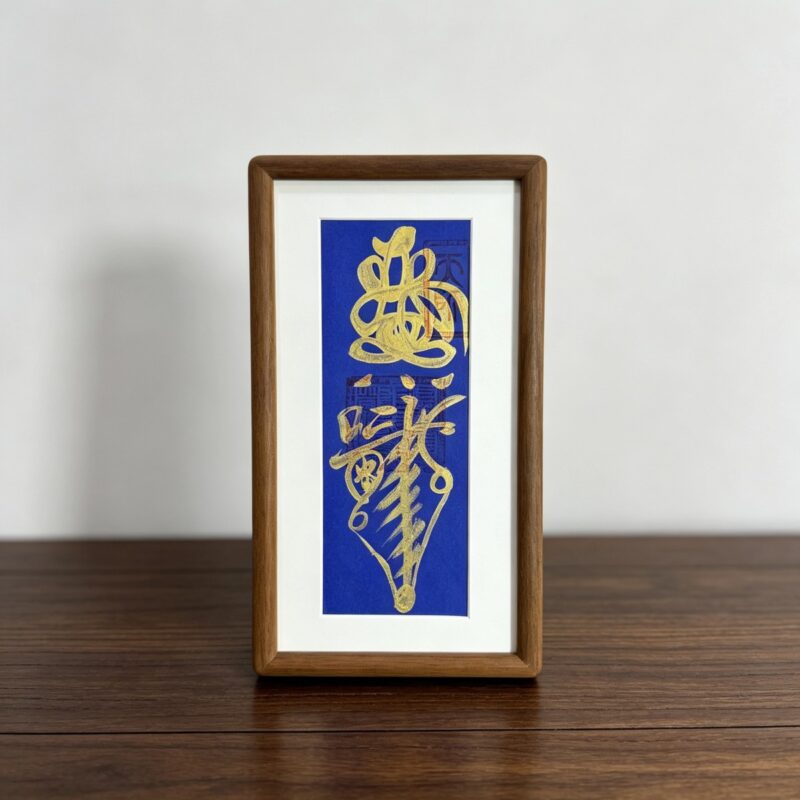
A Taoist talisman structure is not random. It has a grammar — a head, a body, and a foot.
Most Taoist talismans are built from three essential parts: the head (fu tou), the body or heart (fu dan), and the foot (fu jiao). Understanding this Taoist talisman structure is the first step toward reading a fu — not as a magic trick, but as a traditional form of writing with its own rules and logic.
The Three Parts of a Taoist Talisman Structure
The Taoist talisman structure is composed of three components: the head (fu tou), the body or heart (fu dan), and the foot (fu jiao). Each part has a distinct function. The head addresses the spiritual realm. The body states the purpose. The foot authorizes the document. Together they form a complete, coherent whole.
This three-part structure is documented in official cultural references. The Taiwan Folk Art Dictionary, published by the Taiwan Provincial Historical Commission, describes the structure of a peace talisman as “符頭、符身(符膽)、符腳” — head, body, and foot — confirming this as a recognized traditional form. You can view the entry on the Taiwan Folk Art Dictionary.
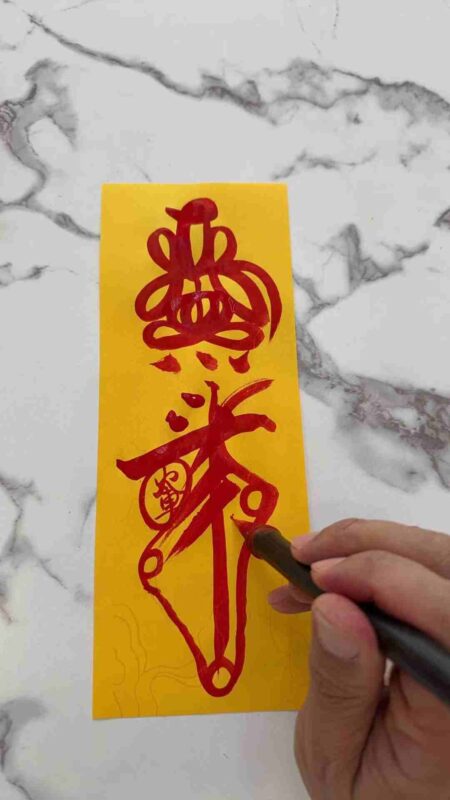
The Talisman Head (符頭) — The Address
The top of a talisman is its head. It is not a title. It is more like an address — it tells the spiritual realm who this document is for, and who is sending it.
The most common element in a talisman head is three small V-shaped strokes (ˇ ˇ ˇ). In the Taoist tradition, these three marks represent the Three Purities (San Qing) — the three highest deities of the Taoist pantheon. They are always drawn first.
In some lineages, each stroke is accompanied by a silent incantation. As Eva Wong documents in her work on Taoist practice:
“The first mark moves sky and earth. The second mark unleashes the power of the patriarch’s sword. With the third mark, may all malevolent spirits and destructive powers be banished a thousand miles away.”
The head establishes authority. Without it, the talisman has no one to answer to.
The Talisman Body / Heart (符膽) — The Command
Below the head is the body (fu dan), sometimes called the gallbladder or heart. This is the core of the Taoist talisman structure — where its purpose is stated and its power is concentrated.
The body typically contains the command (chi ling 敕令), followed by the name of the deity or spirit being invoked, and then the specific function of the talisman — whether for protection, healing, or another purpose.
Some talismans include a final, concentrated mark called the fu dan proper — a kind of “seal” or “heart” that locks the intention into place. In traditional practice, this is considered the most vital part. One description puts it plainly: “The fu dan is the essence of the entire talisman. Whether it works or not depends on this.”
The body is where the talisman becomes specific. The head says who. The body says what.
The Talisman Foot (符腳) — The Signature
At the bottom is the foot (fu jiao). This is where the talisman is authorized.
In many traditions, the foot is drawn as a complex, stylized character — often resembling a signature or a seal. It represents the authority of the priest or lineage that issued the talisman.
The most common form is the compound character “Gang Yin” (罡印), which combines the concept of gang (the energy of the Big Dipper, associated with cosmic power) and yin (a seal of authority). The foot is not decorative. It is a statement: This is valid. This is authorized. This carries the weight of the lineage behind it.
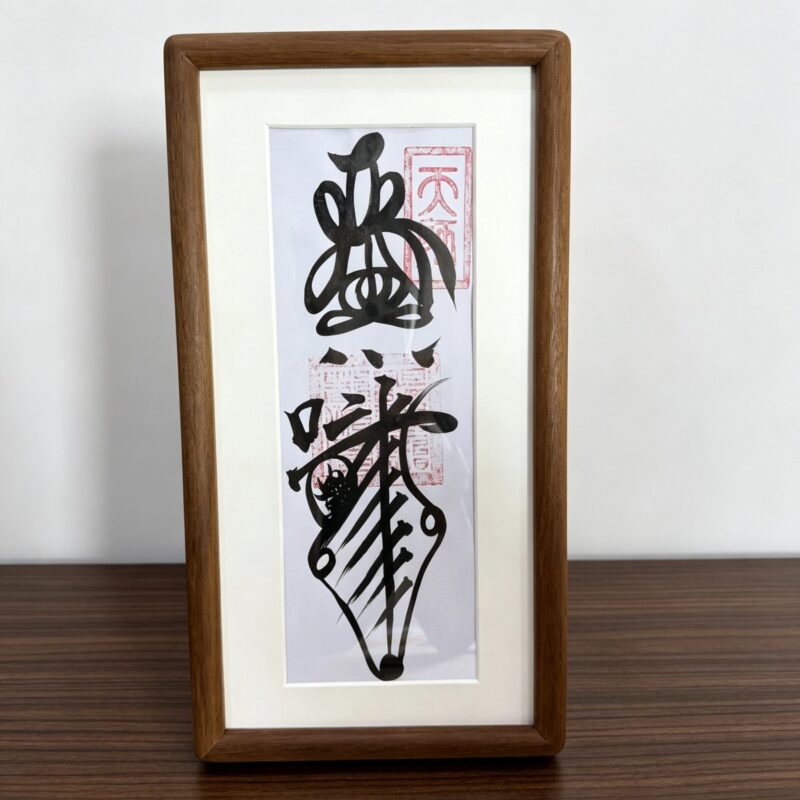
Why It Looks Unreadable
A fair question at this point: if a Taoist talisman structure has a grammar, why can’t most people read it?
The answer is historical. Early talismans were sometimes simple and legible. Over time, they became deliberately cryptic — not to hide meaning, but to signal that they were not ordinary writing.
As scholars of Taoism have noted, the incomprehensibility of the script is central to its authority. Ge Hong, the 4th-century Taoist master, wrote that as long as the inscription was authentic, the user did not need to be able to read it.
The talisman is not meant to be read the way you read a letter. It is meant to be recognized — by the spirits it addresses, and by the tradition it belongs to.
What This Means for You
When you understand the Taoist talisman structure, you are not just looking at a piece of paper with ink. You are holding a document with a head, a heart, and a foot. It has an address. It has a command. It has a signature.
You do not need to read it to feel its weight. But understanding its structure can turn it from a mysterious object into a quiet piece of tradition — one you can hold with a little more awareness. Explore Hand-drawn Taoist Talisman →