
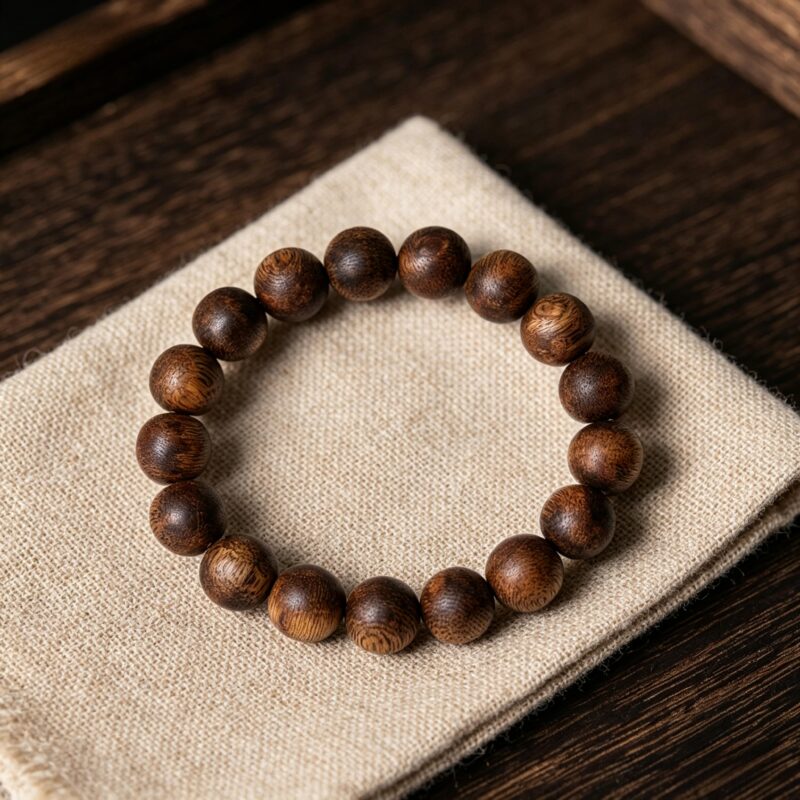
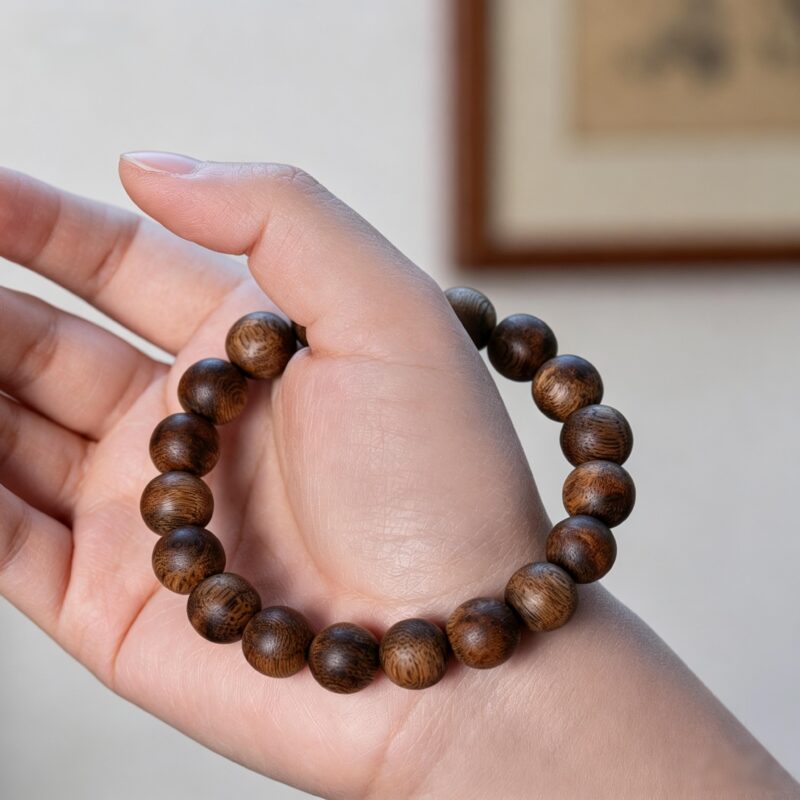
A Hainan Yingge Green Qinan Agarwood Bracelet is valued not simply as a bracelet, but as a material object shaped by resin, aroma, and time. In current market language, this term is usually used for Hainan agarwood appreciated for fine oil lines, a sweet-cool aromatic character, and a softer, more integrated relationship between resin and wood. For buyers, the appeal lies in balance: richness without heaviness, depth without aggression, and a fragrance that stays close rather than projecting sharply.
At the botanical level, Chinese agarwood comes from Aquilaria sinensis, an accepted species in Kew’s Plants of the World Online, with a native range extending to Hainan. Agarwood itself forms when resin develops in response to injury or infection within the wood, which is why scent, density, grain, and oil line structure can vary significantly from piece to piece. (Kew POWO – Aquilaria sinensis, AFCD Species Action Plan for Aquilaria sinensis)
What “Yingge Green Qinan” Usually Refers To
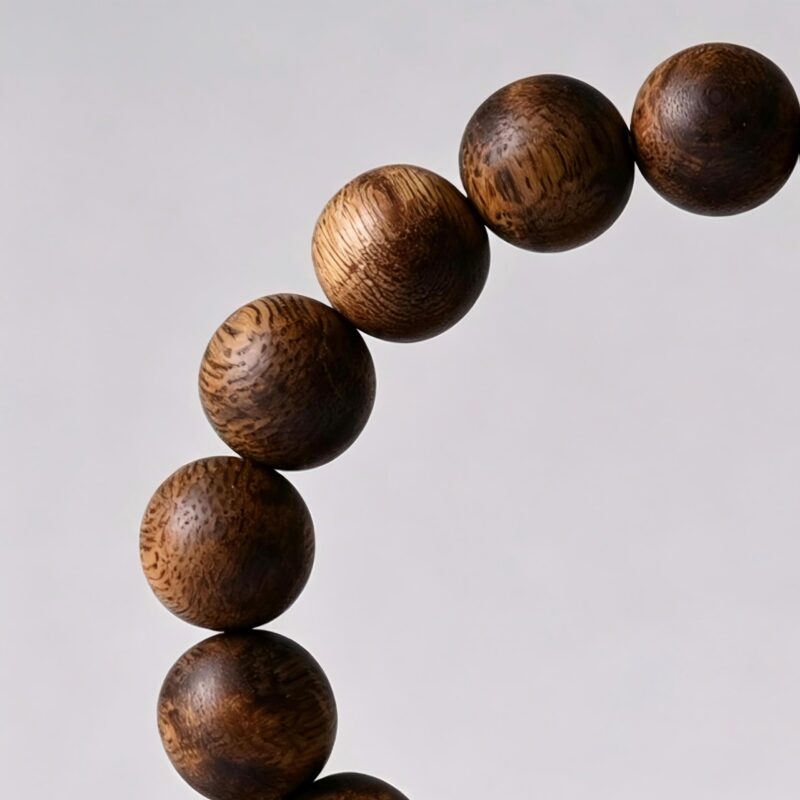
In fragrance and bracelet circles, “Yingge Green Qinan” is generally used as a material description rather than a formal botanical grade. It usually points to Hainan material associated with:
- fine and visible oil lines
- green-brown to olive-toned surface character
- a soft, oil-rich feel
- a sweet opening, cooler middle tone, and creamy finish
- a more integrated, fibrous resin structure rather than a sharply separated resin layer
This is one reason such material is often appreciated both for wearing and for close aromatic appreciation. In bracelet form, especially at larger bead sizes such as 11mm, the user experiences not only scent, but also weight, warmth, and surface character.
Botanical and Conservation Context
Chinese agarwood is tied to Aquilaria sinensis, and wild resources are now under strong protection pressure. Official Chinese protected-species listings include Aquilaria sinensis as a second-class nationally protected wild plant, and official Shenzhen government guidance notes that illegal cutting of wild incense trees may constitute a criminal offense under Chinese law. Meanwhile, international trade in agarwood-producing taxa is regulated under CITES. ( CITES – Agarwood-producing taxa)
Because wild populations have declined and regulation has tightened, commercially circulating Hainan agarwood today is generally cultivated rather than wild-harvested. ITTO and CITES materials also note that cultivation and inoculation are important for relieving pressure on wild populations and supporting legal trade. That does not automatically make cultivated material low quality. The relevant question is not “wild or not,” but rather how well the resin formed, how integrated the material is, and how honestly it is described. (ITTO/CITES workshop note, AFCD Species Action Plan)
What Makes a Good Hainan Yingge Green Qinan Bracelet
A strong Hainan Yingge Green Qinan bracelet is usually judged by a combination of factors rather than one dramatic sign.
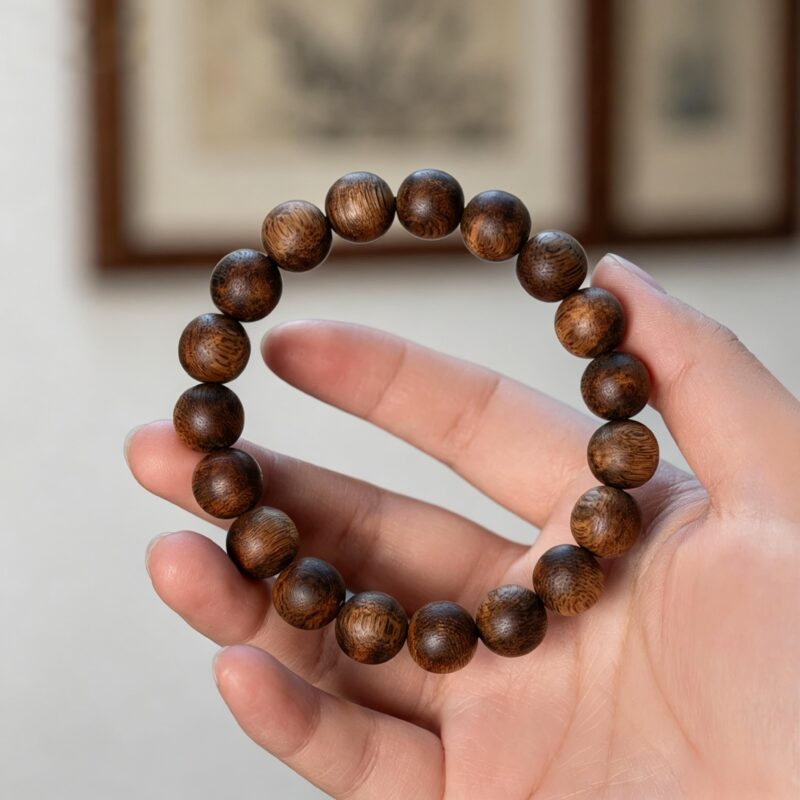
1. Oil line clarity
Fine, visible oil lines are one of the first things buyers look for. They suggest that resin formation is present and legible in the bead surface.
2. Integrated resin and wood
Higher-quality material often feels unified rather than patchy. The resin does not look pasted onto the wood; it feels settled into the structure.
3. A softer, weighted texture
Well-formed material is often slightly softer in tactile impression than dry wood, with an oily, warm, and quietly substantial feel.
4. Aroma development
A more refined piece does not need to shout. Instead, it tends to open sweetly, move toward a cooler tone, and settle into a rounded, creamy finish.
5. Honest natural variation
Real agarwood beads are not perfectly identical. Differences in line, tone, surface response, and depth are part of the material’s authenticity.
Why 11mm Beads Change the Experience
The larger the bead, the more room the material has to show itself.
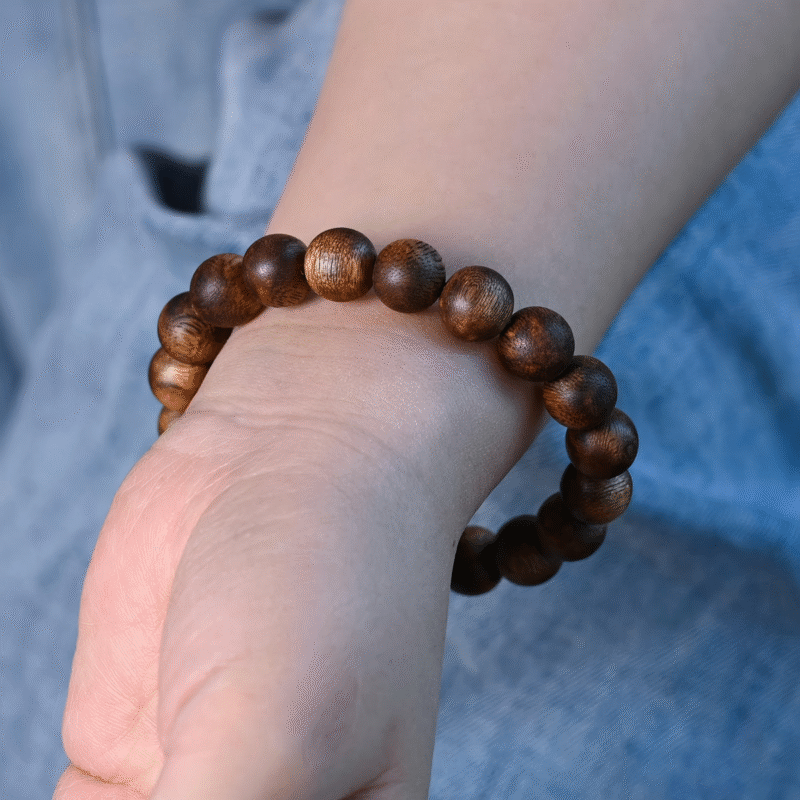
With an 11mm Hainan Yingge Green Qinan Agarwood Bracelet, the user experiences:
- stronger wrist presence
- clearer oil lines and tonal transitions
- more noticeable warmth in hand
- better aromatic appreciation bead by bead
A smaller bracelet may be easier for daily wear, but an 11mm bracelet gives more space for the material to be read through both touch and scent. That is why this size often appeals to buyers who want something that sits between personal wear and quiet connoisseurship. Explore the 11mm Hainan Yingge Green Qinan Agarwood Bracelet →
How to Read the Aroma
For this style of Hainan agarwood, the scent is often valued for its sequence rather than brute force.
A common way people describe the experience is:
- opening: clear sweetness
- middle: a cooler tonal lift
- finish: mellow creaminess or milky softness
This kind of profile is part of what makes Hainan green qinan-style material attractive. It can feel rich without becoming sharp, and composed without becoming dull. The scent usually stays close to the skin and becomes more noticeable through warmth, touch, and handling rather than through outward projection.
How to Judge Before You Buy
If you are considering a Hainan Yingge Green Qinan bracelet, it helps to check the following:
- Is the seller transparent about origin and treatment status?
- Are the oil lines visible in clear close-up photos?
- Does the listing describe aroma in specific terms instead of vague luxury language?
- Are natural differences between beads acknowledged rather than hidden?
- Is the material positioned honestly as cultivated or wild where relevant?
For higher-end pieces, the best sellers do not oversimplify. They explain what the material is, what it is not, and why it is valued.
Why Reserve Grade Makes Sense
Not every strong Hainan bracelet needs to be labeled as a top collector piece.
Reserve Grade works well for material that shows:
- clear oil lines
- good resin balance
- strong wearable presence
- real aromatic depth
- suitability for both wearing and scent appreciation
That makes it a useful level for buyers who want meaningful material quality without moving immediately into the most rarefied collector pricing.
Final Thoughts
A Hainan Yingge Green Qinan Agarwood Bracelet is best understood through its material behavior: how the oil lines read, how the resin and wood integrate, how the scent unfolds, and how the bracelet feels over time.
The best examples are not loud. They do not depend on ornament, coating, or exaggerated claims. They stand on natural resin structure, aromatic continuity, and a quiet but unmistakable sense of presence.
For a buyer, that is often the real difference between a bracelet that merely looks expensive and one that feels materially convincing.
Explore Agarwood Bracelet Collection →
How to Choose an Agarwood Bracelet →
How to Tell if Agarwood Is Real →
FAQ
What is a Hainan Yingge Green Qinan Agarwood Bracelet?
It is a bracelet made from Hainan agarwood material commonly described in trade language as “Yingge Green Qinan,” typically valued for fine oil lines, sweet-cool aroma, and a more integrated resin structure.
Is Hainan Yingge Green Qinan wild or cultivated?
Commercially circulating material today is generally cultivated rather than wild-harvested, because wild Aquilaria sinensis resources are protected and international trade is regulated. (Kew POWO – Aquilaria sinensis, CITES – Agarwood-producing taxa)
Does cultivated Hainan agarwood still have high quality?
Yes. Quality depends on resin formation, oil integration, aroma, and material consistency—not on a simple wild-versus-cultivated label. ITTO and CITES materials explicitly discuss cultivated and planted resources as part of sustainable agarwood supply. (ITTO/CITES workshop note)
Why do bead surfaces and colors vary?
Natural agarwood is not uniform. Differences in tone, grain, oil line expression, and surface response reflect how resin formed within the wood over time.
Is a larger bead size better?
Not always better, but different. Larger beads such as 11mm usually give stronger material presence, clearer oil-line visibility, and a fuller tactile and aromatic experience.
What should I look for when buying one?
Look for visible oil lines, natural variation, honest treatment disclosure, specific aroma description, and clear close-up photos.