
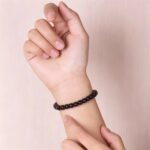

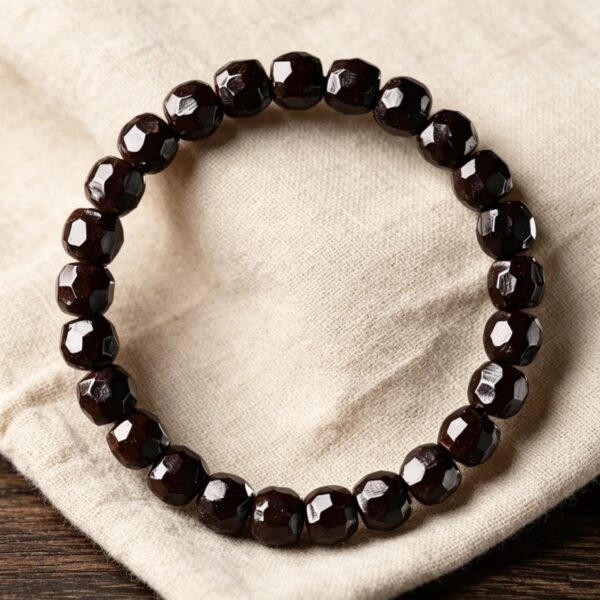
Indonesian Coconut Pedicle Bracelet · The Quiet Black
Worn for stillness. Deepened by touch.
A bracelet is not merely an ornament. It is a companion that changes with you — quietly, over months and years.
This is not coconut shell. It is Ye Di — the coconut pedicle, the small, dense joint where the fruit once connected to the tree. Each coconut yields only one pedicle. From that single pedicle, only one or two beads can be made. What you hold is the rarest part of the fruit.
This piece is made from Indonesian coconut pedicle — the most prized origin, known for its extraordinary density, rich natural oils, and deep, lasting color.
Why Indonesian Coconut Pedicle
Density born of a longer growing season.
Indonesian coconut trees grow more slowly than their Hainan counterparts. The fruit develops a thick, almost fleshless shell — hard, compact, and unusually dense. This is the material that experienced collectors seek. It is heavier in the hand, more stable with age, and far more responsive to the patina process.
Rich natural oil content.
The natural oils within Indonesian coconut pedicle are abundant. This is why it polishes so beautifully, why it resists cracking, and why it develops a deep, glowing patina with wear. It is not treated to achieve this effect. It is simply the nature of the material.
A color that deepens with time.
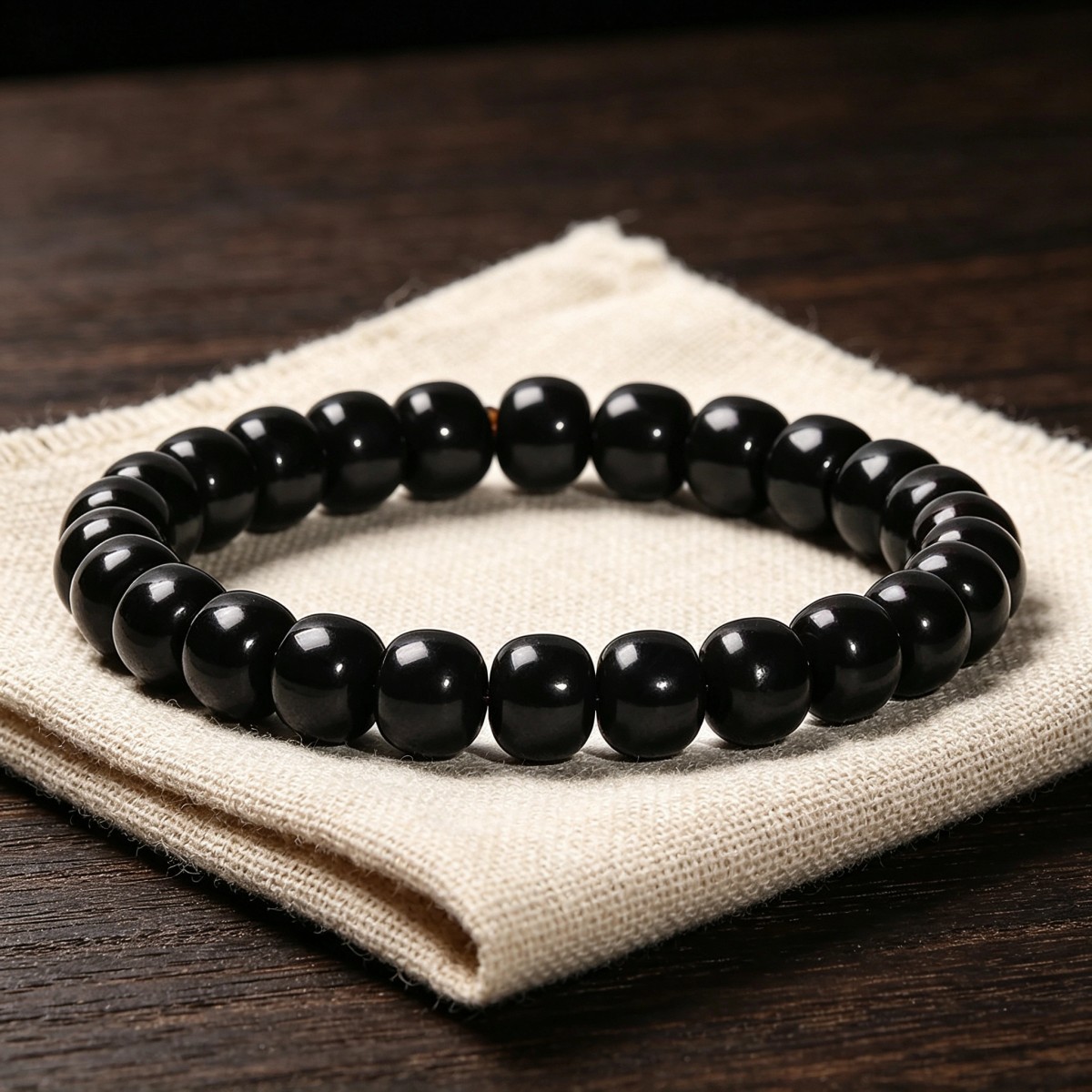
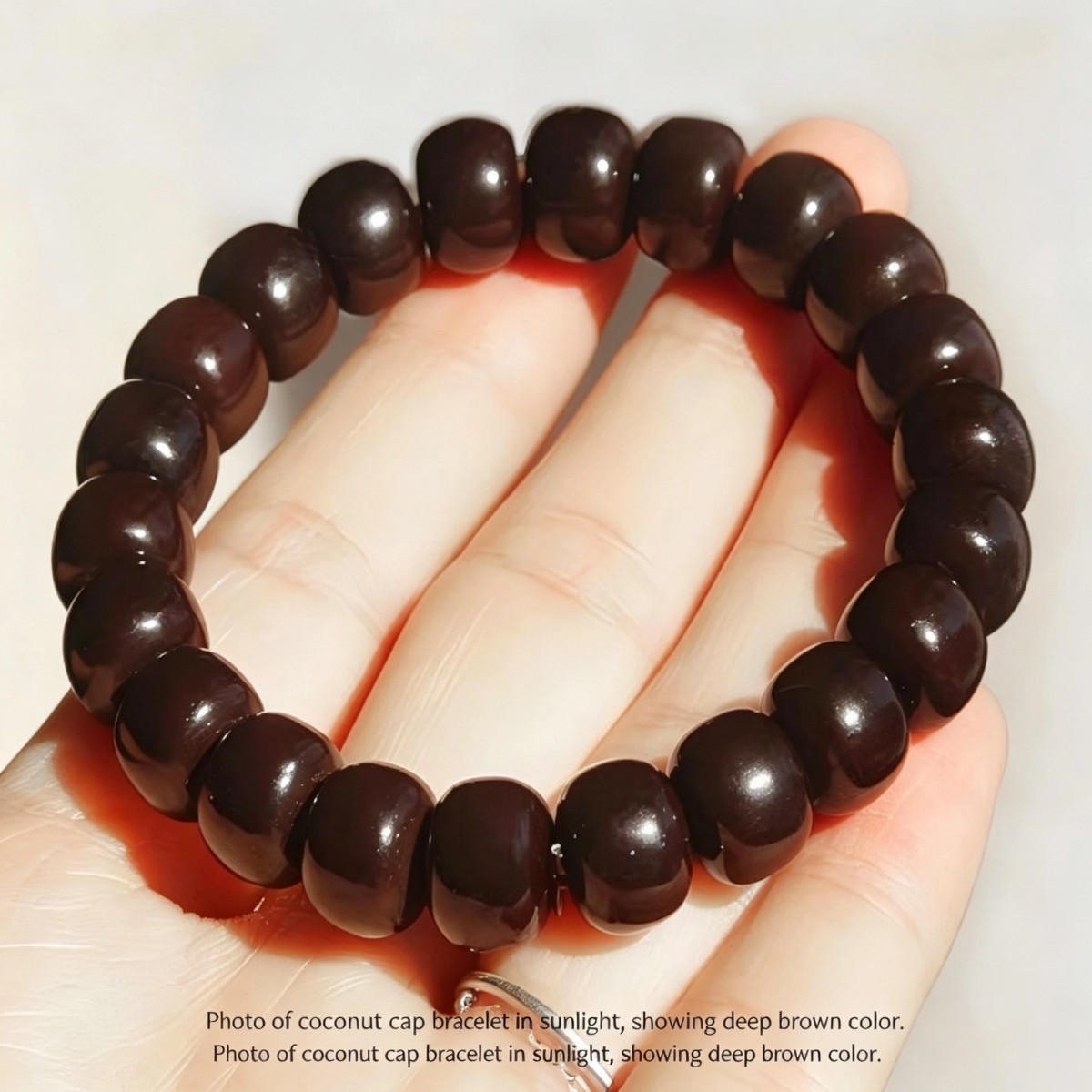
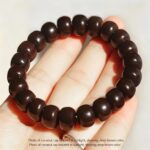
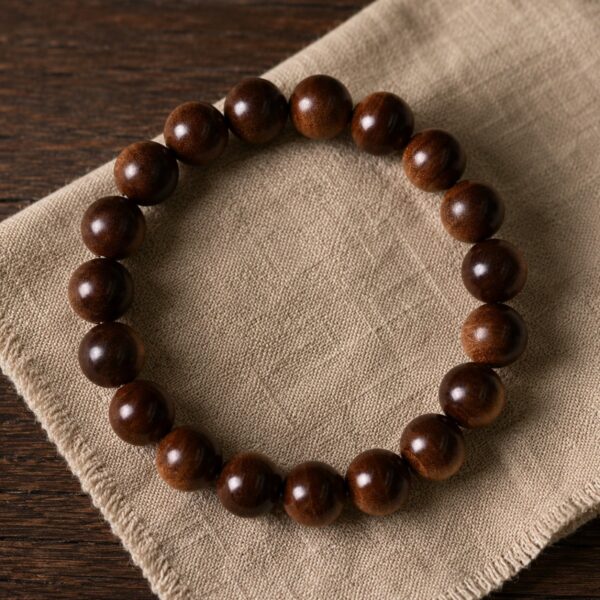
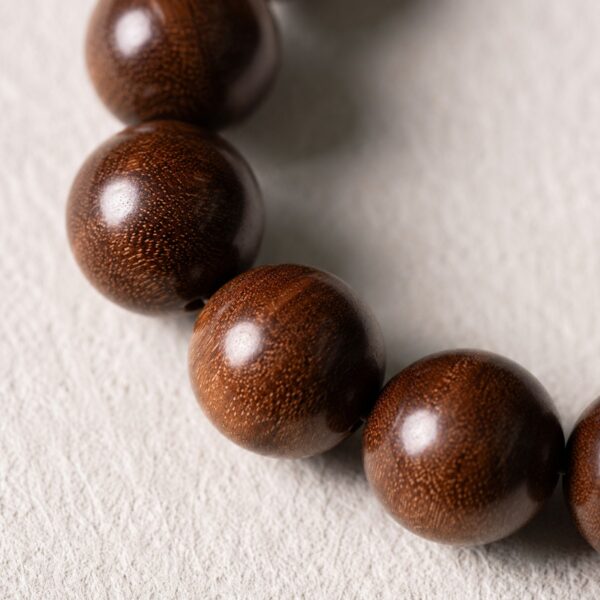
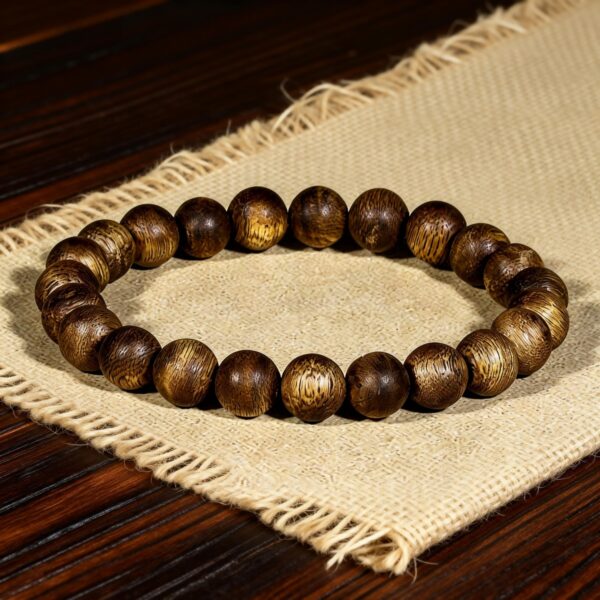
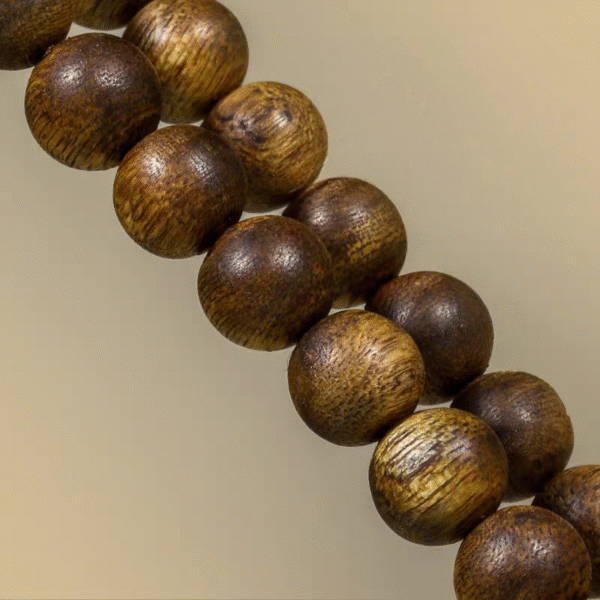
In indoor light, these beads appear almost black — deep, quiet, and grounded. Step into sunlight, and the same beads reveal a warm dark brown, with subtle grain lines catching the light. This is the nature of authentic, untreated coconut pedicle. It does not sit still. It responds to its surroundings.
What Makes This Different
One coconut, one pedicle.
The coconut pedicle is the woody connection point between the fruit and the palm — not the shell, not the husk. It is denser, finer-grained, and far more scarce. A single coconut produces only one pedicle. From that pedicle, only one or two beads can be cut. This is why old-growth coconut pedicle beads have long been treasured by collectors — not for decoration, but for rarity.
Old-growth material, high density, natural oil content.
These beads are selected from aged Indonesian coconut pedicles — dense, richly oiled, and quietly heavy in the hand. No dye. No oil treatment. No artificial darkening. The color you see is the color the material has grown into over years.
Hand-polished. Never waxed.
Traditional physical polishing only. No wax coating, no chemical finish. Each bead is shaped and polished by an experienced craftsman, slowly, until the surface is smooth and honest.
A quiet, natural scent.
True, untreated coconut pedicle carries a faint, warm woodiness — a subtle sweetness that deepens slightly with the warmth of your skin. It is not perfumed. It is not treated. It is simply the material, breathing quietly.
How to Tell Real From Treated
This is important — and easy to check.
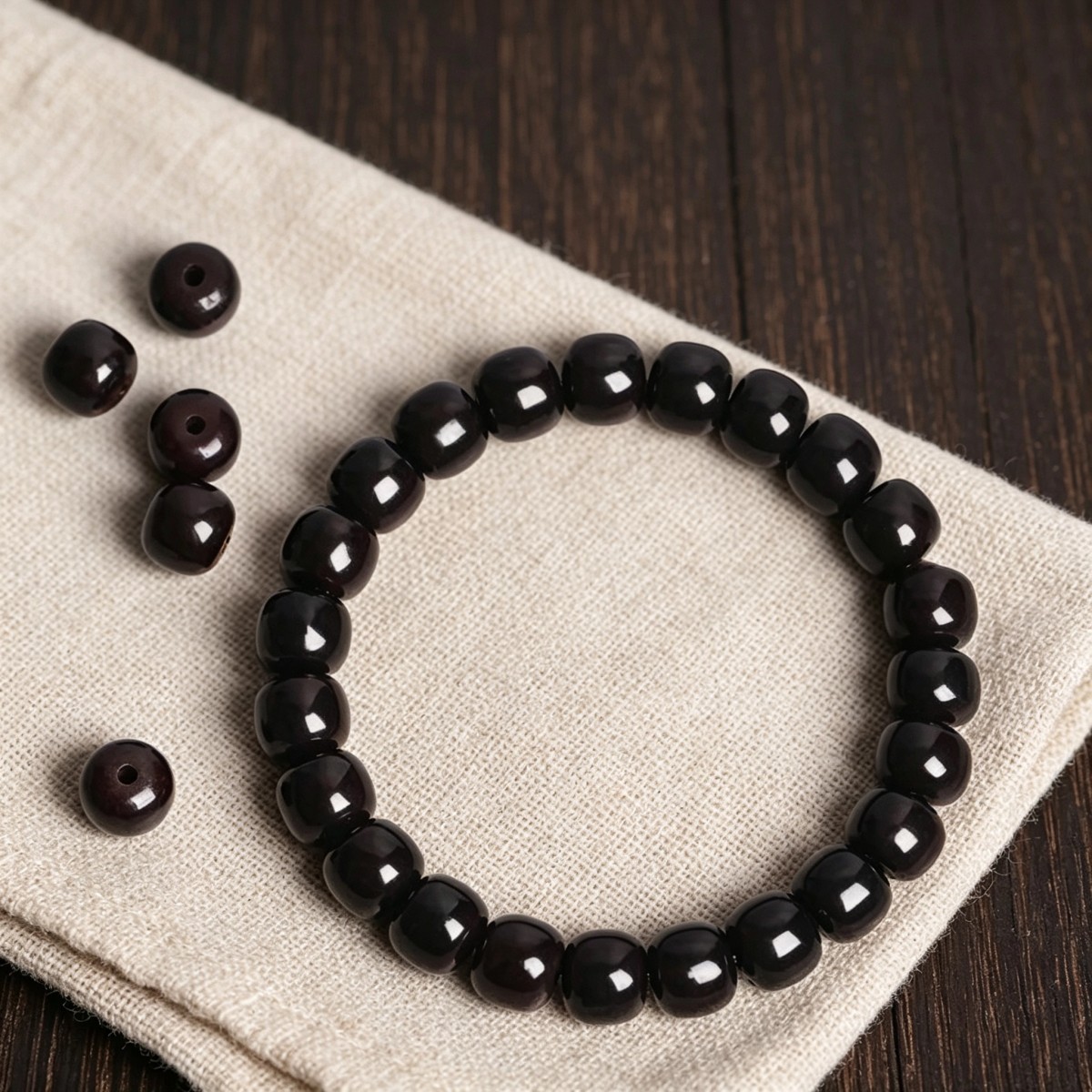
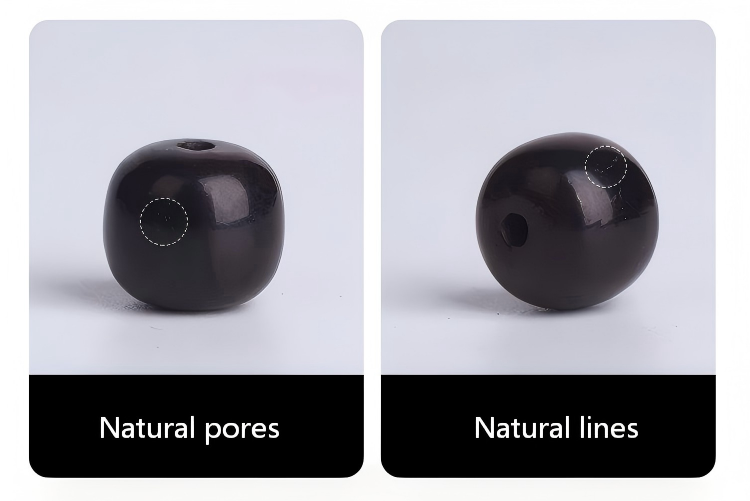
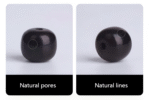
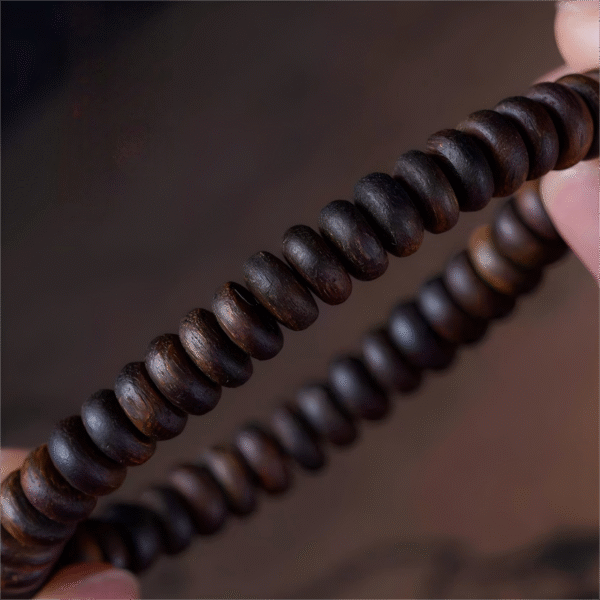
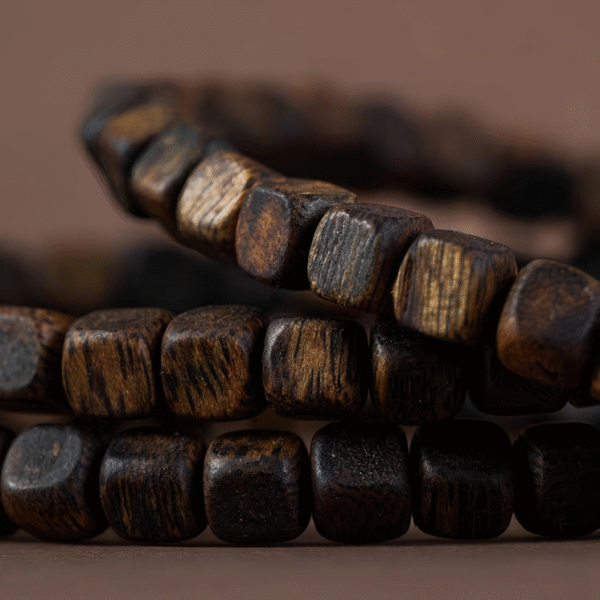
Natural coconut pedicle: Look closely at the holes where the cord passes through. You will see small pores and fine grain lines around the edges. These are the natural growth marks of the material. They are not cracks. They are not flaws. They are the signature of authenticity.
Dyed or oil-treated coconut pedicle: The holes are stained solid black. No pores. No grain lines. The surface looks uniformly dark even in bright light, with no warmth, no variation, no life.
These beads are the first kind. The pores and grain lines you see are a promise — not a problem.
How to Choose a Coconut Pedicle Bracelet →
A Quiet History
Beads made from coconut have been used in Chinese and Tibetan Buddhist practice since the Tang and Song dynasties, over a thousand years ago. By the Qing Dynasty, they were documented under names like Mu Ya and Man Guan, and old, well-patinaed coconut pedicle beads were considered rare and precious — valued alongside the finest sandalwood and rosewood.
This value has endured into the modern auction market. At a 2019 auction held by Cardale Auctioneers, a Coconut Pedicle 108-Bead Rosary was offered with an estimate of $2,000–$3,000 USD — a direct testament to the material’s recognized worth among collectors of Asian antiques.
In the Himalayan tradition, coconut shell prayer beads from the early 20th century are preserved in the collection of the Rubin Museum of Himalayan Art, where they are classified as ritual objects — physical companions to the recitation of mantras and the cultivation of merit.
Among dark prayer beads, old-growth coconut pedicle has long been regarded as the finest of its kind. Not for its color alone, but for the way it responds to time and touch.
The Patina Journey
With regular wear, the natural oils from your skin begin to interact with the beads. Over weeks and months, a soft patina forms — the surface deepens, the grain lines gradually soften, and the beads develop a quiet, mirror-like sheen that collectors call “piano black.”
The color will continue to shift, slowly, with the rhythm of your own skin. No two wearers will end up with the same bracelet. This is not a flaw. It is the quiet pleasure of wearing a living material.
Details
| Material | Old-growth natural Indonesian coconut pedicle, undyed, untreated |
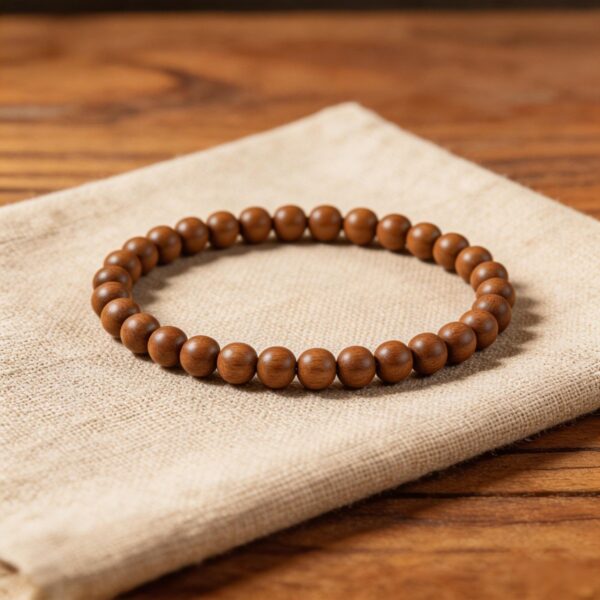
| Bead size | 8 × 7 mm |
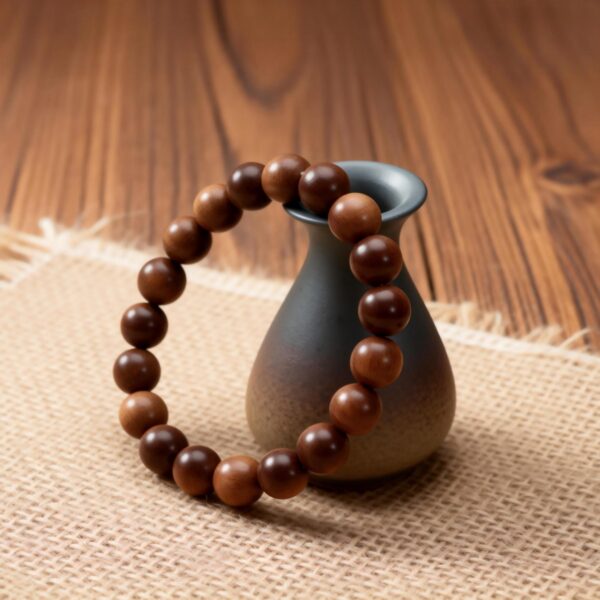
| Bead count | 28 beads |
| Finish | Traditional physical polishing, no wax, no oil treatment |
| Color | Near-black indoors, warm dark brown in sunlight |
| Grain | Natural pores and fine grain lines visible around bead holes |
| Scent | A faint, warm woodiness — natural to the material, more noticeable when warmed by the skin |
| Patina | Develops gradually with wear — deepens to a soft “piano black” over time |
| Craftsmanship | Hand-polished by experienced craftsman |
| Gender | Unisex |
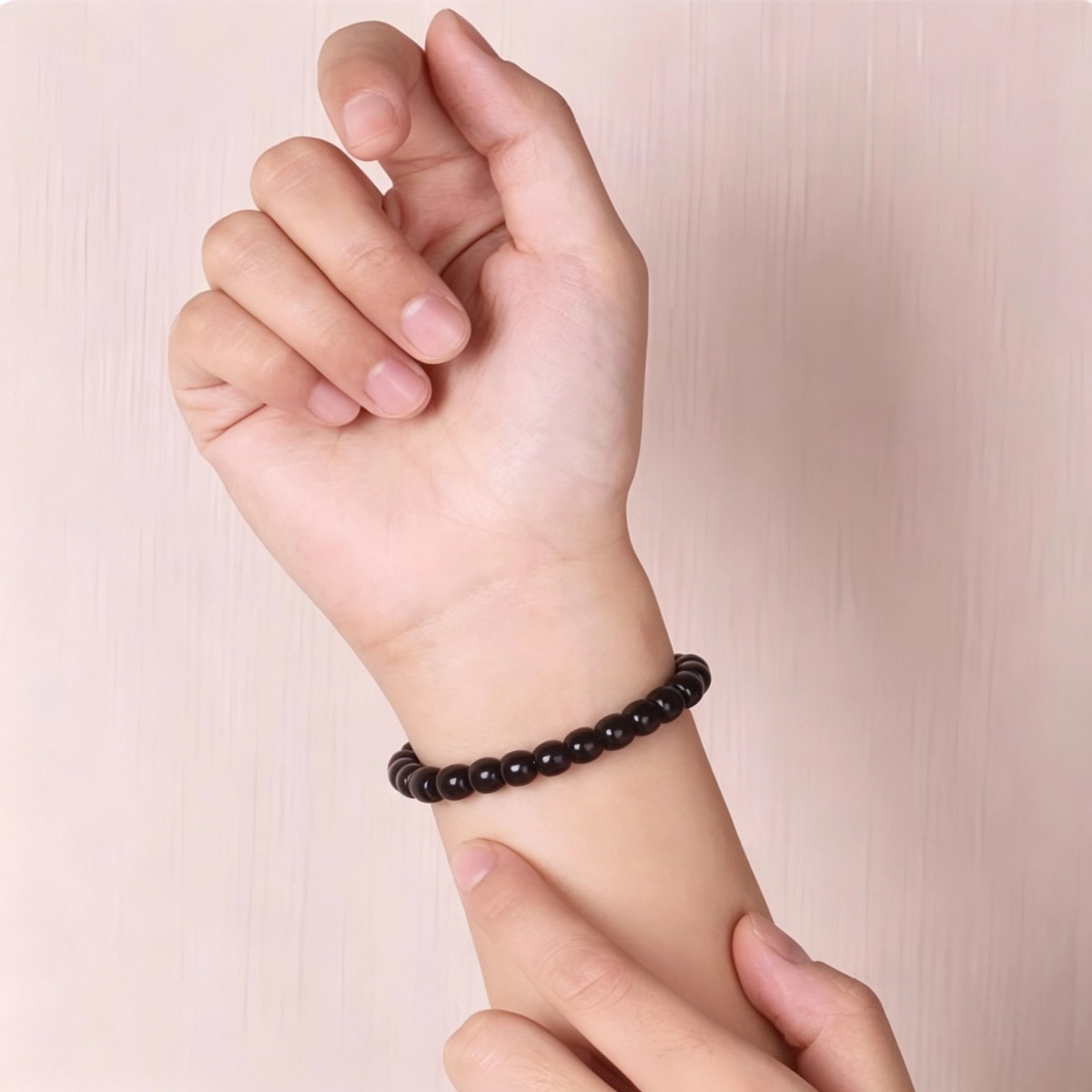
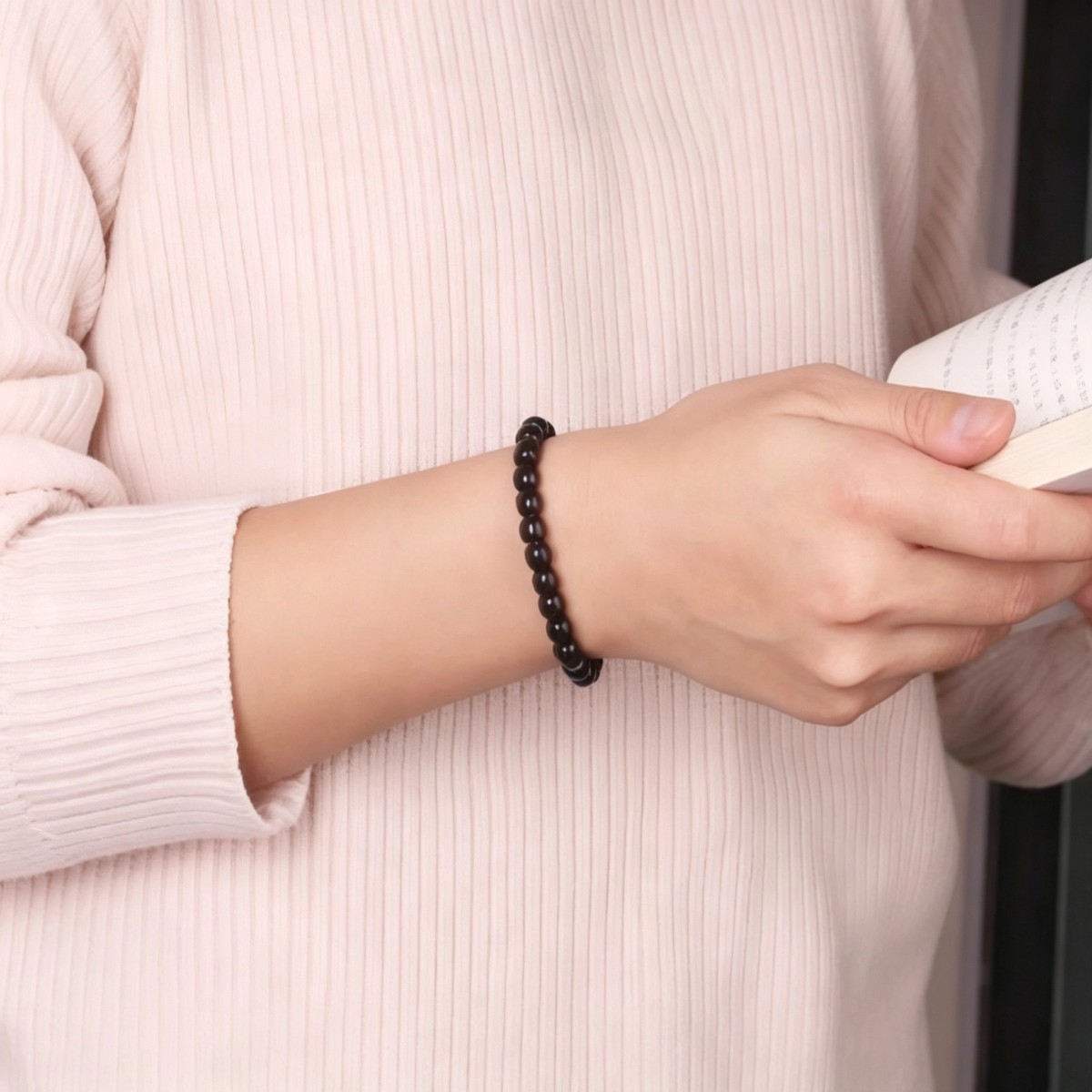
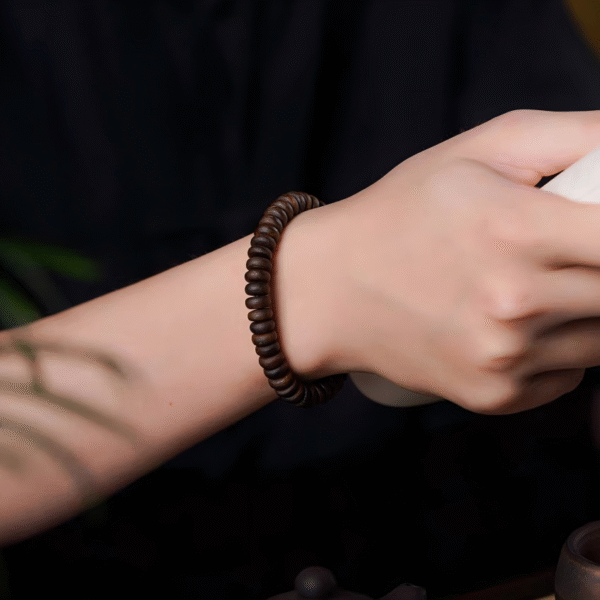
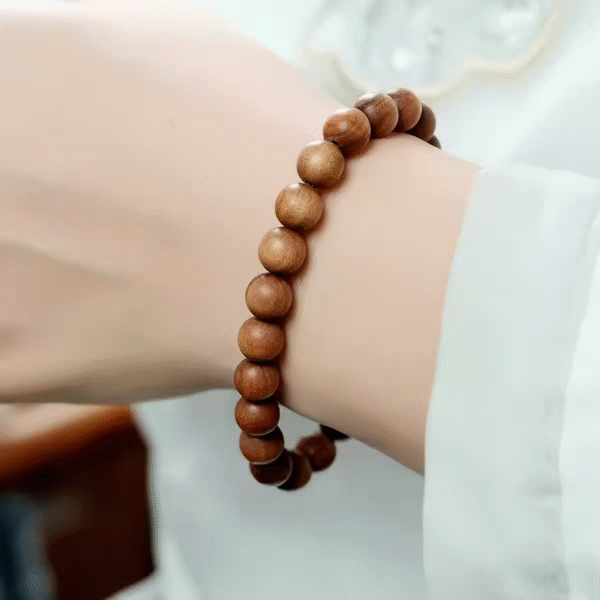
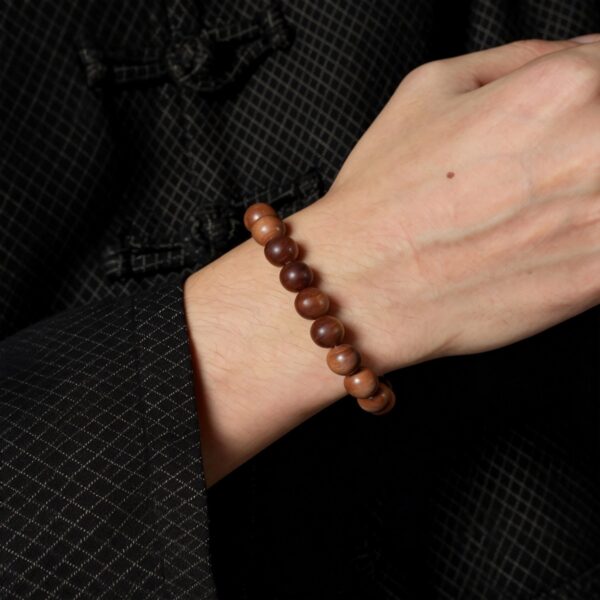
| Wrist fit | Approx. 15–17 cm |
| Custom sizing | Available upon request. Additional fee applies based on materials added. Please email us. |
| Care | Keep dry. Avoid harsh chemicals. Wipe with a soft cloth. |
A Note Before You Wear It
This is a natural, handcrafted object. Natural variations in grain and color are part of its character, not defects.
No specific outcome is claimed or promised. What is offered here is the bracelet itself — a quiet object made from a rare material, shaped by hand, and meant to be lived with.
Explore more natural materials →
Not decoration. Not display.
A companion for the years —
deepening with every touch.
FAQ – Indonesian coconut pedicle bracelet
Is this dyed or treated?
No. These beads are entirely natural — no dye, no oil treatment, no wax. The color comes from the material itself and will continue to deepen with wear.
Why can I see small lines and pores on the beads?
These are natural grain lines and pores, unique to authentic coconut pedicle. They are visible around the holes and on the bead surface. They are not cracks or defects — they are the signature of untreated, natural material.
How do I know it is not dyed?
Look at the bead holes. On natural coconut pedicle, you will see pores and grain lines around the edges. On dyed beads, the holes are stained solid black and the grain is invisible.
Will the color change over time?
Yes. With regular wear, the natural oils from your skin will gradually deepen the color and create a soft patina. This is a slow process — weeks, months, years — and is part of the quiet pleasure of wearing this material.
How should I care for it?
Keep it dry. Avoid harsh chemicals, perfumes, and prolonged exposure to water. Wipe it gently with a soft cloth. The bracelet will age beautifully with normal wear.
Is this suitable as a gift?
Yes. For anyone who appreciates natural materials, quiet craftsmanship, or the meditative pleasure of watching something deepen with time, this bracelet is a thoughtful gift.
Reviews
There are no reviews yet.