
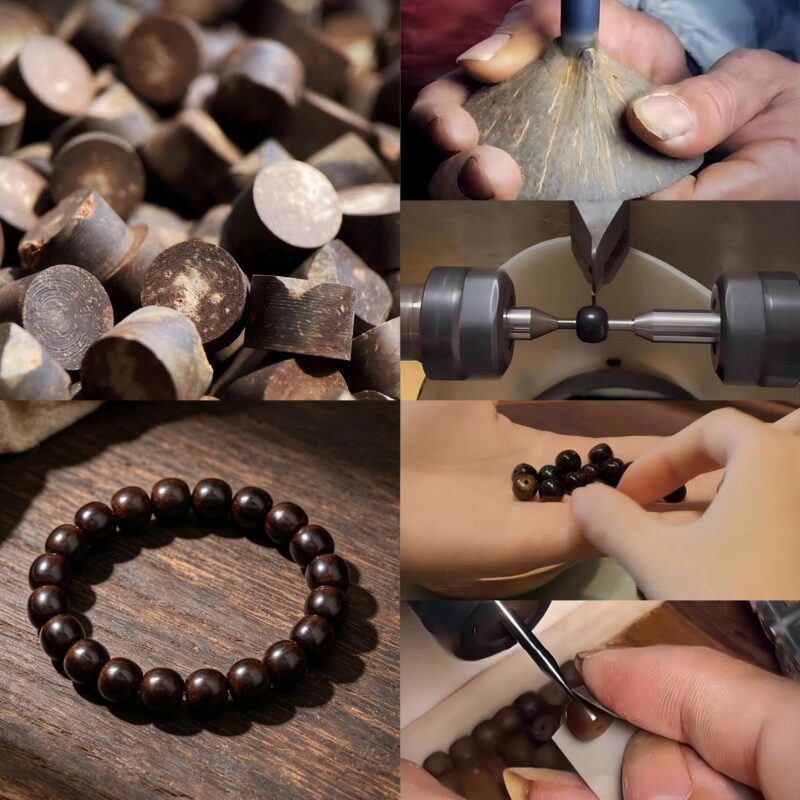
How to choose a coconut pedicle bracelet is one of the trickiest decisions in botanical jewelry. Prices range from under $20 to several hundred dollars, and from the photos alone, a $25 bracelet can look almost identical to a $200 one.
The difference lies in material density, oil content, sourcing origin, and processing method—factors that determine whether your bracelet develops a beautiful patina over months of wear or stays dull and lifeless indefinitely.
This guide walks you through exactly what to check before you buy.
1. Origin: Why Indonesian Coconut Pedicle Matters
The two primary sources for coconut pedicle in the market are Hainan, China and Indonesia. They are not equal in quality.
Hainan pedicles tend to be larger and thinner, often shaped like flattened pills. They are more widely available and generally more affordable.
Indonesian pedicles are thicker, denser, and richer in oil content. They are the preferred choice for higher-end bracelets and are more likely to develop a deep, glass-like patina with wear. If that’s the quality you’re after, browse our Indonesian Coconut Pedicle Bracelets.
If a listing specifies “Indonesian coconut pedicle,” that is generally a positive signal—but verify it through other quality indicators, since origin claims are not always accurate.
What to look for: Explicit origin disclosure in the product description. Vague terms like “premium coconut shell” or “natural coconut material” without specifying pedicle vs. shell are a red flag.
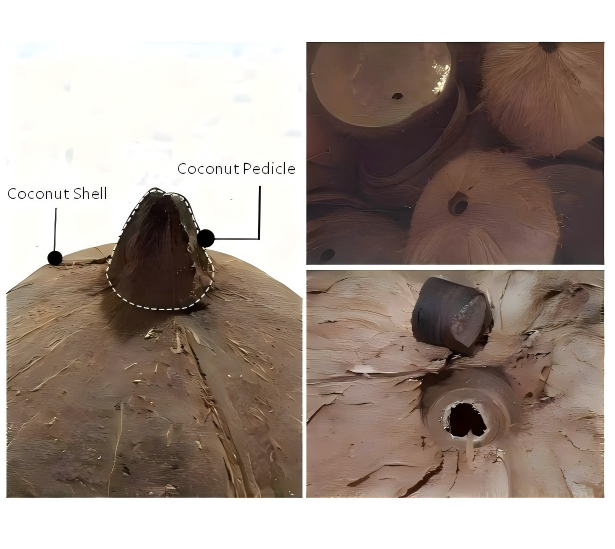
2. Appearance: Color, Brown Spots, and What They Tell You
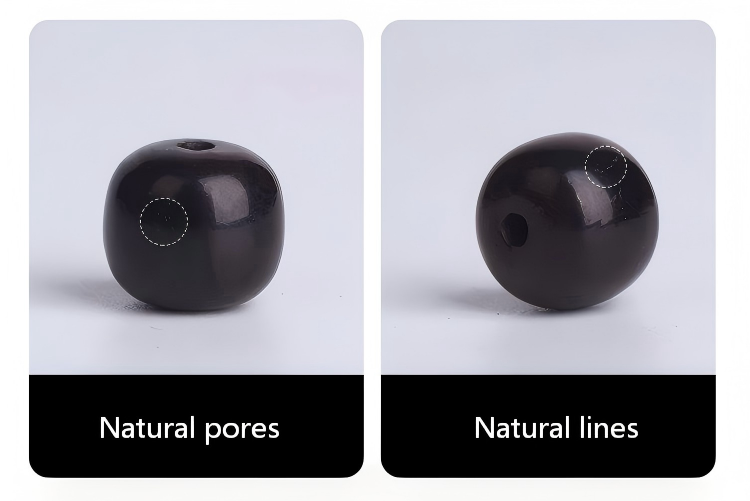
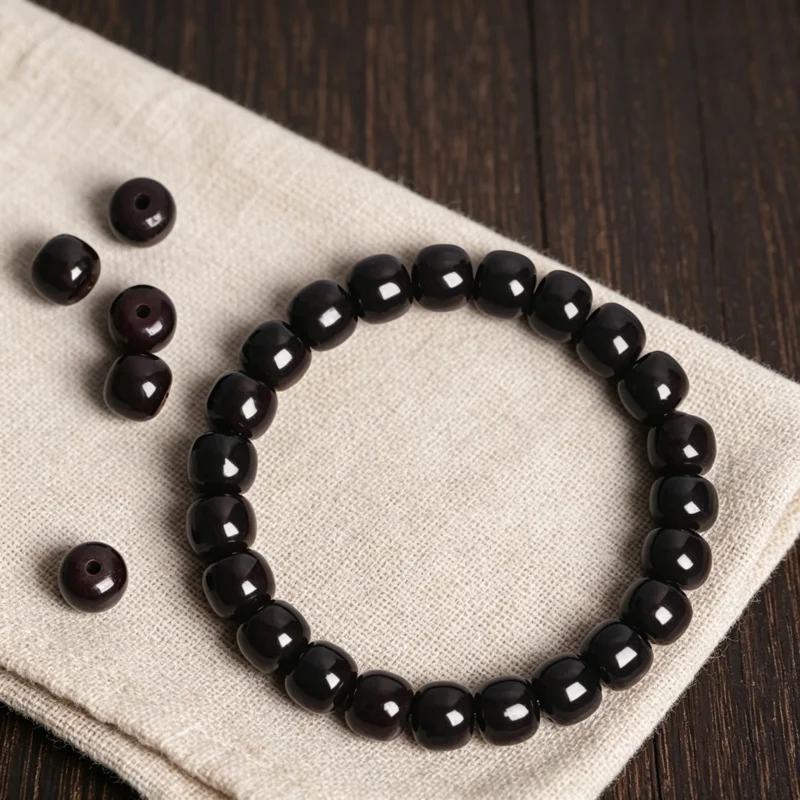
Color. Natural coconut pedicle ranges from deep brown to near-black, but it is never uniformly black. Under light, you should see subtle brown or golden-brown grain lines running through the material.
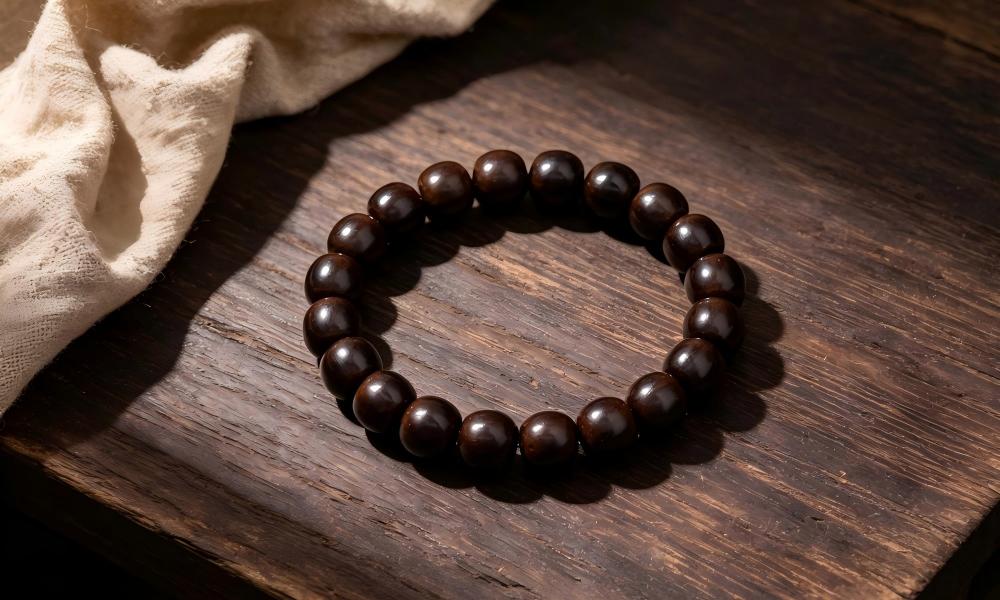
If a bracelet is solid black with no visible grain, no brown lines, and no natural variation, it has almost certainly been dyed or treated with oil.
Brown spots. These are small dark pores or “eyes” in the material. Completely spot-free pedicles are extremely rare. A few scattered spots are normal and acceptable. Large, clustered spots that break up the visual uniformity are a quality downgrade.
What to look for: Deep brown base color with visible natural grain. Some brown spots are fine. Perfect uniformity is a warning sign, not a mark of quality.
3. Density and Weight: The Most Reliable Quality Test
You cannot fake weight.
Density is the single most reliable indicator of coconut pedicle bracelet quality. High-density pedicles feel substantial and solid in your hand—almost like a small stone. The scientific principle behind this test is well established: the ASTM D2395 standard defines the official methods for measuring density and specific gravity in wood and wood-based materials, which applies directly to coconut pedicle.
Premium coconut pedicles achieve densities above 0.95 g/cm³, compared to ordinary coconut shell at approximately 0.65 g/cm³. The visual difference is not always obvious in photos, but the weight difference is unmistakable when you hold the bracelet.
What to look for:
- The bracelet should feel heavier than it looks.
- Beads should feel solid, not porous or airy.
- If you’re comparing two bracelets of similar size, the heavier one almost always has better oil content and density.
Note: Color and brown spots can be altered through dyeing. Weight cannot be faked. When in doubt, trust your hand.
4. Oil Content and Surface Texture
High-quality coconut pedicle is naturally rich in oils. This shows up in two ways:
Surface sheen. Even before any patina develops, a good pedicle bracelet should have a soft, natural luster—not a plastic shine, but a warm, organic glow.
Tactile feel. Run your thumb across the surface. It should feel smooth and slightly silky, not rough or dry. A dry, chalky texture suggests low oil content and poor density.
What to look for: Warm, natural sheen. Smooth, silky surface. No visible wax or coating that flakes off.
5. How to Spot Fake or Low-Quality Coconut Pedicle
The most common counterfeits that undermine coconut pedicle bracelet quality are molded resin beads and wood or lower-grade shell dyed to imitate pedicle. Here are the tests:
The smell test. Rub the bead vigorously with your thumb until it warms up. Real coconut pedicle releases a faint, natural woody-coconut scent. Resin fakes smell like plastic or chemicals. Dyed beads may smell of solvent.
The burn test (for loose beads only). Hold a bead over a flame for a few seconds. Real coconut pedicle burns slowly, smells like toasted coconut, and produces light gray, crumbly ash. Resin melts, drips, emits black smoke, and smells sharply chemical.
The alcohol wipe test. Wipe a bead with a cotton swab dipped in alcohol. Dyed beads will leave visible color on the swab. Natural beads leave no color transfer.
The water test. Place a single bead in room-temperature water for 30 minutes. Real coconut pedicle absorbs water slowly and may release tiny air bubbles from its natural pores. Resin beads show no absorption at all.
The UV light test. Under a 365nm UV light, resin fakes glow blue-white for more than 15 seconds. Natural coconut pedicle shows no fluorescence.
6. Craftsmanship: What to Check on the Beads
Bead uniformity. High-quality bracelets are hand-turned, with bead diameter tolerance within ±0.3 mm. If beads vary noticeably in size or shape, the craftsmanship is inconsistent.
Hole quality. Look at the drill holes. They should be smooth inside, with a slight spiral pattern from the lathe. Rough, uneven holes with large openings (≥1.8 mm) indicate machine stamping or injection molding rather than hand-turning.
Edge finishing. Beads should have clean, polished edges. Sharp or burred edges will fray the cord and feel uncomfortable against the wrist.
What to look for: Consistent bead size and shape. Smooth, well-finished holes. No sharp edges.
7. Dyed vs. Natural: Which Should You Choose?
Some coconut pedicle bracelets are oil-soaked to darken the color and improve apparent oil content. This is not necessarily a dealbreaker—low-temperature craft oil soaking is a legitimate technique used to enhance naturally low-oil pedicles.
However, dyed bracelets (using potassium permanganate or similar chemical dyes) are a different matter. These produce an unnaturally uniform black color that never develops the subtle tonal shifts of a natural patina. Over time, dyed beads may fade unevenly or develop a dull, flat appearance.
Recommendation: Choose natural, unbleached, undyed coconut pedicle whenever possible. The initial color may be lighter, but the long-term patina will be more beautiful and more authentic.
8. Patina Potential: Why It Matters Before You Buy
The patina is the long-term payoff of a coconut pedicle bracelet. After 3–6 months of daily wear, a good bracelet will develop a deep, glossy black surface—sometimes described as a “mirror-like” or “black jade” finish.
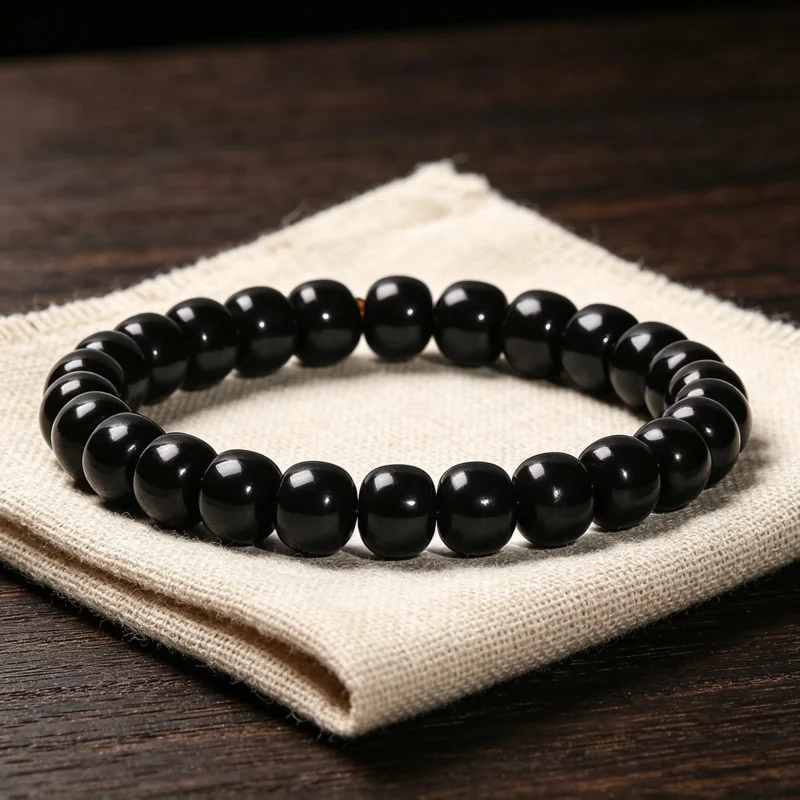
But not all pedicles patina equally. The best patina comes from high-density, high-oil pedicles that have not been chemically treated. If you buy a dyed or resin-filled bracelet, it will never develop this patina. It will simply stay the same color until the coating wears off.
What to look for: Natural color, visible grain, solid weight, and a smooth surface. These are the best predictors of future patina quality.
Quick Reference: Coconut Pedicle Bracelet Quality Checklist
Use this checklist to evaluate coconut pedicle bracelet quality at a glance:
| Factor | Good Sign | Warning Sign |
|---|---|---|
| Origin | Indonesian pedicle, disclosed | Vague “natural coconut” |
| Color | Deep brown with visible grain | Solid black, uniform |
| Weight | Heavy, solid feel | Light, hollow feel |
| Surface | Smooth, silky sheen | Rough, dry, or plastic-shiny |
| Smell | Faint natural coconut/wood | Chemical or plastic |
| Holes | Smooth, spiral lathe marks | Rough, oversized, uneven |
| Bead size | Consistent, ±0.3 mm tolerance | Noticeable variation |
Final Thoughts: How to Choose a Coconut Pedicle Bracelet
How to choose a coconut pedicle bracelet ultimately comes down to density and natural character—not cosmetic perfection. A bracelet with a few natural brown spots and visible grain will almost always outperform a perfectly uniform black bracelet that has been dyed or resin-filled.
Trust your hand. If it feels substantial and warm, and the grain tells a natural story, you’ve found a keeper.
What Exactly Is a Coconut Pedicle? →