
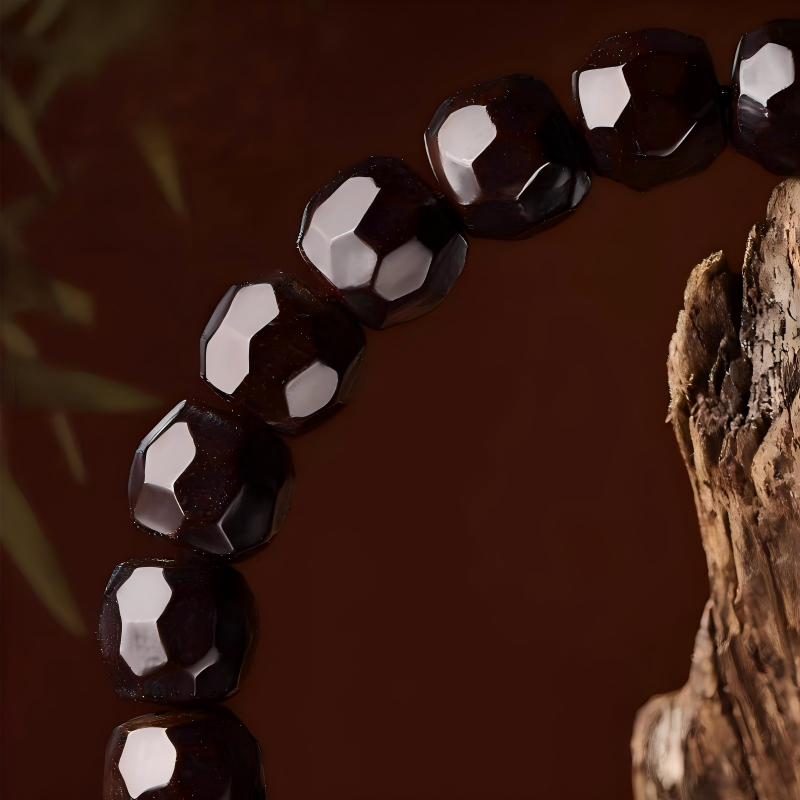
Coconut pedicle material—known in Chinese as 椰蒂 (yē dì)—is the rarest part of the coconut. If you’ve spent time browsing handcrafted botanical jewelry, you may have encountered a coconut pedicle bracelet that looks like polished obsidian yet feels warm and organic against the skin. It has quietly become one of the most sought-after raw materials in the world of meditative bead jewelry.
Unlike gemstones or precious metals, coconut pedicle material is not mined or cast. It is grown, harvested, and slowly transformed by hand. And the story of how this unassuming tropical byproduct became a collector’s material is as compelling as the bracelet itself.
What Exactly Is a Coconut Pedicle?
The coconut pedicle is the top section of the coconut where it attaches to the palm tree—the growth point through which the fruit absorbs nutrients during its development. Think of it as the coconut’s “crown.” Each coconut produces only one pedicle, and from a single pedicle, a bead-maker can typically yield only one to two beads.
This extreme yield ratio is the first clue to why coconut pedicle material occupies a different tier than ordinary coconut shell accessories.
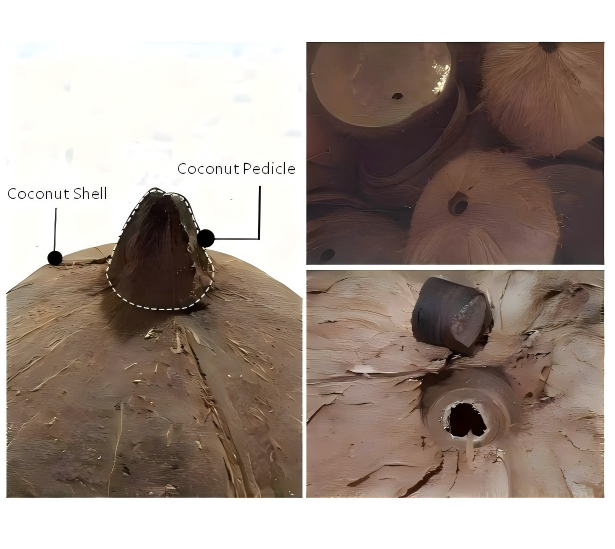
The coconut pedicle comes from Cocos nucifera, a species in the Arecaceae (palm) family. For readers who want to verify the botanical classification, the Royal Botanic Gardens, Kew maintains the authoritative reference on this species via its Plants of the World Online database.
How It Differs from Coconut Shell
Most people assume “coconut shell bracelet” and “coconut pedicle bracelet” are the same thing. They are not.
Coconut shell is the hard outer husk of the fruit—abundant, relatively thin (typically 3–4 mm), and widely used in budget-friendly jewelry. Coconut pedicle material, by contrast, is the nutrient-dense attachment point, significantly thicker (often 5–10 mm or more) and dramatically denser.
In practical terms, the difference shows up on your wrist:
- Coconut shell beads tend to feel lighter, look rougher, and lack the oil-rich sheen that develops over time.
- Coconut pedicle beads are solid, crack-resistant, and rich in natural oils. They take on a deep, glass-like patina with wear—something coconut shell beads rarely achieve.
If you’ve ever wondered why two bracelets that look similar in photos are priced very differently, this is usually the reason.
A Brief History: From Tang Dynasty Temples to Modern Wrists
Coconut shell and pedicle prayer beads have a documented history in China dating back to the Tang and Song Dynasties (618–1279 AD), with written records becoming more detailed during the Qing Dynasty. They were particularly favored in Tibetan and Han Buddhist traditions, where coconut-based materials were valued for their durability, resistance to sweat, and ability to develop a lustrous patina through daily handling.
In the Qing Dynasty, these beads were referred to by several names—Mù yá (木芽), Yē dì (椰蒂), and Mǎn guàn (满贯)—reflecting their status as an established material in Buddhist practice, not merely a decorative curiosity.
What Does It Smell Like?
Natural, unbleached coconut pedicle has very little scent. If you press a bead close to your nose, you may detect a faint, warm, woody undertone—reminiscent of dried coconut husk or aged wood. It is not a fragrant material in the way sandalwood or agarwood is.
Be cautious of any coconut pedicle product that carries a strong chemical or artificial odor. Bleached or dyed beads sometimes emit a faint chemical smell, which is a sign of processing rather than natural character. Authentic coconut pedicle should smell like nothing—or like the tropics, subtly.
Why Is It Considered Rare?
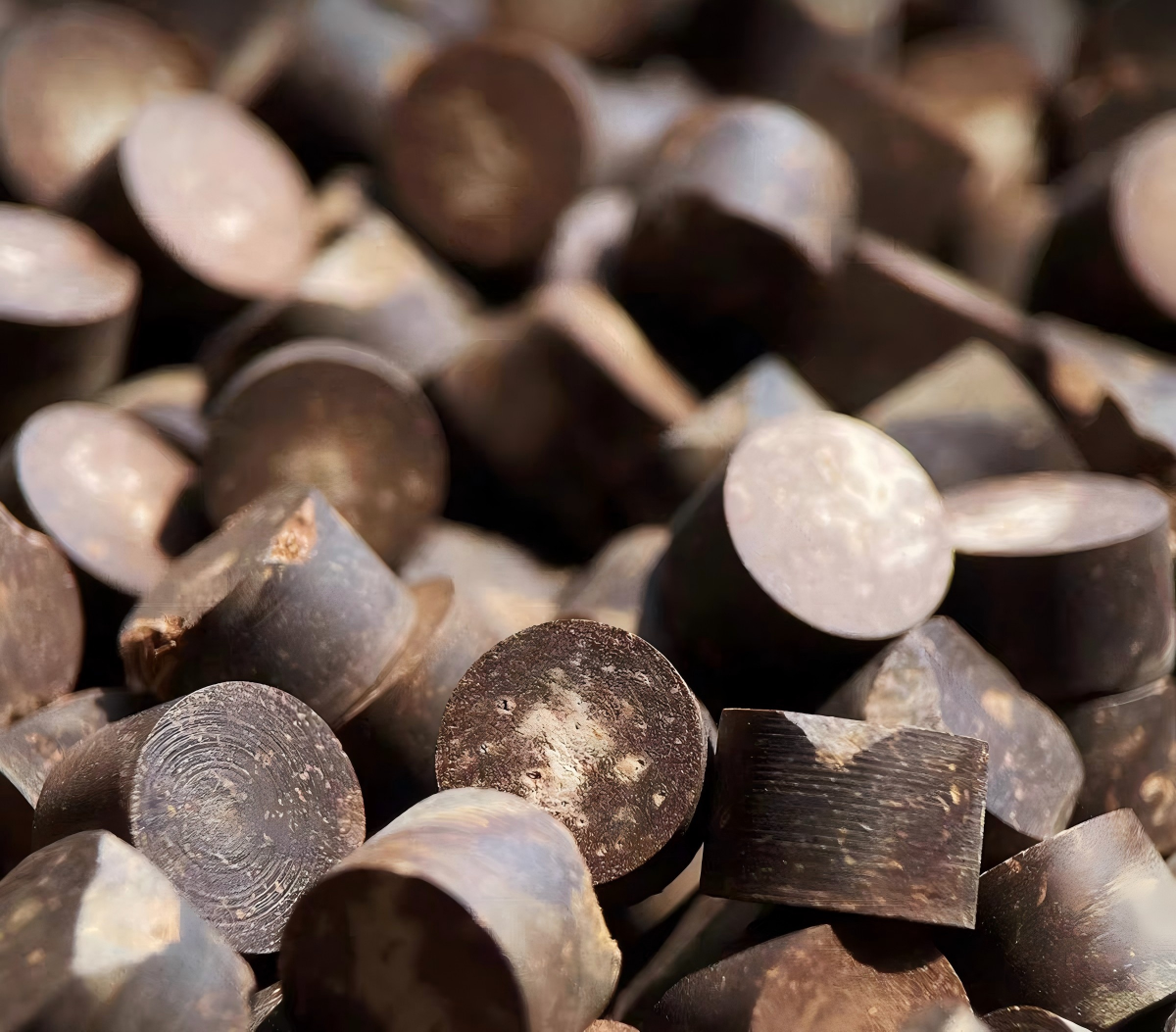
Rarity in coconut pedicle material comes from three converging factors:
1. Low yield per fruit. One coconut = one pedicle = one to two beads. Compare that to a coconut shell, from which dozens of spacer beads can be cut.
2. Slow growth and high density. Premium coconut pedicles are harvested from coconuts grown for over five years under abundant sunlight. These achieve a density above 0.95 g/cm³, far exceeding ordinary coconut shell at around 0.65 g/cm³. The denser the material, the more durable the bead—and the better it polishes.
3. Limited sourcing regions. The two primary sources in the market are Hainan (China) and Indonesia. Indonesian pedicles are generally thicker and denser, making them the preferred choice for higher-end bracelets. For a closer look at this grade, explore our High-Density, High-Oil Indonesian Coconut Pedicle Bracelets →
Cultural Symbolism: Humility, Resilience, and Grounded Wisdom
In Buddhist and broader East Asian cultural contexts, coconut shell and pedicle carry layered meanings:
- Humility — the coconut grows high on the palm but its most valuable part lies hidden within.
- Resilience — the pedicle must withstand the full weight of the coconut throughout its growth.
- Rooted wisdom — it is the connection point between fruit and tree, symbolizing the link between individual and origin.
These associations make coconut pedicle bracelets a meaningful gift for anyone navigating transition, seeking stability, or simply drawn to grounded, earth-connected aesthetics.
The Patina Journey: Why It Gets Better With Time
This is where coconut pedicle truly distinguishes itself from synthetic or lower-grade materials.
After 3–6 months of daily wear, the surface tone gradually deepens from its initial dark brown toward a rich, glossy black—a natural patina that collectors describe as developing a “mirror-like” or “black jade” finish. The oils from your skin interact with the natural oils within the pedicle, and the surface slowly develops a soft, reflective sheen.
This is not a coating. It is a transformation of the material itself.
For collectors, this patina is part of the value proposition. A coconut pedicle bracelet is not a static accessory—it is an object that changes with you, recording the time you’ve spent wearing it.

How to Care for Coconut Pedicle
- Wear it regularly. The best care is consistent wear. Natural skin oils accelerate patina development.
- Avoid prolonged water exposure. Coconut pedicle is dense but not waterproof. Remove before swimming or showering.
- Wipe with a soft cloth. A dry cotton cloth is sufficient for daily cleaning.
- No chemical cleaners. Avoid alcohol, acetone, or abrasive polishes—these strip natural oils.
Coconut pedicle material is not just “coconut shell with a better marketing name.” It is a fundamentally different material: denser, oilier, rarer, and capable of a patina that lower-grade coconut materials cannot replicate. It sits at the intersection of traditional Buddhist craftsmanship and modern botanical jewelry—a material that asks for nothing but time and rewards you with something that looks better every year.
If you’re drawn to jewelry that carries a story and evolves with wear, coconut pedicle deserves a place in your collection.
How to choose a coconut pedicle bracelet?→